









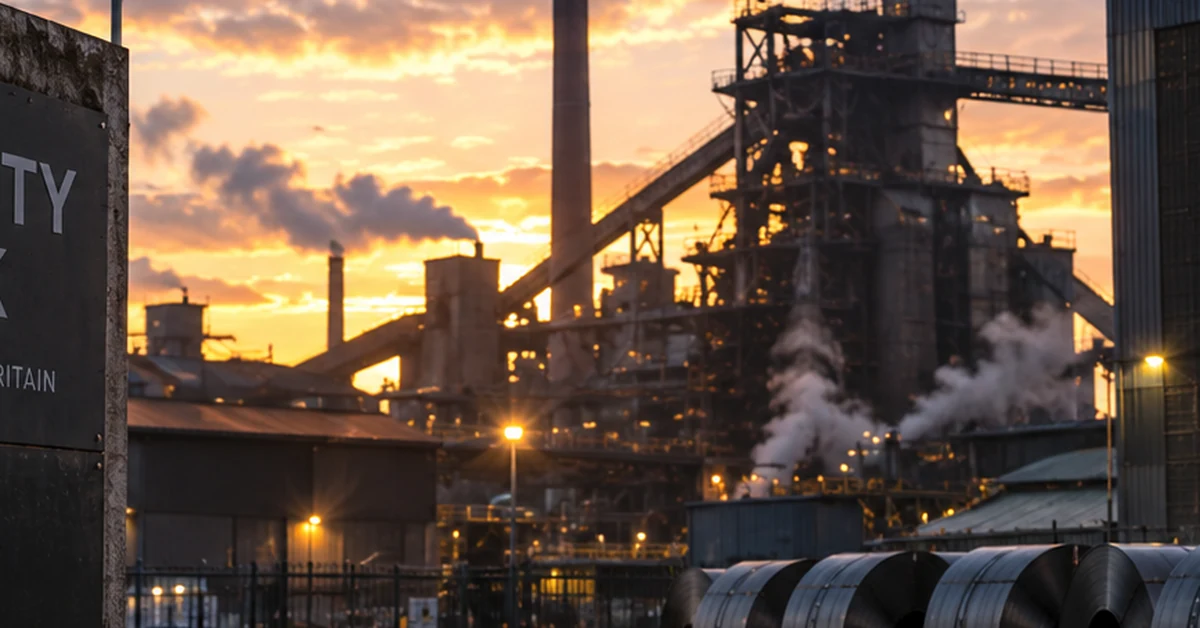
The UK government is preparing to acquire Speciality Steel UK after rejecting a proposed private-sector bid for the insolvent steelmaker, putting more than 1,300 jobs and strategically important manufacturing capacity in line for public ownership.
The former Liberty Steel business operates sites in Rotherham, Stocksbridge, Brinsworth and Wednesbury.
The government says it will now pursue an acquisition itself, subject to due diligence, while considering the long-term future of the business.
Speciality Steel UK is not simply another producer of commodity steel.
Its products have supplied aerospace, defence and advanced manufacturing – sectors where losing domestic production capacity can create dependencies that are considerably harder to reverse than they are to create.
The proposed intervention follows the failure to secure what the government considered an acceptable private-sector solution.
That leaves ministers choosing between allowing an insolvent company to follow the normal consequences of commercial failure or preserving industrial capability using the public balance sheet.
There is an obvious danger in the latter.
Governments that rescue strategically important companies can end up preserving inefficient businesses, socialising losses and discovering that almost any sufficiently large employer can make a case for exceptional treatment.
Britain also has to contend with the consequences of doing nothing.
Once specialist plants close, skilled workers disperse, equipment disappears and supply chains reorganise. Recreating that capacity years later is not simply a matter of reopening the gates.
Steel has become increasingly entangled with national-security policy as European governments reassess their dependence on overseas supply chains for defence, energy and critical infrastructure.
Speciality Steel UK’s exposure to aerospace and defence puts this proposed acquisition squarely inside that debate.
More than 1,300 jobs may provide the immediate political pressure.
The harder question is what those workers and plants are capable of producing.
Britain does not need to decide whether every failed steel business deserves nationalisation.
It needs to decide which industrial capabilities it is prepared to lose permanently – and which are too strategically important to surrender because no private buyer emerged.
Sources
Join the Dissenting Citizen Newsletter
Independent news and commentary delivered directly to your inbox.
Breaking stories, analysis and commentary throughout the day.
Follow @VoxDissent →