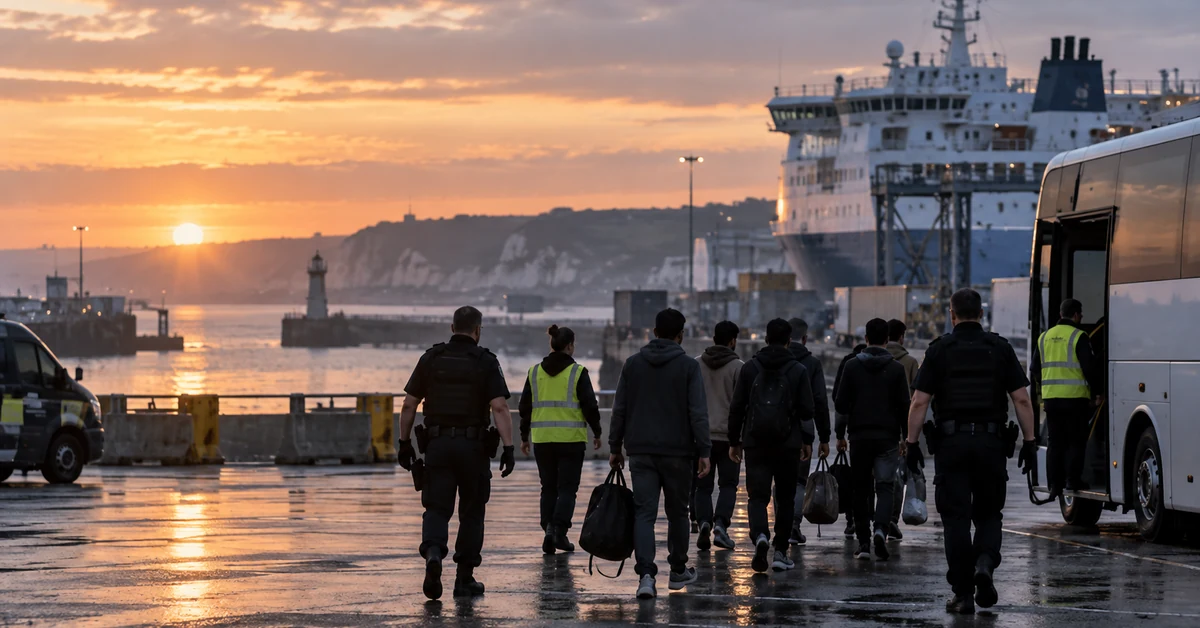









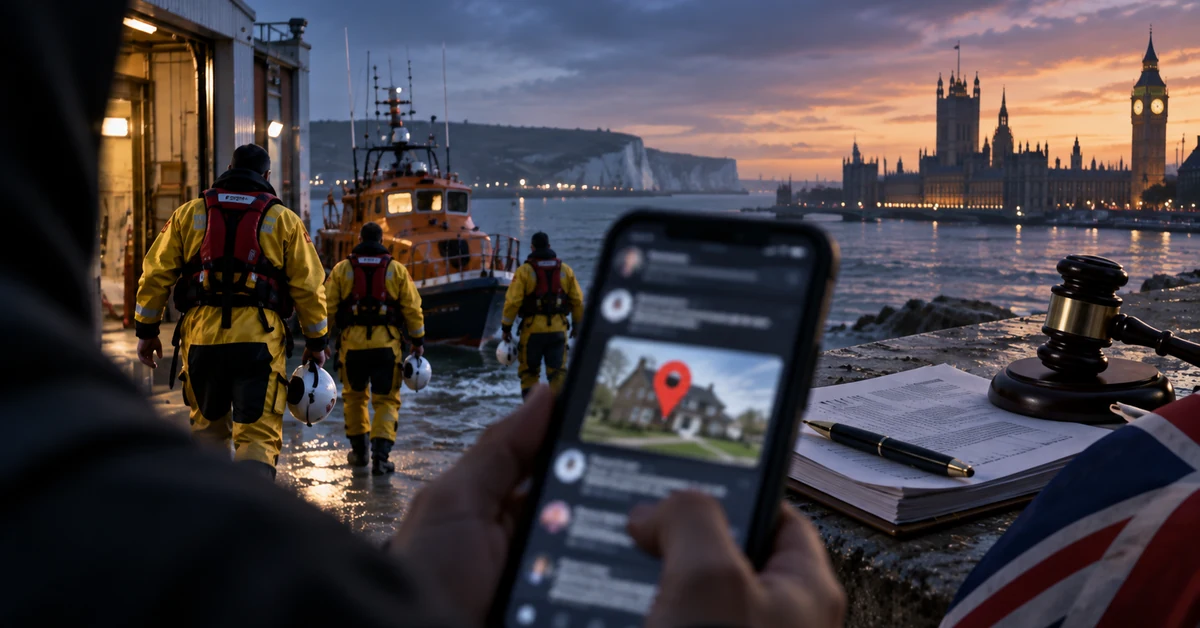
The government is considering a new criminal offence covering the publication of private home addresses after RNLI volunteers, police officers and journalists were targeted online during recent anti-migrant protests.
Digital Secretary Lisa Nandy said ministers were prepared to change the law following incidents in which personal information was published online amid protests in Dover and Portsmouth.
RNLI volunteers involved in rescuing migrants crossing the English Channel have been among those targeted, with some branded “traitors” and their personal details circulated online.
The charity has strengthened security measures in response.
Government examines new offence
Existing legislation can already cover threatening and abusive online behaviour, but prosecutors generally need to establish factors including an intention to cause harm or distress.
Nandy is considering whether publishing someone’s private address should itself become a more clearly defined offence.
The proposal would potentially make it easier to prosecute doxxing cases without having to establish an accompanying explicit threat.
Any legislation would need to determine what information qualifies as private and what exemptions apply where publishing an address or other identifying information serves a legitimate journalistic or public-interest purpose.
Nandy attacks X
The government has also been holding talks with major social-media companies about how their platforms respond to doxxing and abuse.
Nandy criticised X after the company did not attend a government meeting on the issue, describing the platform as an “absolute” and “utter disgrace”.
TikTok indicated that it would remove material containing targeted private information.
Meta said its existing policies would not necessarily result in every instance being automatically removed.
The dispute follows protests over small-boat migration in which demonstrators have criticised the RNLI’s role in rescuing people attempting to cross the Channel.
The RNLI operates as a rescue organisation rather than an immigration-enforcement body. Its crews respond when people are considered to be in danger at sea.
Opposition to Britain’s immigration and small-boats policies remains lawful political activity.
The government’s challenge is determining where that activity crosses into targeted intimidation – and whether publishing somebody’s private home address should constitute that boundary even when no explicit threat accompanies it.
Sources
- The Times – Nandy attacks X over RNLI doxxing talks
- ITV News – government talks over abuse of RNLI volunteers
Join the Dissenting Citizen Newsletter
Independent news and commentary delivered directly to your inbox.
Breaking stories, analysis and commentary throughout the day.
Follow @VoxDissent →