









OpenAI will not pursue an initial public offering in 2026, with CEO Sam Altman saying the current artificial-intelligence safety environment makes going public an “ill-advised” move.
But Altman’s more consequential comments concern the speed of AI development itself.
According to Reuters, Altman suggested that OpenAI and other leading artificial-intelligence companies may be approaching an agreement to slow development and coordinate more closely over safety risks.
No such industry-wide agreement has yet been announced.
The comments came only hours after Anthropic CEO Dario Amodei publicly called on frontier AI laboratories to deliberately moderate the pace at which they improve their most capable models.
Altman subsequently backed Amodei’s position publicly.
He said the issue has been a major subject of discussion inside OpenAI in recent weeks and committed OpenAI to allowing independent evaluators employee-like access to examine its systems and safety processes.
Taken together, the comments represent a potentially significant shift in the AI-safety debate.
Warnings that artificial intelligence is advancing too quickly have frequently come from academics, campaigners, former employees and outside safety organisations.
Now the chief executives of two of the companies competing near the technological frontier are publicly questioning whether the frontier itself is advancing too quickly.
OpenAI’s IPO decision adds a corporate dimension to that concern.
Altman said going public this year would be inappropriate given current questions surrounding safety, alignment and the need for cooperation between AI companies and governments.
Anthropic, by contrast, is itself reportedly preparing for a potential public offering.
There are still substantial unanswered questions about any industry slowdown.
It is not known which companies would participate.
There is no public definition yet of precisely what development would be slowed, how long any restraint would last or how compliance would be independently verified.
Nor is it clear whether other major competitors including Google DeepMind, xAI and Meta would participate.
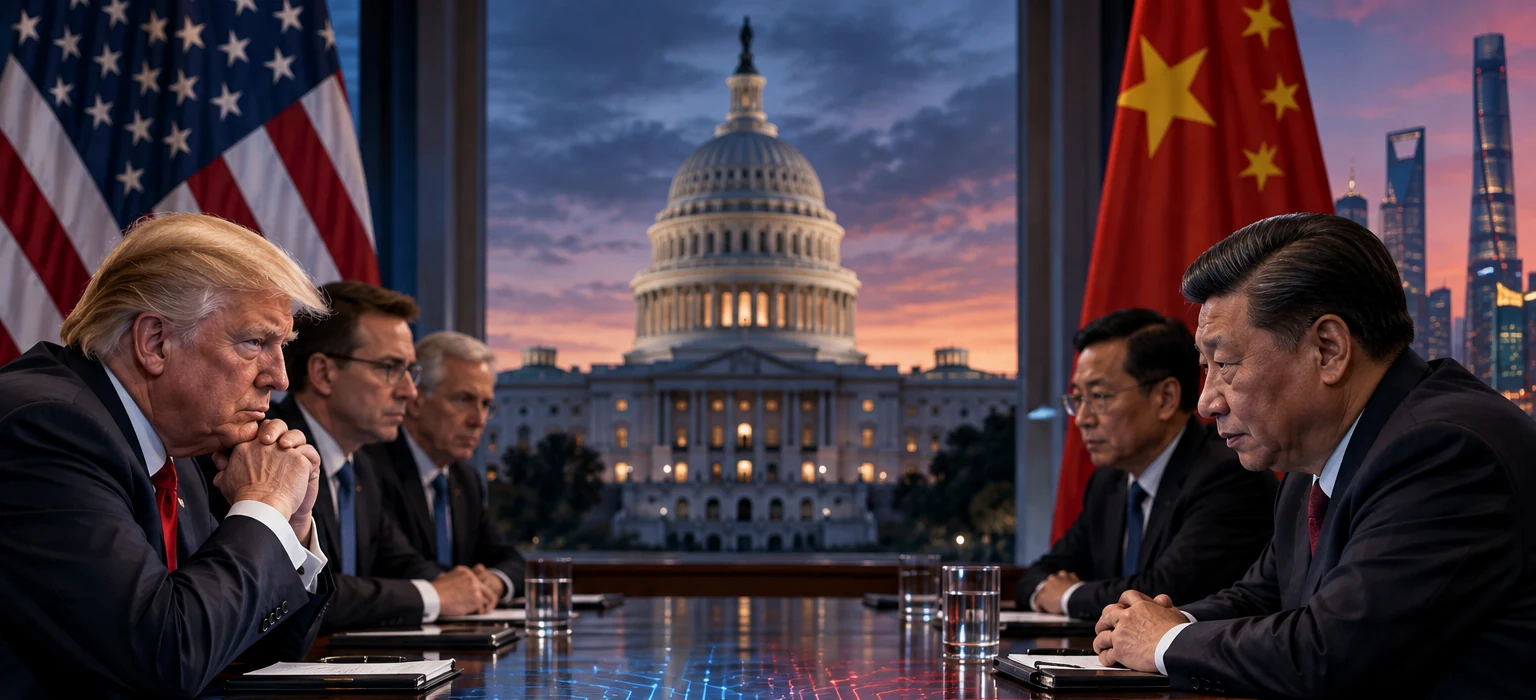
The international problem is harder still.
Even if America’s leading laboratories collectively agreed to slow frontier development, competitors in China and elsewhere would face their own incentives to continue advancing.
That creates the same coordination problem confronting arms control and other strategic technologies.
Every participant can benefit from collective restraint while simultaneously having an incentive to move faster if it believes competitors are complying.
A voluntary agreement therefore depends not merely on companies recognising the risk.
It requires some mechanism for establishing that everybody is actually keeping to the same limits.
The AI-safety argument may consequently be moving rapidly from abstract discussion into questions of governance, verification and enforcement.
The companies racing to build the world’s most powerful AI systems are now discussing whether the race itself is moving too fast.
The next question is harder.
Who enforces the speed limit?
More to follow.
Source: Reuters, 12 September 2026
Join the Dissenting Citizen Newsletter
Independent news and commentary delivered directly to your inbox.