









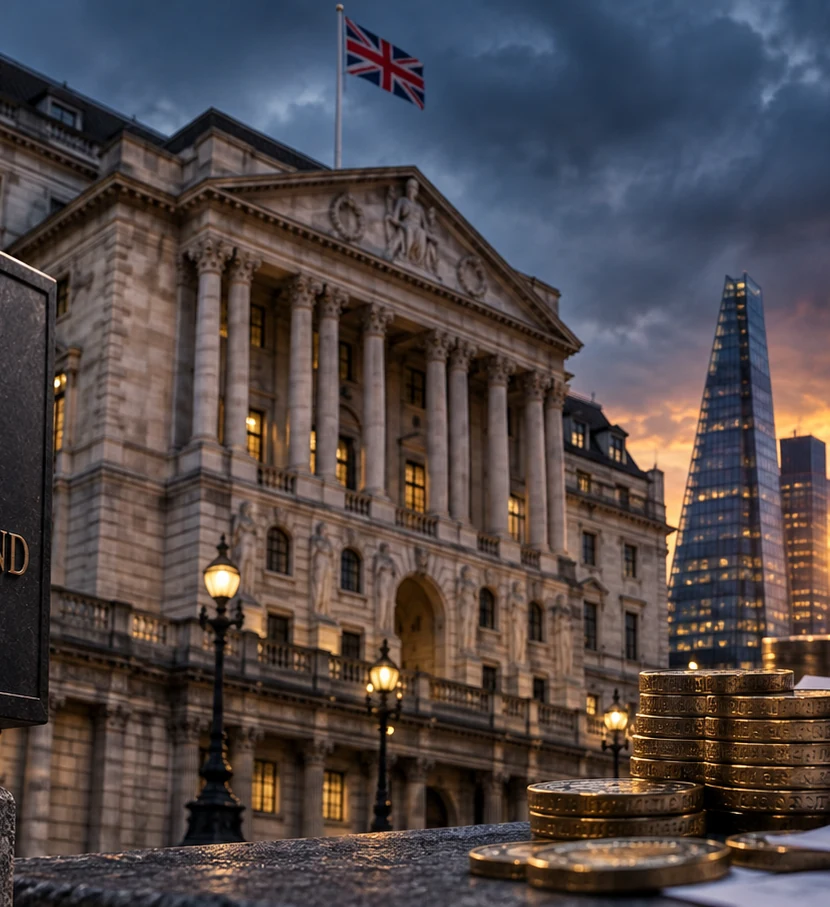
The Bank of England is expected to hold interest rates at 3.75% this week while slowing the pace at which it unwinds the huge government bond portfolio accumulated through quantitative easing.
The Bank currently reduces its gilt holdings by around £70 billion a year.
Markets expect that pace to fall to roughly £50 billion for the next cycle.
More than £400 billion of bonds have already been removed from the portfolio since quantitative tightening began in 2022.
The Bank now faces a difficult backdrop.
Oil has risen above $100 a barrel.
UK inflation stands at 2.9%, against the Bank’s 2% target.
Long-dated gilt prices recently fell to their lowest levels since 1998.
THE COST OF REVERSING QE
Quantitative easing allowed the Bank to buy enormous quantities of government debt during successive crises.
Reversing those purchases puts bonds back into the market.
Bank of England research estimates QT has added around 25 basis points to gilt yields overall. Morgan Stanley estimates the effect on 30-year gilts could be closer to 70 basis points.
Higher gilt yields ultimately mean higher government borrowing costs.
QE was introduced as an emergency measure.
The emergency ended. The financial consequences didn’t.
Sources
Reuters: Bank of England expected to hold rates and slow QT
Bank of England: September monetary policy decision
Join the Dissenting Citizen Newsletter
Independent news and commentary delivered directly to your inbox.
Breaking stories, analysis and commentary throughout the day.
Follow @VoxDissent →