





Republicans spent years accusing the Biden administration of pressuring technology companies to censor Americans.
Democrats have accused Trump administration officials of using regulatory power to pressure broadcasters over speech they dislike.
A bipartisan group of senators is now advancing a simpler principle.
Neither should be acceptable.
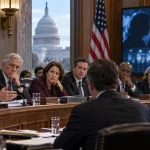
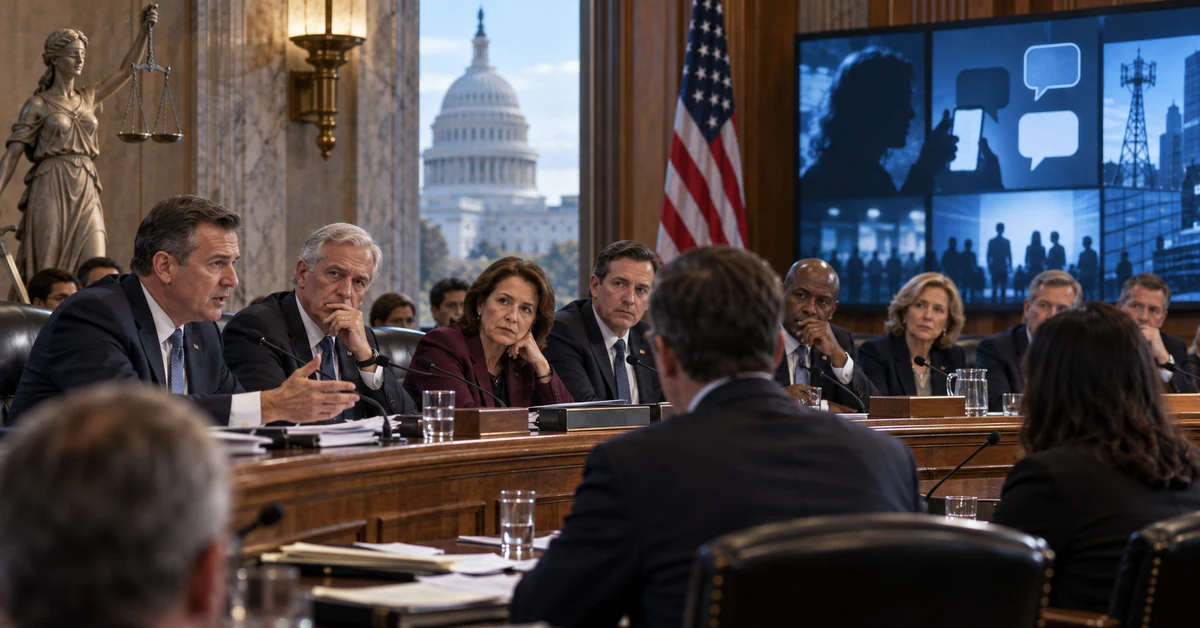
The Senate Commerce Committee voted 18-10 to advance legislation allowing Americans to sue federal agencies and employees who coerce private companies into suppressing speech protected by the First Amendment.
The JAWBONE Act is not yet law.
It still needs approval from the full Senate and House before reaching the president.
But the argument behind it addresses a problem that has survived changes of administration.
The US government is constrained by the First Amendment.
Private companies generally are not.
A television network can decide what programmes it broadcasts.
A social-media company can establish moderation rules.
An employer can make decisions about what happens on its own platforms or services.
The constitutional problem becomes more complicated when government officials attempt to make those decisions for them.
That practice is sometimes described as “jawboning”.
Government does not formally order speech removed.
Instead, officials can use meetings, private communications, public threats, regulatory authority or the prospect of government action to encourage a private organisation to do something the state itself may be constitutionally prohibited from doing directly.
Determining when legitimate government persuasion becomes unconstitutional coercion is difficult.
The JAWBONE Act attempts to give citizens another way to challenge it.
The legislation would create a cause of action against federal agencies and employees that coerce private companies into suppressing protected speech.
Importantly, the proposed remedy would not depend upon which political party controlled the government.
That principle has acquired unusually bipartisan relevance.
Senate Commerce Committee chairman Ted Cruz has spent years investigating allegations that officials in the Biden administration pressured technology companies over speech involving Covid, vaccines and elections.
Democrats have increasingly raised the same constitutional concern from the opposite direction.
Senator Maria Cantwell, the committee’s ranking Democrat, has raised concerns about Federal Communications Commission chairman Brendan Carr and regulatory pressure involving broadcasters.
Those examples involve different administrations, different industries and different kinds of speech.
The underlying constitutional problem is the same.
Government possesses powers private companies do not.
Regulators approve licences.
Agencies investigate businesses.
Officials influence mergers.
Government departments award contracts, impose penalties and write regulations capable of affecting billions of dollars in corporate value.
That makes a government request fundamentally different from a complaint made by an ordinary citizen.
A company receiving it knows who is asking.
The difficulty is separating coercion from legitimate communication.
Government agencies routinely need to speak with private companies.
Law-enforcement agencies may warn platforms about terrorist activity.
Cybersecurity officials may share information about foreign attacks.
Health authorities may correct dangerous misinformation.
Election officials may alert companies to foreign interference.
None of those interactions automatically violates the First Amendment.
The constitutional question is whether government provides information and leaves the private company free to decide what to do with it, or uses state power to make refusal costly.
That boundary has already produced years of litigation and political argument.
The JAWBONE Act would give people claiming to have been harmed another route into court.
Its bipartisan origins are therefore significant.
Cruz and Democratic Senator Ron Wyden introduced the legislation together.
The American Civil Liberties Union and Knight First Amendment Institute are among organisations supporting stronger remedies against government coercion of private speech intermediaries.
There will still be arguments over where coercion begins.
There will still be difficult cases involving national security, public safety and genuine government attempts to communicate with companies.
And passage by one Senate committee does not mean the proposal will become law.
But the political symmetry makes the underlying principle unusually easy to test.
Imagine the government official doing the pressuring belongs to the party you oppose.
If the conduct suddenly looks unconstitutional, the standard probably should not change when your own side takes office.
Free-speech protections are most useful when they constrain governments we agree with as well as governments we do not.
Otherwise they are not really protections.
They are permissions granted by whoever currently holds power.
Sources
- US Senate Commerce Committee – September 16 markup results
- US Senate Commerce Committee – Cruz-Wyden JAWBONE Act
- Reuters – Senate panel advances JAWBONE Act
Join the Dissenting Citizen Newsletter
Independent news and commentary delivered directly to your inbox.
Breaking stories, analysis and commentary throughout the day.
Follow @VoxDissent →