







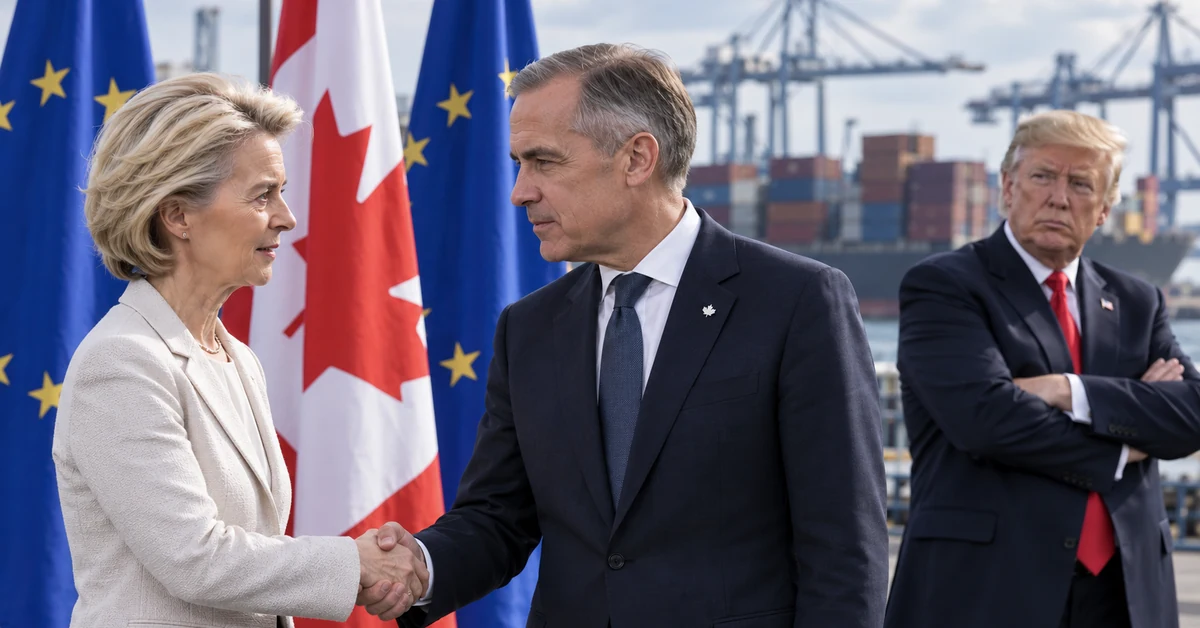
Donald Trump has threatened Europe with “very serious” tariffs after Ursula von der Leyen proposed allowing Canada to become the European Union’s first-ever “associate member”.
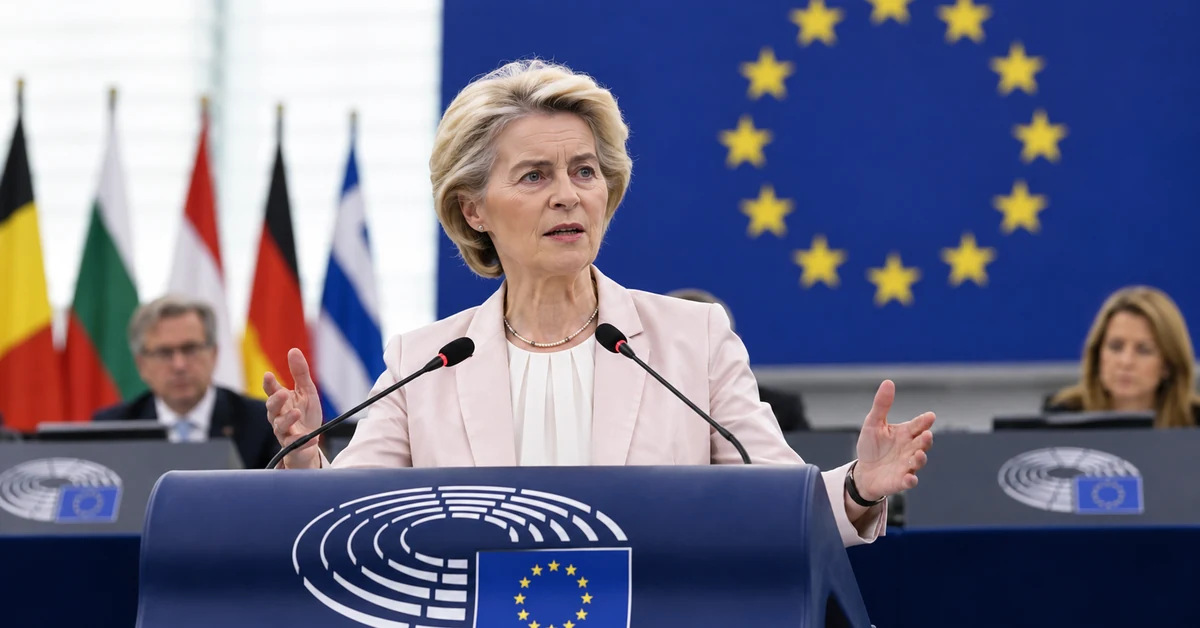
The European Commission president used her State of the Union address to propose a new “Alliance for the Future” with Canada, covering defence production, critical minerals, energy, artificial intelligence, computing infrastructure, cyber security and economic security.
She also proposed creating an entirely new relationship with the bloc.
“Canada could become the first associate member of our Union,” von der Leyen said.
The proposal is not an offer of full EU membership. The Commission has yet to define precisely what associate membership would involve or what rights and obligations Canada would acquire.
Canadian Prime Minister Mark Carney welcomed the initiative, describing closer European relationships as part of Canada’s efforts to strengthen its strategic autonomy, resilience and sovereignty.
Trump: ‘Laughable’
Trump responded by describing the proposal as “laughable”.
He said that if he considered the developing EU-Canada relationship hostile to the United States, Washington could impose substantial tariffs on European goods or halt trade in particular sectors.
That introduces an unusual question into Canada’s attempt to diversify its international relationships.
Canada is a sovereign US ally, but its economy is exceptionally closely integrated with its southern neighbour.
Ottawa has increasingly sought alternatives as its relationship with Washington has deteriorated.
The proposed EU arrangement would extend that diversification well beyond trade.
Canada also moves closer to Britain on defence
Canada has formally applied to join the Joint Expeditionary Force, the British-led military partnership currently bringing together ten northern European countries.
Membership would deepen Canada’s operational defence relationship with Britain and European allies while the proposed EU partnership could extend cooperation into defence manufacturing, energy and technology.
Neither development means Canada is abandoning its relationship with the United States.
They do show Ottawa attempting to reduce the extent to which its security and prosperity depend upon one country.
That creates a potential contradiction in Washington’s use of economic pressure.
Tariffs can increase US leverage because Canada depends heavily on access to the American market.
But the same pressure gives Ottawa a stronger reason to find other markets, security relationships and supply chains.
Europe has now offered Canada a relationship no country has previously had.
Trump’s response is to threaten Europe with tariffs if he decides it goes too far.
Sources
- Reuters – EU opens door to Canada becoming its first associate member
- Reuters – Canada applies to join UK-led Joint Expeditionary Force
- European Commission – 2026 State of the Union address
Join the Dissenting Citizen Newsletter
Independent news and commentary delivered directly to your inbox.
Breaking stories, analysis and commentary throughout the day.
Follow @VoxDissent →