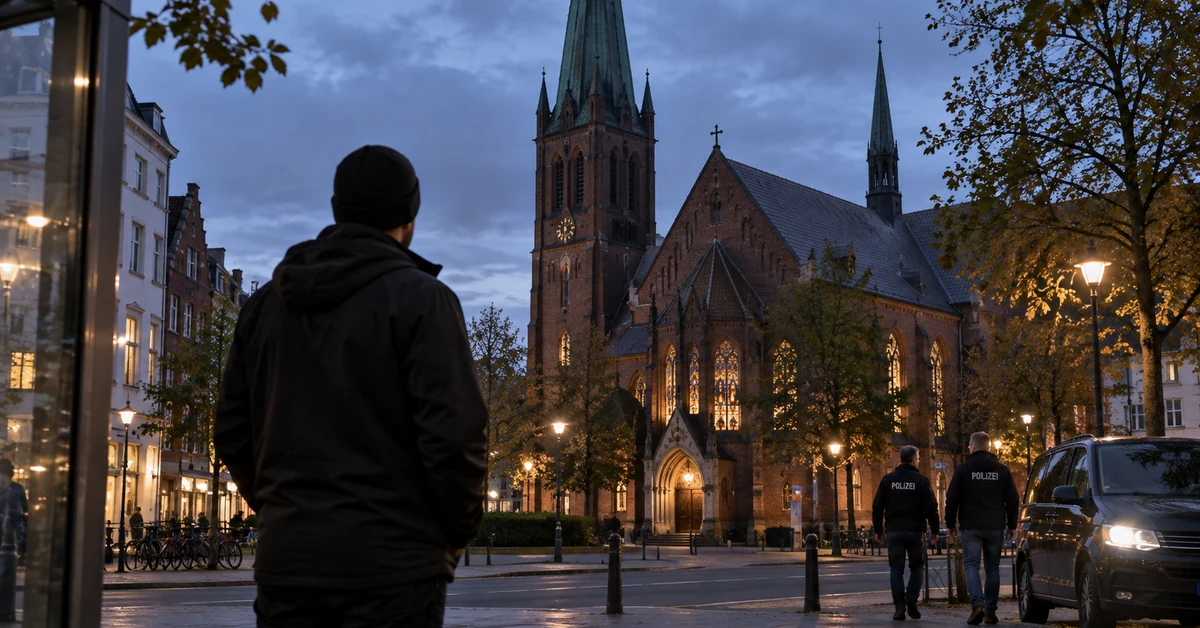






Austria wants to ban political Islam.
The difficult part is deciding what, exactly, that means in law.
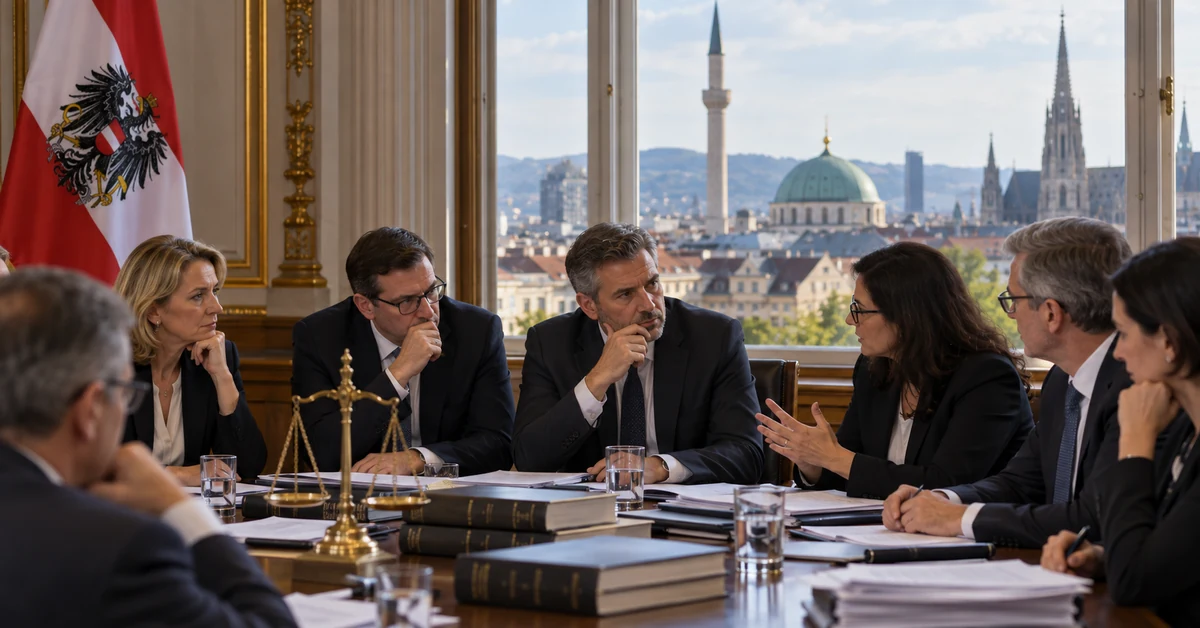
The country’s parliament confronted that problem directly on Wednesday as its Constitutional Committee debated a proposal for a dedicated “Prohibition Act for Political Islam”.
The proposal did not pass.
It was deferred by Austria’s governing parties.
But the idea behind it is not going away.
Integration Minister Claudia Bauer says the Austrian government is itself “concretely working on a ban on political Islam”, accompanied by possible changes to the country’s laws governing associations, assemblies and recognised religious communities.
That turns what might otherwise have been another hard-line opposition proposal into a much more significant European experiment.
Austria is attempting to determine whether Islamism can be separated from Islam not merely in political language, but in enforceable law.
The proposal debated on Wednesday came from the opposition Freedom Party, or FPÖ.
Its version would go considerably further than simply banning terrorist organisations.
The party wants activity advancing the objectives of political Islam prohibited, relevant organisations and mosques dissolved and their assets confiscated.
It also proposes citizenship consequences for people belonging to or supporting organisations falling within the prohibition.
The governing parties did not accept that proposal.
But their objection was not simply that political Islam should be left alone.
ÖVP MP Wolfgang Gerstl identified the central legal problem: drafting such a prohibition without abandoning the rule of law and creating what he called a “Gesinnungsstrafrecht” – effectively a system that punishes people for their beliefs.
His party’s government is now trying to find another route.
Bauer says political Islam seeks to place itself above Austria’s democratic constitutional order and reshape society according to religious rules.
Her ministry is developing a prohibition alongside changes to association, assembly and religious-community law intended to prevent anti-democratic organisations from embedding themselves within Austrian institutions.
She also wants action against the Muslim Brotherhood and other Islamist organisations.
That raises an obvious question.
Where does Islam end and political Islam begin?
Austria already protects Islam as a recognised religion.
Muslims are free to worship, establish organisations, participate in politics and argue from religious convictions.
Those activities cannot become illegal merely because the government dislikes the beliefs behind them.
At the same time, religious freedom does not require a democratic state to accept organisations seeking to replace democratic government with a religious political order.
Austria’s government-backed Documentation Centre for Political Islam has attempted to draw that boundary.
Its working definition describes political Islam as an ideology seeking to reshape society, culture, the state or politics according to rules presented as Islamic but which conflict with democratic constitutional government and human rights.
That definition is considerably narrower than Islam itself.
Turning it into criminal or organisational law is harder.
Austria’s officially recognised Islamic Religious Community, the IGGÖ, argues that “political Islam” remains too imprecise a concept for legislation.
Its president, Ümit Vural, says authorities should identify the specific extremist behaviour and structures they intend to combat.
If the target is anti-democratic extremism, the IGGÖ says it supports the constitutional state.
What it rejects is legislation capable of placing ordinary Islamic religious practice – or Muslims generally – under suspicion.
That concern has support inside Austria’s governing coalition.
SPÖ politicians warned during Wednesday’s parliamentary debate against placing an entire religious community under general suspicion.
NEOS has said it is open to measures that improve security but wants a definition capable of surviving legal scrutiny.
The coalition therefore broadly agrees that Islamist extremism presents a problem while disagreeing over how the state can define the thing it wants to prohibit.
That distinction becomes especially important because political Islam does not necessarily look like terrorism.
A jihadist organisation planning attacks presents an obvious criminal-law problem.
A lawful organisation advocating social or political change derived from a religious worldview presents a more complicated one.
At what point does conservative religious activism become an attempt to undermine the democratic state?
When does political participation become anti-democratic political organisation?
And who decides?
Austria’s government now has to answer those questions in statutory language.
The debate also reaches beyond Austria.
European governments have spent years distinguishing Islam from Islamism rhetorically.
Islam is a religion followed peacefully by millions of Europeans.
Islamism is generally used to describe political movements seeking to organise society or government according to their interpretation of Islam.
That distinction is easy enough to state.
Austria is now discovering how difficult it is to legislate.
A law drafted too narrowly may add little to existing powers against terrorism, extremism and anti-state activity.
A law drafted too broadly risks treating protected religious or political beliefs as criminal.
The FPÖ has proposed one answer.
Austria’s governing parties have declined to adopt it.
But the government is working on an answer of its own.
That makes Austria an unusually important European test case.
The question is no longer simply whether politicians can distinguish Islam from political Islam in a speech.
It is whether legislators can define the difference precisely enough to put it into law.
Sources
- Austrian Parliament – September 16 debate on a prohibition law for political Islam
- Austrian Parliament – FPÖ proposal and parliamentary status
- Austrian Federal Chancellery – Bauer confirms work on a ban on political Islam
- ORF – Bauer seeks action against the Muslim Brotherhood and other Islamist organisations
Join the Dissenting Citizen Newsletter
Independent news and commentary delivered directly to your inbox.
Breaking stories, analysis and commentary throughout the day.
Follow @VoxDissent →