








Anthropic is reportedly seeking to raise as much as $100 billion at a valuation of approximately $2 trillion in what could become the largest initial public offering in history.
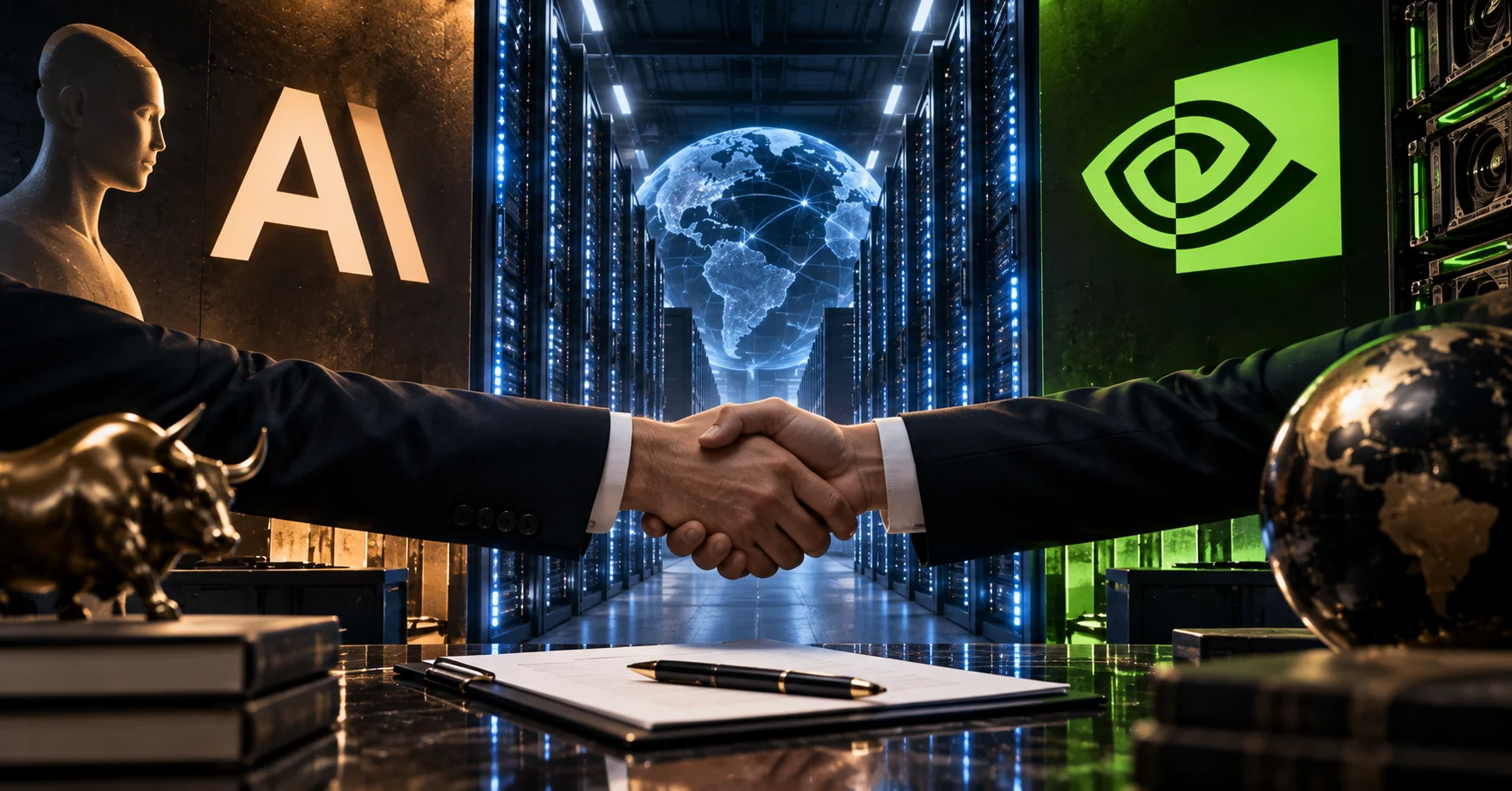
Nvidia is considering investing as much as $10 billion and becoming an anchor investor in the potential listing, according to sources cited by Reuters.
The discussions remain under negotiation and the size, valuation and timing of the transaction could change.
But even the possibility illustrates the extraordinary amounts of capital now moving through the frontier artificial-intelligence industry.
Anthropic raised $65 billion in May at a post-money valuation of $965 billion.
A $2 trillion valuation would therefore represent another enormous increase in the company’s implied value within months.
The growth in Anthropic’s business has also been remarkable.
The company says its annualised revenue run rate exceeded $65 billion by the end of July, compared with approximately $9 billion at the end of 2025.
Reuters reports that a potential listing is expected before the U.S. midterm elections in November.
But Nvidia’s possible role makes the structure of the transaction almost as interesting as its size.
Frontier AI companies require enormous quantities of computing infrastructure.
Much of that infrastructure is built around Nvidia’s processors.
As companies such as Anthropic expand their models and services, they create demand for the computing hardware and infrastructure from which Nvidia derives substantial revenue.
Nvidia could now also become a major investor in Anthropic itself.
There is nothing inherently improper about that arrangement. Anchor investors are common in major public offerings, and suppliers routinely invest in important customers and emerging markets.
But it demonstrates how increasingly interconnected the economics of frontier AI have become.
AI laboratories raise enormous amounts of capital to finance computing infrastructure.
Infrastructure providers benefit from that spending.
Those providers can then invest some of their capital back into the companies generating the demand.
The result is an ecosystem in which supplier, customer and investor relationships increasingly overlap.
That does not establish that AI valuations are unsustainable.
Anthropic’s rapidly increasing revenue provides an important counterpoint to any simplistic argument that the valuations are based purely on speculation.
But a potential $2 trillion valuation would move the question onto an entirely different scale.
Public-market investors may soon be asked to decide how much future growth is already reflected in valuations measured in trillions of dollars.
And behind that valuation sits another question.
What happens when the companies supplying the AI boom increasingly become investors in the companies buying their products?
More to follow.
Source: Reuters
Join the Dissenting Citizen Newsletter
Independent news and commentary delivered directly to your inbox.