









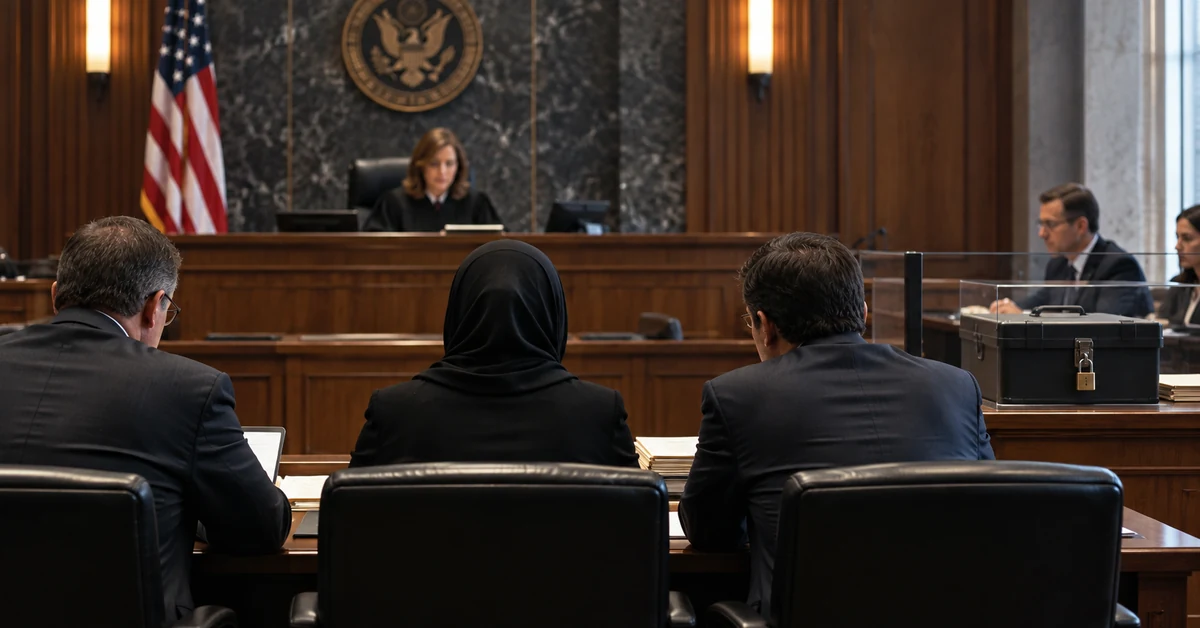
The United States has deported a lawful permanent resident through a specialised terrorism court that had never been used in the 30 years since Congress created it.
Nazira Haji Zada, a 47-year-old Afghan national who had been living in Fort Worth, Texas, was removed to Afghanistan after proceedings before the Alien Terrorist Removal Court.
The Justice Department says Haji Zada supported an ISIS-inspired plot by members of her family to carry out a mass shooting in the United States on Election Day 2024. She was never criminally charged.
Her son, Abdullah Haji Zada, and son-in-law, Nasir Ahmad Tawhedi, were arrested in October 2024 after buying two AK-47-style rifles and 500 rounds of ammunition from an undercover FBI employee.
Abdullah later pleaded guilty and was sentenced to 15 years in federal prison. Tawhedi pleaded guilty to terrorism-related offences including conspiring and attempting to provide material support to ISIS.
Prosecutors alleged that Nazira Haji Zada supported the plot and helped conceal the family’s activities. According to the Justice Department, the family sold property and bought one-way tickets to Afghanistan for Haji Zada and other family members shortly before the planned attack, while Abdullah and Tawhedi were to remain in the United States.
A court unused since 1996
Congress established the Alien Terrorist Removal Court in 1996 to provide a mechanism for removing non-citizens deemed terrorists.
Unlike a criminal prosecution, the government must establish terrorism status by a preponderance of the evidence.
The court can also consider classified information that the government says cannot safely be disclosed publicly for national-security reasons. The statute provides for legal representation and allows appeals to the US Court of Appeals for the District of Columbia Circuit.
No administration had previously used the court.
The Justice Department filed its application against Haji Zada on July 15. She appeared before Chief Judge Joan N. Ericksen on July 30 and ultimately conceded that she qualified as an “alien terrorist”, waived an appeal and accepted removal.
The court issued the removal order on August 20. It was unsealed after she had been returned to Afghanistan.
Classified evidence
The case has nevertheless opened a dispute over what evidence someone facing removal should be entitled to see.
The government says it used classified information to establish its case and also supplied Haji Zada and her two federal public defenders with approximately half a terabyte of other documents.
Her lawyers say they were unable to examine the classified evidence relied upon against her.
They argue that the procedure raises serious constitutional due-process problems and say Haji Zada’s decision to accept removal should not be interpreted as accepting the legitimacy of the court. They expect its procedures eventually to face a constitutional challenge.
Attorney General Todd Blanche defended the government’s use of the tribunal, describing the first case as a victory for national security and saying the Justice Department would use the legal tools available to remove foreign nationals who support terrorism.
The immediate case is over.
The larger legal question created by it is not.
After sitting unused for three decades, the United States now has an operational mechanism for removing lawful permanent residents accused of terrorism through proceedings in which classified evidence can play a role without being fully disclosed to the person facing deportation.
Sources
- Reuters – Afghan woman deported in first use of terrorism court
- US Department of Justice – first Alien Terrorist Removal Court removal
- Associated Press – deportation and due-process dispute
Join the Dissenting Citizen Newsletter
Independent news and commentary delivered directly to your inbox.
Breaking stories, analysis and commentary throughout the day.
Follow @VoxDissent →