









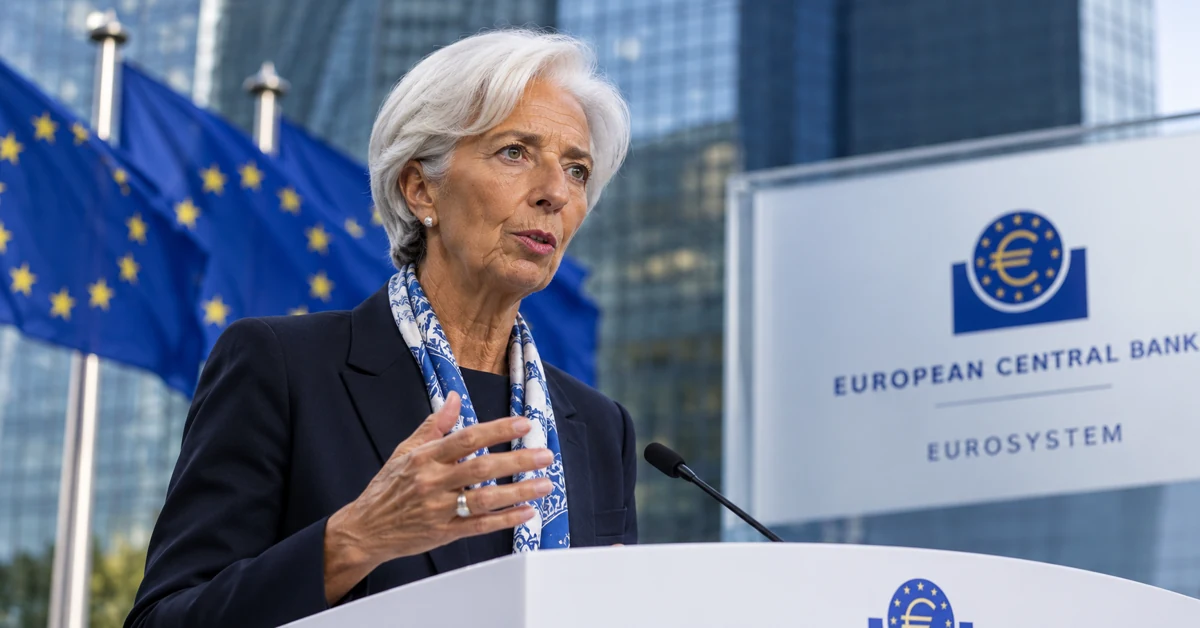
ECB President Christine Lagarde has warned that Europe’s growing dependence on foreign AI could give the United States strategic leverage over critical parts of the European economy.
Lagarde expects artificial intelligence increasingly to help screen goods at borders, select tax returns for audit, dispatch trains, monitor hospital patients and clear bank payments.
If those systems depend heavily on American technology, control of access becomes more than a commercial issue.
A foreign provider changing its terms or withdrawing access could disrupt several sectors simultaneously.
Lagarde warned that such dependence could ultimately become bargaining leverage in disputes over tariffs, digital taxes or other areas of transatlantic policy.
Europe already lacks enough data-centre capacity to meet demand.
She says the gap could grow more than sixfold within a decade.
Her answer is not necessarily to beat American frontier models outright.
Europe needs sufficient domestic computing infrastructure and “good enough” European models capable of operating on it.
From energy dependence to AI dependence
Europe has already learned what happens when strategically important infrastructure relies heavily on external suppliers.
AI potentially reaches deeper.
Energy powers an economy.
AI could increasingly make decisions inside it.
Borders, hospitals, banks, transport networks and government administration are precisely the systems countries normally regard as strategically sensitive.
Europe does not need to dominate every layer of artificial intelligence.
It does need to decide how much of its critical infrastructure it is comfortable allowing somebody else to control.
Sources
Join the Dissenting Citizen Newsletter
Independent news and commentary delivered directly to your inbox.
Breaking stories, analysis and commentary throughout the day.
Follow @VoxDissent →