









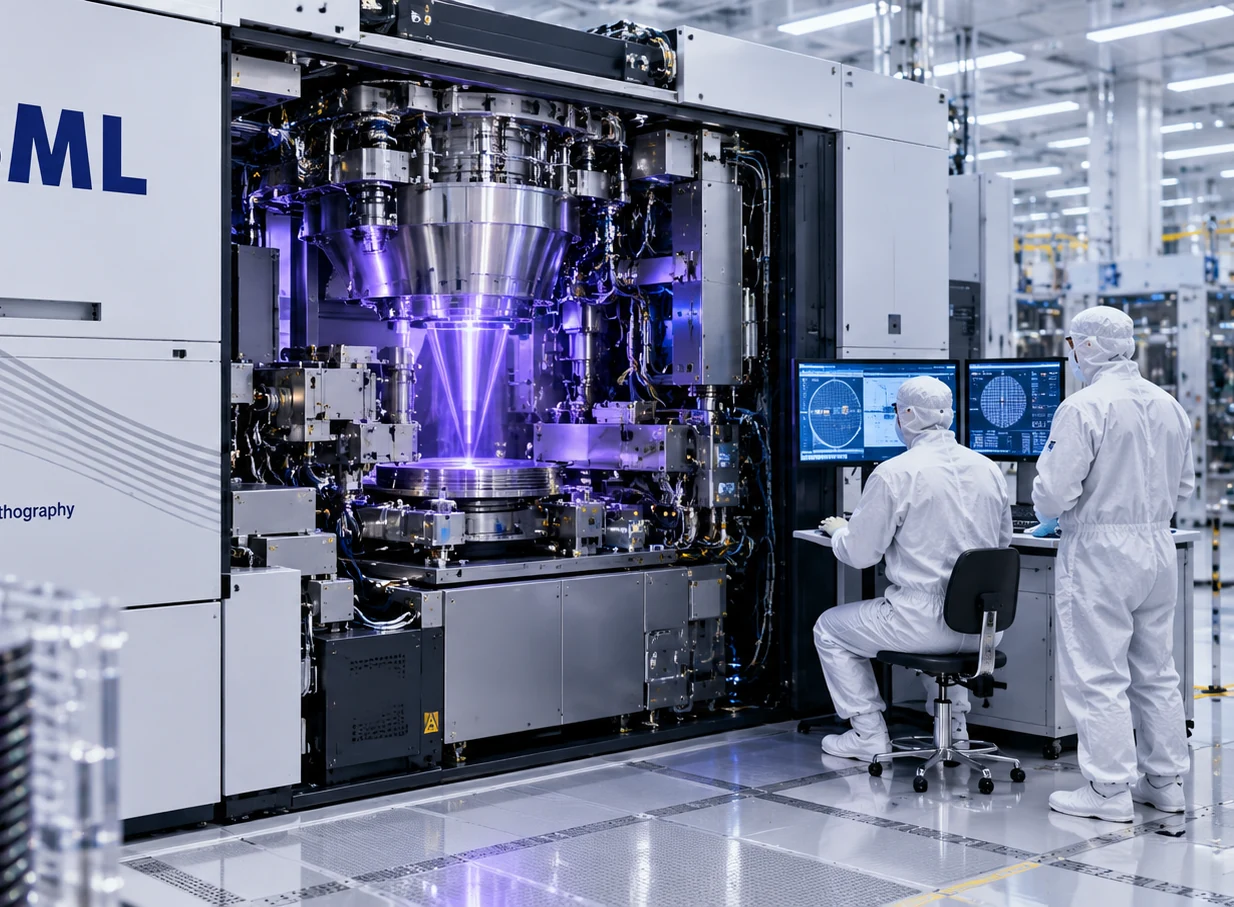
ASML is strengthening its extraordinary position at the heart of the global AI race as the world’s largest chipmakers commit to its next generation of semiconductor manufacturing machines.
The Dutch company’s existing EUV lithography systems cost around $200 million each and are nearly sold out through 2027.
Its new High NA machines cost approximately $400 million each and can print features around 40% smaller than conventional EUV.
Intel says it has already processed more than one million High NA wafers.
Samsung and SK Hynix plan to adopt the technology from 2028, with TSMC following from 2030.
A 94% MARKET SHARE
JPMorgan estimates ASML controlled 94% of the global lithography market in 2025.
At the technological frontier, its position is even stronger.
ASML has no commercial competitor in EUV lithography, the technology required to manufacture the smallest circuitry used in the world’s most advanced commercial AI chips.
The company is also working with TSMC on larger photomasks for the High NA generation.
Much of the AI race is discussed in terms of Nvidia’s chips or the models produced by OpenAI, Anthropic and their competitors.
Underneath them sits a remarkable physical bottleneck.
The world’s most advanced AI ultimately depends on machines costing $400 million each that only one company can currently build.
Sources
Reuters: ASML extends chipmaking dominance as customers embrace High NA
ASML: TSMC and ASML announce High NA photomask initiative
Join the Dissenting Citizen Newsletter
Independent news and commentary delivered directly to your inbox.
Breaking stories, analysis and commentary throughout the day.
Follow @VoxDissent →