








Britain’s inflation outlook has deteriorated sharply enough that three Bank of England policymakers already want interest rates increased.
The Bank held its benchmark rate at 3.75% on Thursday, but the 6-3 vote conceals a significant change in the economic outlook.
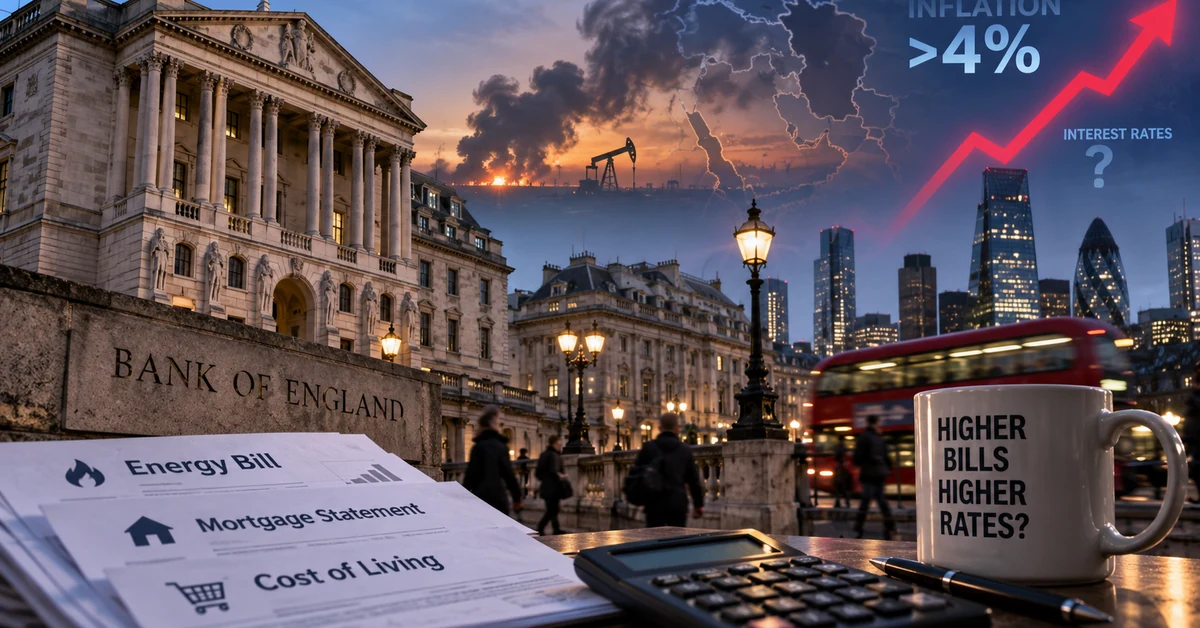
UK inflation is now expected to reach around 3.75% in the final quarter of this year and climb slightly above 4% in early 2027.
In July, the Bank expected a peak of 3.2%.
Almost all of that deterioration comes from energy.
The Bank says developments in wholesale and refined oil and gas prices account for nearly the entire upward revision since July as the Middle East conflict has become more prolonged than previously expected.
For British households, that creates the possibility of being hit twice by the same overseas shock.
The first effect is already familiar.
Higher oil and gas prices feed into petrol, electricity, heating and eventually the prices businesses charge for goods and services.
The Ofgem energy price cap will rise to £1,723 for October to December, and the Bank now expects it to increase substantially again in the first quarter of 2027 if other conditions remain unchanged.
The second effect comes through interest rates.
The Bank cannot produce more oil or end a Middle Eastern conflict by changing Bank Rate. What it can do is try to prevent an initial energy shock from becoming persistent domestic inflation as businesses raise prices and workers seek higher wages to recover lost purchasing power.
Three members of the nine-person Monetary Policy Committee – Huw Pill, Megan Greene and Catherine Mann – believe that risk is already serious enough to justify raising Bank Rate from 3.75% to 4%.
Their concern is partly about timing.
The projected inflation surge would arrive in early 2027 as another round of wage settlements is being negotiated. They argue that raising rates now could help prevent higher inflation expectations becoming embedded.
Six members, including Governor Andrew Bailey, aren’t there yet.
They acknowledge that energy risks have increased but point to continued weakness in the labour market, easing domestic inflationary pressures and limited evidence so far that the energy shock is generating the feared second-round effects.
Bailey’s position leaves both directions open.
If geopolitical tensions ease and inflationary pressure subsides, he says monetary easing could come back into view.
If the shock persists and begins feeding more broadly into wages and prices, the Bank stands ready to act.
That leaves British households unusually exposed to events far beyond Britain’s borders.
A prolonged energy shock can make filling the car and heating the home more expensive.
If it lasts long enough to change inflation expectations, the response intended to contain it can make mortgages, loans and business finance more expensive as well.
The Middle East conflict does not need to reach Britain physically to impose a cost on British households.
The transmission mechanism is already running through their bills – and could increasingly run through their borrowing costs too.
Sources
- Bank of England – Monetary Policy Summary and Minutes, September 2026
- Reuters – Bank of England sounds inflation alarm as it holds rates
Join the Dissenting Citizen Newsletter
Independent news and commentary delivered directly to your inbox.
Breaking stories, analysis and commentary throughout the day.
Follow @VoxDissent →