





Education Secretary Lucy Powell has said it is unacceptable for schools to require young girls to wear the hijab.
Asked directly in the Commons whether it was acceptable for young children to be compelled to wear one as part of their school uniform, Powell answered:
“No.”
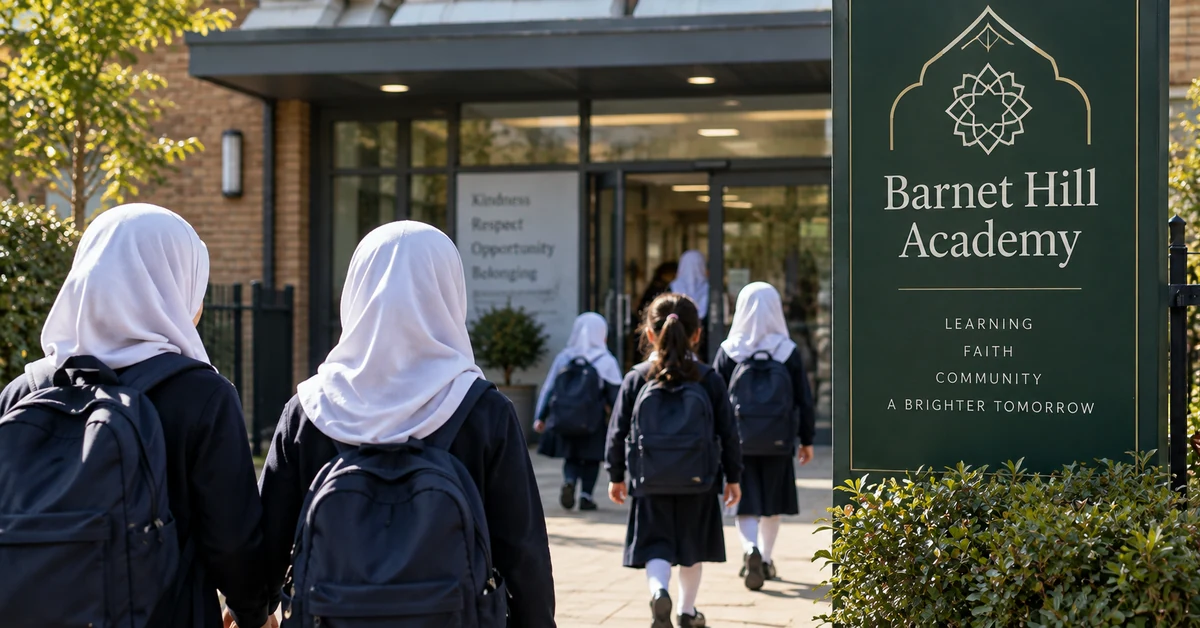
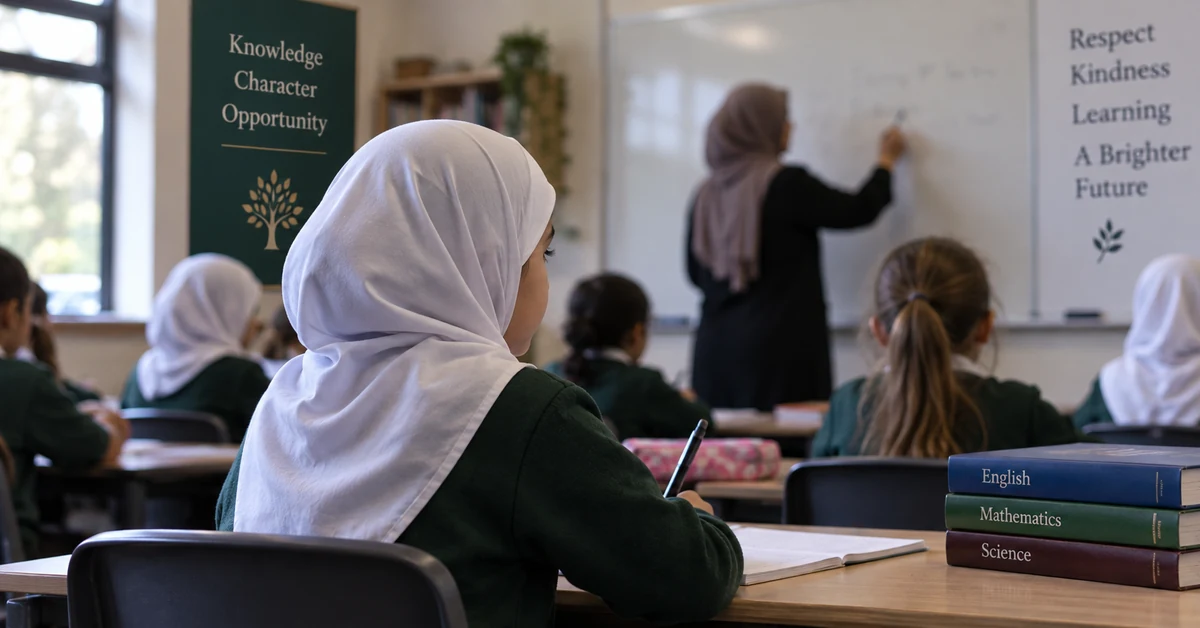
Yet Barnet Hill Academy, an Islamic primary school in north London that entered the state-funded sector this month, still publishes a uniform policy listing a white hijab for girls at Key Stage 2, beginning at around age seven.
And its exemption is specific.
The school’s website states that the hijab “is not a requirement for any non-Muslim students attending the school.”
Three accounts of the same policy
Powell told Parliament that the Department for Education had been in “close touch” with the school and understood that it had clarified the hijab was not compulsory.
Barnet Council has offered a different explanation, saying Muslim girls are required to wear it only during acts of worship.
The school’s published uniform policy says something different again.
It lists the hijab among the uniform items for girls, says pupils are expected to wear the prescribed uniform and explicitly exempts non-Muslim pupils from the hijab requirement.
If the hijab is optional for everybody except during worship, the obvious question is why the published exemption is defined by religion.
Referred to the equality watchdog
Shadow Education Secretary Laura Trott and Shadow Equalities Minister Joy Morrissey have referred the school and Barnet Council to the Equality and Human Rights Commission.
They argue that applying different uniform obligations according to whether a girl is regarded as Muslim may breach equality and human-rights protections.
The referral is not a finding that the school has acted unlawfully.
Barnet Hill Academy says its uniform and Islamic dress code reflect the school’s religious ethos, while Barnet Council maintains that its policy complies with the law.
But the dispute has now moved beyond one school’s dress code.
The National Secular Society says it has identified eight other state-funded Islamic schools whose published policies require girls to wear hijabs.
Government doesn’t know how widespread it is
The Department for Education cannot currently say how many state-funded schools require girls to wear the hijab.
In a parliamentary answer published on September 10, the department said it does not collect individual schools’ uniform policies.
Instead, schools are expected to ensure their own rules comply with the Equality Act 2010 and Human Rights Act 1998.
That leaves the Government in an awkward position.
Its Education Secretary has now established a clear principle: young girls should not be compelled by their schools to wear hijabs.
A newly state-funded primary school’s published policy still lists the hijab for girls from around seven while expressly exempting pupils who are not Muslim.
And the Government does not know how many other state-funded schools have similar rules.
The immediate issue should be straightforward to resolve.
If Barnet Hill’s hijab really is optional, its published uniform policy can simply say so.
Sources
- Barnet Hill Academy – current uniform policy
- Parliamentary exchange – Powell questioned over compulsory hijab
- National Secular Society – mandatory hijab policies in state-funded schools
- UK Parliament – Department for Education does not track school hijab requirements
Join the Dissenting Citizen Newsletter
Independent news and commentary delivered directly to your inbox.
Breaking stories, analysis and commentary throughout the day.
Follow @VoxDissent →