






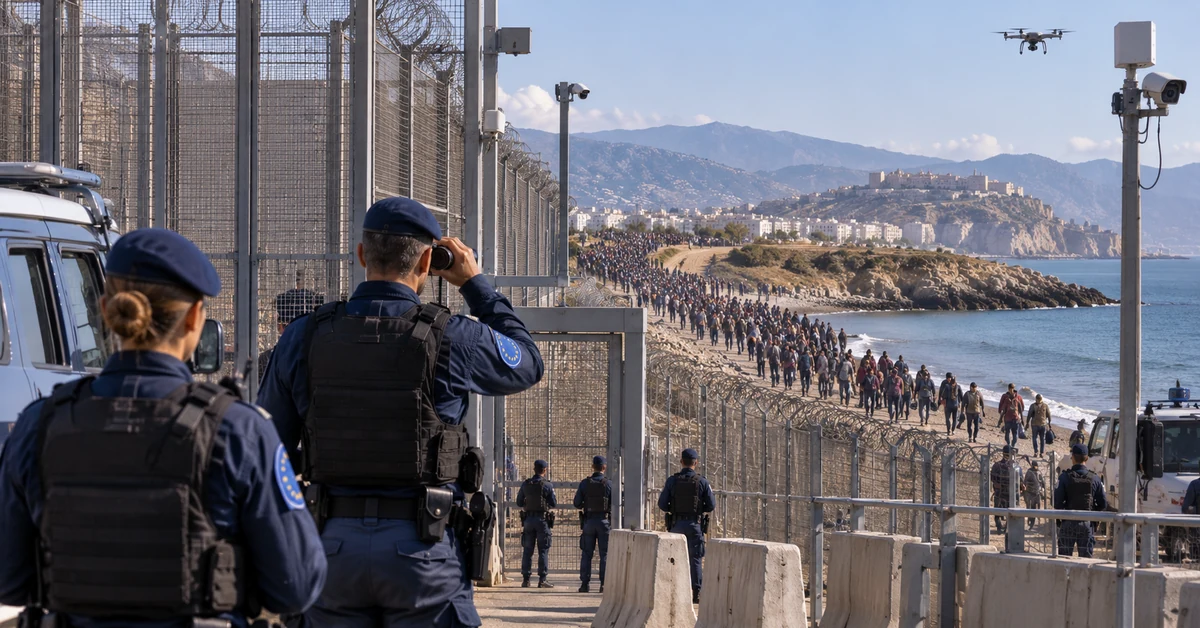
The European Union is preparing emergency powers for situations in which mass movements of migrants are deliberately “engineered and weaponised”, allowing normal procedures to be temporarily altered when a border crisis meets strictly defined criteria.
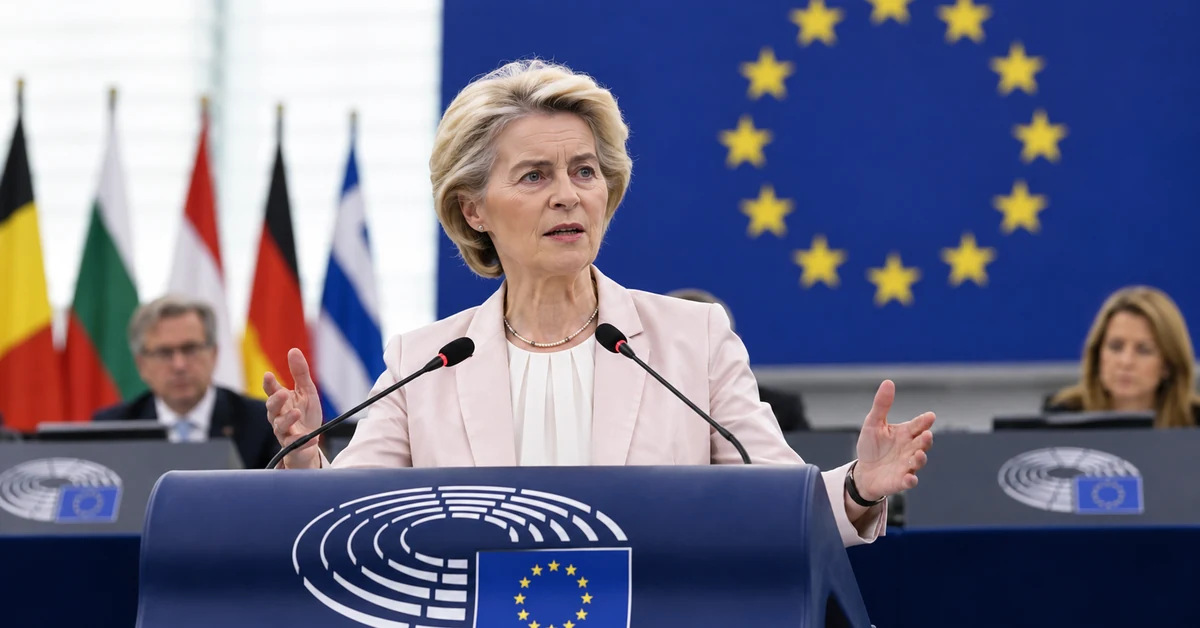
European Commission President Ursula von der Leyen announced the proposed European Emergency Response Framework following a summer of pressure at Europe’s external borders, including the crisis in Ceuta.
Her language marks an important shift in how Brussels describes some migration crises.
The Commission is explicitly recognising that large movements of people can be created or exploited not simply by smugglers, but by hostile actors seeking to place political and security pressure on an EU country.
“Europe needs the means to protect its borders at all times,” von der Leyen said, particularly when mass movements are “engineered and weaponised”.
When migration becomes an instrument of pressure
The proposed framework would not automatically apply whenever migrant arrivals increase.
Von der Leyen said it would operate under strictly defined activation criteria and allow only time-limited, specifically defined flexibility from standard procedures.
The Commission has not yet published the detailed legal mechanism.
That means it is not yet established which asylum or border procedures could be modified, how far those changes could go or exactly what evidence would be required to establish that migration had been deliberately engineered.
Claims that the EU has decided to suspend ordinary asylum protections therefore go further than the proposal currently establishes.
Von der Leyen simultaneously said the EU would continue complying with fundamental rights.
Her next line was considerably harder:
“It is we, Europeans, who decide who comes to our Union and under what circumstances.”
The lesson from Ceuta
Von der Leyen specifically referred to the summer crisis in Ceuta while setting out the case for stronger European border mechanisms.
She told Spain that “Ceuta’s border is a European border” and said Europe would support it.
The Commission’s broader package includes strengthening Frontex, accelerating returns, improving early-warning systems and increasing cooperation with countries outside the EU.
The existing EU Pact on Migration and Asylum remains the normal framework. The proposed emergency mechanism is intended for exceptional situations in which ordinary migration pressure becomes something different.
That distinction matters because migration can be two things simultaneously.
The people arriving at a border can have individual humanitarian and protection claims.
A government or other hostile actor can also deliberately create or manipulate their movement to put another country under pressure.
The first does not make the second impossible.
Who controls the rules during a manufactured crisis?
That is the problem Brussels is now trying to address.
Ordinary asylum rules are designed around people arriving and having their individual circumstances assessed under established procedures.
A deliberately engineered mass movement introduces another actor into that relationship: whoever created the pressure.
If existing procedures must operate completely unchanged regardless of the scale or deliberate construction of the crisis, the actor engineering the movement gains some ability to determine when and under what conditions those procedures are overwhelmed.
The Commission’s proposed answer is temporary flexibility rather than abandoning the underlying system.
Whether that balance survives scrutiny will depend on details Brussels has not yet published: what can be changed, who decides that the emergency threshold has been reached and which protections remain untouchable.
The significant change has already happened at the level of policy.
The EU is no longer treating every mass migration event purely as a migration-management problem.
It is explicitly preparing for the possibility that the movement of people itself can be used as a weapon.
Sources
- Reuters – EU plans emergency framework for weaponised mass migration
- European Commission – State of the Union migration measures
Join the Dissenting Citizen Newsletter
Independent news and commentary delivered directly to your inbox.
Breaking stories, analysis and commentary throughout the day.
Follow @VoxDissent →