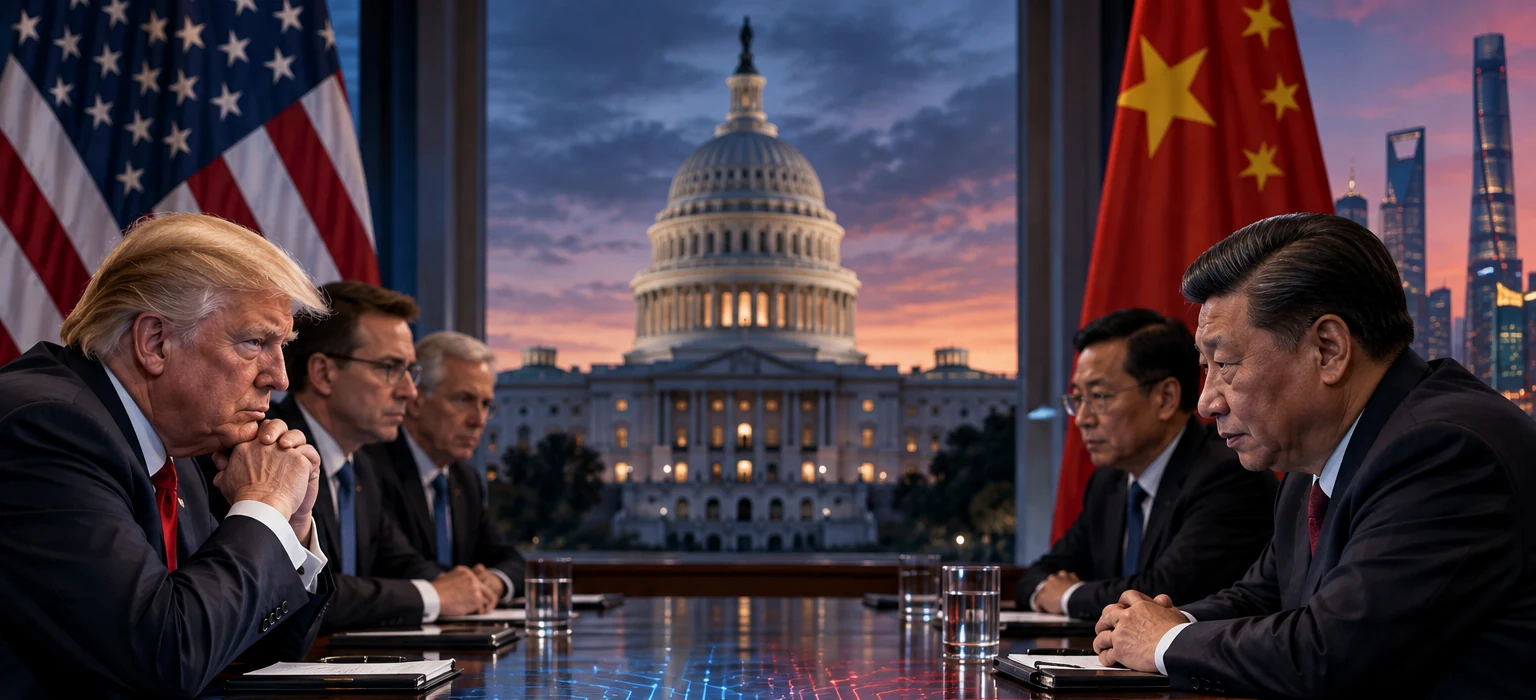








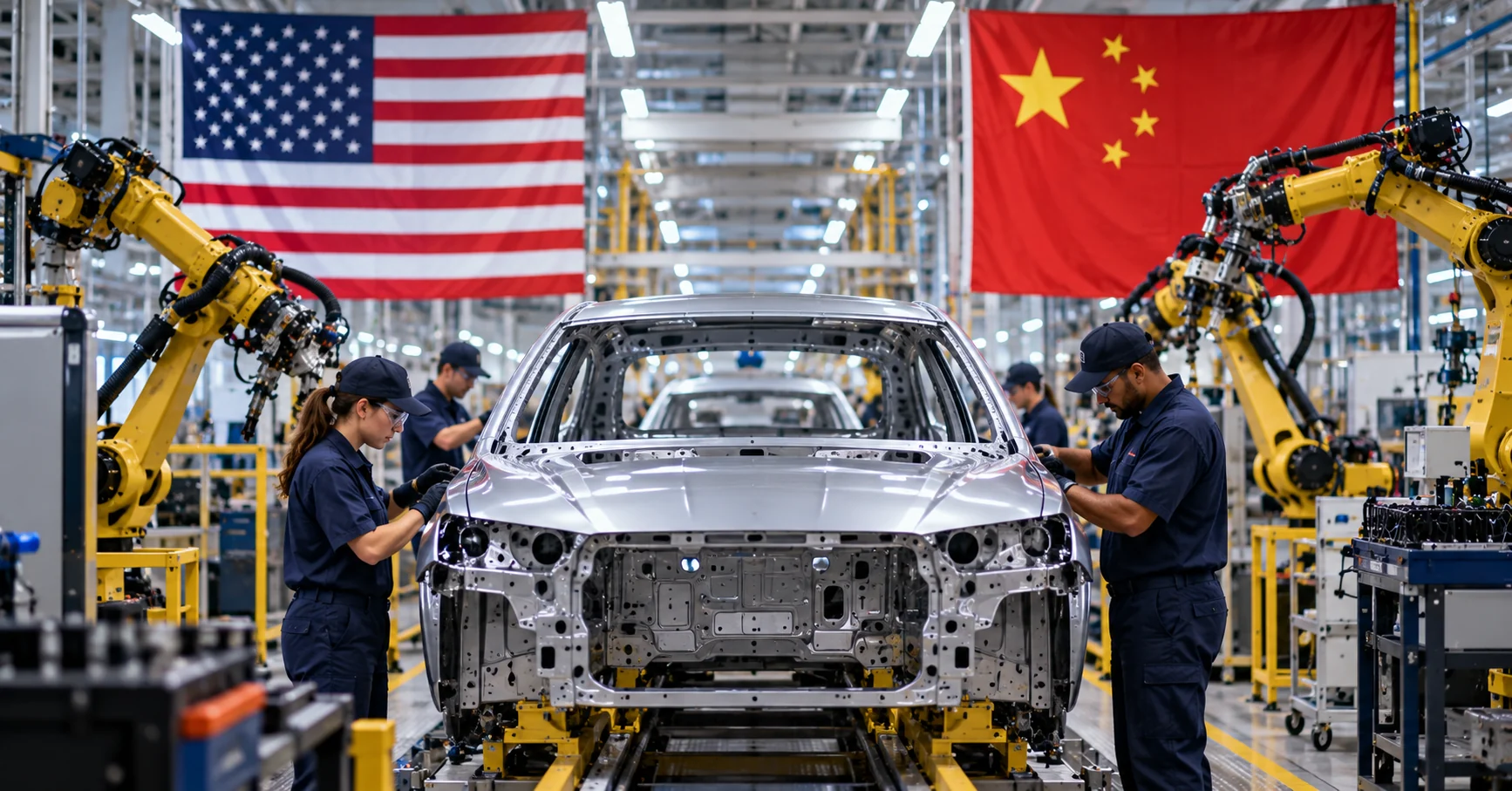
President Donald Trump has said Chinese automakers should be allowed to build vehicles in the United States provided their factories employ American workers.
Trump distinguished Chinese investment inside the United States from companies manufacturing vehicles in Mexico and exporting them across the border into the American market.
The distinction reflects a familiar element of Trump’s industrial policy: foreign capital can be beneficial if manufacturing, employment and investment are brought onto American soil.
But applying that principle to Chinese automakers creates a significant conflict with existing U.S. policy.
Current Commerce Department rules restrict connected-vehicle hardware and software linked to China and Russia.
The restrictions, which took effect in stages beginning in 2025, were introduced on national-security grounds and effectively prevent Chinese-linked manufacturers from competing normally in the American connected-passenger-vehicle market.
The security argument rests partly on how dramatically cars have changed.
Modern vehicles are increasingly sophisticated computing platforms.
They contain cameras, sensors, communications equipment and software capable of collecting, processing and transmitting substantial quantities of data.
That means the argument over Chinese vehicles is no longer simply about whether American manufacturers can compete with cheaper foreign cars.
It is also about control of software, data and strategically important supply chains.
The American automotive industry is pushing Washington to go further.
The Alliance for Automotive Innovation, whose members include GM, Ford, Toyota, Volkswagen, Hyundai, Honda and Stellantis, has urged Congress to make the exclusion of Chinese connected vehicles permanent.
Trump’s comments therefore expose two competing versions of economic nationalism.
One says Chinese manufacturers represent a strategic risk regardless of where their factories are located.
The other says foreign companies should be encouraged to invest in the United States if doing so creates American factories and American jobs.
Local production could address concerns about employment, manufacturing capacity and dependence on imported finished vehicles.
It would not automatically resolve concerns about Chinese-controlled software, data or corporate ownership.
Trump has not changed existing U.S. law or regulation, and the restrictions remain in place.
But if his comments develop into policy, Washington could face a significant argument over one of the strongest areas of bipartisan economic resistance to China.
Should America keep Chinese automakers out because of strategic risk, or make them manufacture in America, employ Americans and invest their capital in American factories?
More to follow.
Sources: Reuters, 12 September 2026; Alliance for Automotive Innovation
Join the Dissenting Citizen Newsletter
Independent news and commentary delivered directly to your inbox.