


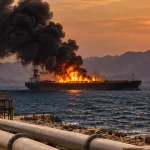


Saudi Arabia has temporarily shut the oil pipeline designed to bypass the Strait of Hormuz after drone attacks, just as Houthi forces have reportedly seized a strategically important island controlling access to the Red Sea.
The simultaneous developments are putting increasing pressure on the alternative routes on which global energy markets depend when the Persian Gulf is disrupted.
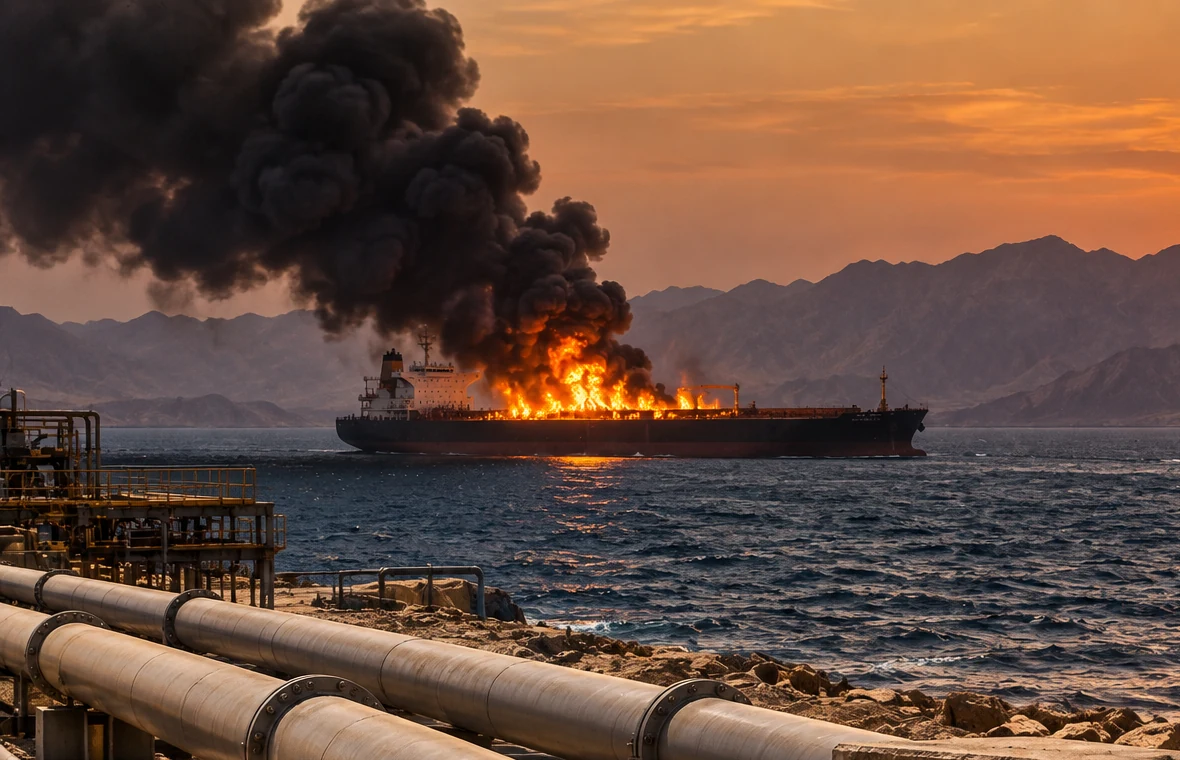
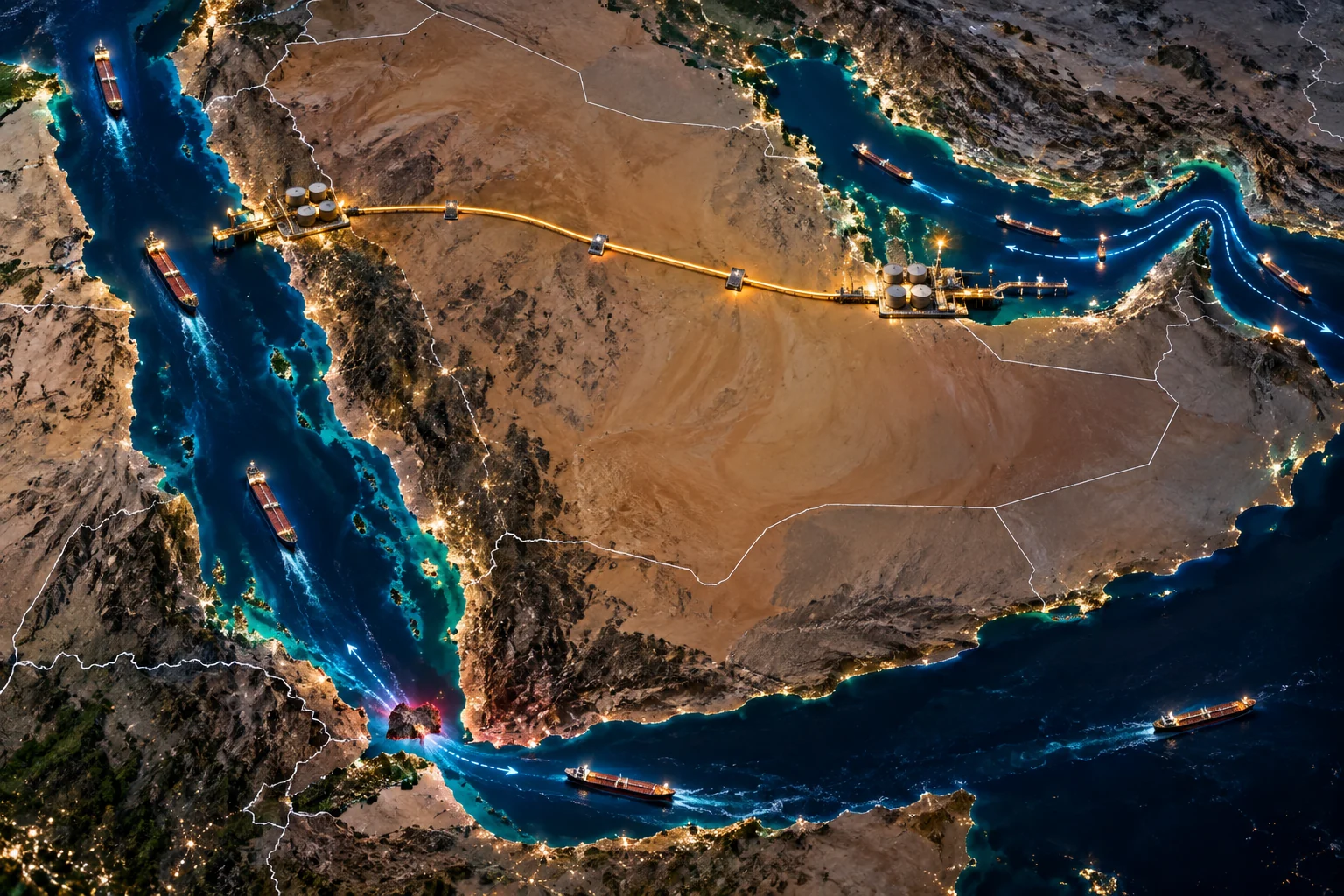
Saudi Arabia’s East-West pipeline runs approximately 1,200 kilometres across the kingdom, allowing oil produced near the Gulf to reach export facilities on the Red Sea without passing through the Strait of Hormuz.
With Hormuz already severely disrupted by the regional conflict, the pipeline had become increasingly important.
Reuters reports that it was carrying approximately 4–5 million barrels of oil per day, equivalent to roughly 4–5% of global oil supply.
It has now been temporarily shut following drone attacks.
Saudi Arabia and Iraq agree that the drones involved originated from Iraqi territory.
But the group responsible has not been publicly identified, and the pipeline attack should not be attributed to Yemen’s Houthis without evidence.
Iraq is investigating and has dismissed the military commander responsible for Maysan province.
At almost the same time, pressure is increasing at another of the world’s most important maritime chokepoints.
Four Yemeni government sources told Reuters that Houthi forces have seized Perim Island.
The island sits in the Bab el-Mandeb Strait, the narrow southern entrance connecting the Red Sea with the Gulf of Aden and the wider Indian Ocean.
Control and security around Bab el-Mandeb matter enormously to shipping moving between Asia, the Middle East and Europe through the Red Sea and Suez Canal.
The combination therefore creates a particularly serious energy-security problem.
The Strait of Hormuz is already disrupted.
Saudi Arabia’s principal pipeline alternative has now been attacked and temporarily shut.
And the southern entrance to the Red Sea is facing growing pressure from the Houthi advance.
Oil prices have consequently climbed back above $100 a barrel, according to Reuters.
The military implications are also widening.
Reuters reports that Saudi Crown Prince Mohammed bin Salman has sought direct U.S. military assistance against the Houthi advance.
Washington has so far declined direct military intervention while providing intelligence and targeting assistance.
The developments illustrate why redundancy is central to energy security.
Alternative pipelines and shipping routes are intended to ensure that disruption at one chokepoint does not stop energy reaching global markets.
But that protection weakens dramatically when conflict begins affecting the alternatives simultaneously.
Energy security isn’t simply having an alternative route. It is having an alternative that still works when the war reaches it.
More to follow.
Source: Reuters, 12 September 2026
Join the Dissenting Citizen Newsletter
Independent news and commentary delivered directly to your inbox.