








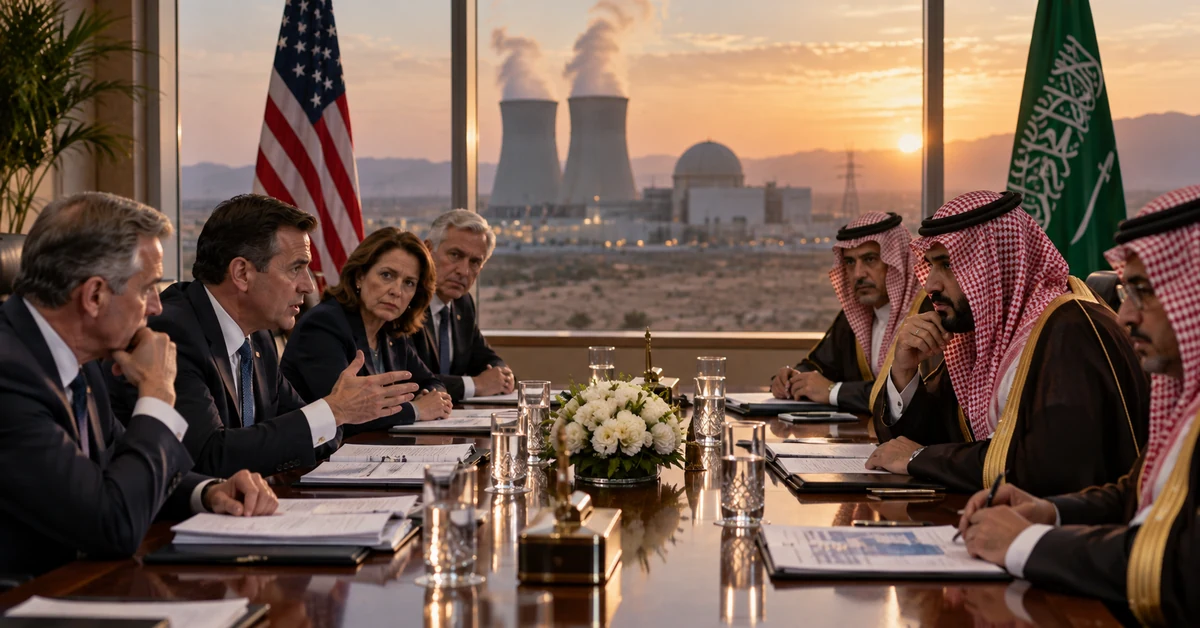
Saudi Arabia wants American nuclear technology to build civilian power stations.
The argument in Washington is increasingly about what it should have to give up in return.
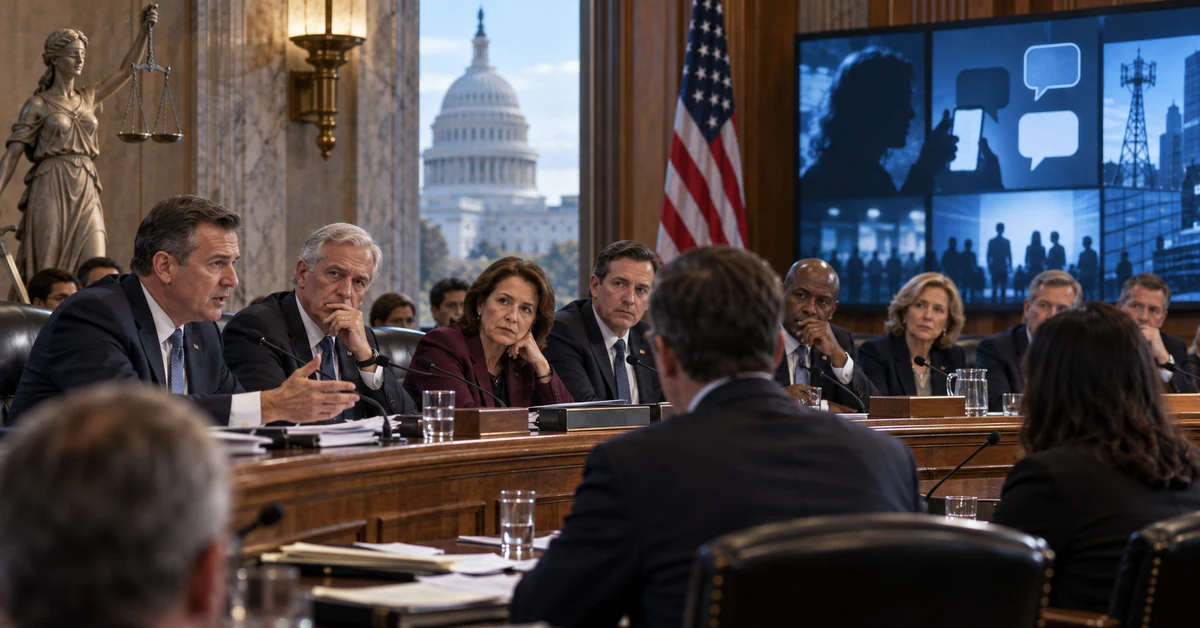
Four House Democrats have introduced a Joint Resolution of Disapproval seeking to prevent President Donald Trump’s proposed 30-year civil nuclear cooperation agreement with Riyadh from taking effect.
The agreement is currently undergoing the 90-day congressional review required under US nuclear law.
Unless Congress successfully blocks it, it can take effect when that process expires.
The immediate political battle is therefore over whether lawmakers can stop the agreement.
The more important policy question concerns what is inside it.
Saudi Arabia would not be prohibited from enriching uranium or reprocessing spent nuclear fuel.
Both technologies have legitimate civilian applications.
Both are also sensitive because they can contribute to pathways towards producing material suitable for nuclear weapons.
That makes the comparison with another American nuclear partner particularly important.
The United Arab Emirates signed its own civil nuclear cooperation agreement with Washington in 2009.
Abu Dhabi agreed not to enrich uranium or reprocess spent fuel domestically.
Those commitments became known as the “gold standard” for US nuclear cooperation.
Saudi Arabia has not accepted the same restrictions.
Representatives Gregory Meeks, Brad Sherman, John Garamendi and Don Beyer argue that it should.
Their resolution seeks to block the agreement on the grounds that allowing Saudi Arabia weaker restrictions creates unnecessary proliferation risk.
The Trump administration takes a different position.
It says the agreement contains the nonproliferation protections required by US law.
Saudi Arabia has also been discussing stronger monitoring arrangements with the International Atomic Energy Agency.
But it has not committed to the IAEA’s Additional Protocol, which provides inspectors with expanded access and information intended to help detect undeclared nuclear activities.
The disagreement therefore isn’t fundamentally about whether Saudi Arabia should be allowed nuclear electricity.
The kingdom has ambitious plans to diversify its energy system and reduce the amount of oil burned domestically for power.
The proposed American agreement could support construction of AP1000 reactors in projects worth tens of billions of dollars.
US nuclear company Westinghouse would stand to benefit significantly.
The question is what safeguards should accompany that cooperation.
The UAE provides an obvious benchmark.
If one Gulf state was prepared to renounce domestic enrichment and reprocessing to obtain American nuclear technology, critics want to know why its neighbour should receive different terms.
Saudi Arabia’s geopolitical circumstances make that question more sensitive.
Crown Prince Mohammed bin Salman has previously said publicly that if Iran obtained a nuclear weapon, Saudi Arabia would need one too.
That does not establish that Riyadh’s current civilian nuclear programme is intended to produce weapons.
It does explain why enrichment and reprocessing provisions receive unusual scrutiny.
There is another unresolved issue.
Trump has said the nuclear agreement will proceed only if Saudi Arabia normalises relations with Israel.
Yet congressional aides told Reuters that no such condition appears in the agreement itself.
That creates an important distinction between a presidential statement and an enforceable provision.
If normalisation is genuinely a condition of American nuclear cooperation, lawmakers want to understand where that obligation exists and how it would operate.
Congress is also missing part of the documentary record.
A bipartisan group of 18 senators has separately asked the administration to declassify and release two classified side letters associated with the agreement.
Republican Senators Rand Paul and John Kennedy joined Democrats and an independent in that request.
Their argument is straightforward: Congress cannot fully evaluate America’s commitments to Saudi Arabia if parts of those commitments remain unavailable.
Timing makes the issue more complicated.
The 90-day statutory review clock is already running.
But House Speaker Mike Johnson sent representatives home on Wednesday until after the November 3 midterm elections.
It is therefore unclear when the House will consider the resolution.
Historically, Congress has never successfully blocked a civil nuclear cooperation agreement through this process.
That does not settle the merits of this one.
Nor does the absence of a blanket enrichment prohibition establish that Saudi Arabia intends to build nuclear weapons.
It leaves a narrower question that the administration should be able to answer on the substance.
The United States previously persuaded another Gulf partner seeking civilian nuclear power to renounce enrichment and reprocessing.
Why should Saudi Arabia receive different terms?
Sources
- Reuters – House Democrats seek to block Saudi nuclear agreement
- House Foreign Affairs Committee Democrats – Joint Resolution of Disapproval announcement
- Reuters – Bipartisan senators seek release of Saudi nuclear side letters
- GovInfo – US-Saudi civil nuclear cooperation agreement congressional document
Join the Dissenting Citizen Newsletter
Independent news and commentary delivered directly to your inbox.
Breaking stories, analysis and commentary throughout the day.
Follow @VoxDissent →