



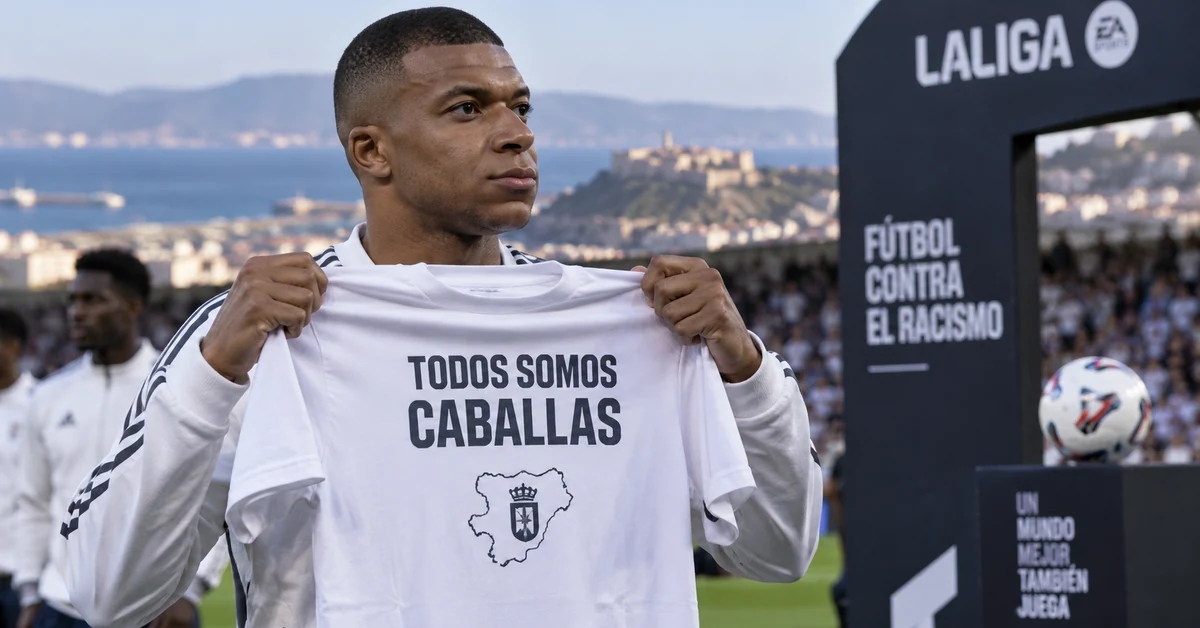
Kylian Mbappé says he obscured part of Real Madrid’s solidarity message for Ceuta because he wanted to acknowledge both the people of Ceuta and migrants who had died during the crisis, rather than present sympathy for one group at the expense of another.
It is the first time Mbappé has publicly explained the decision that prompted criticism from LaLiga president Javier Tebas.
“I didn’t want to prioritise suffering,” Mbappé told AS.
He said he had “all the solidarity” with Ceuta and those affected there, but also wanted to remember migrants who had lost their lives.
That substantially changes what can be said about his original gesture.
Mbappé was not refusing solidarity with Ceuta.
He says he believed the message was incomplete.
‘All the solidarity with Ceuta’
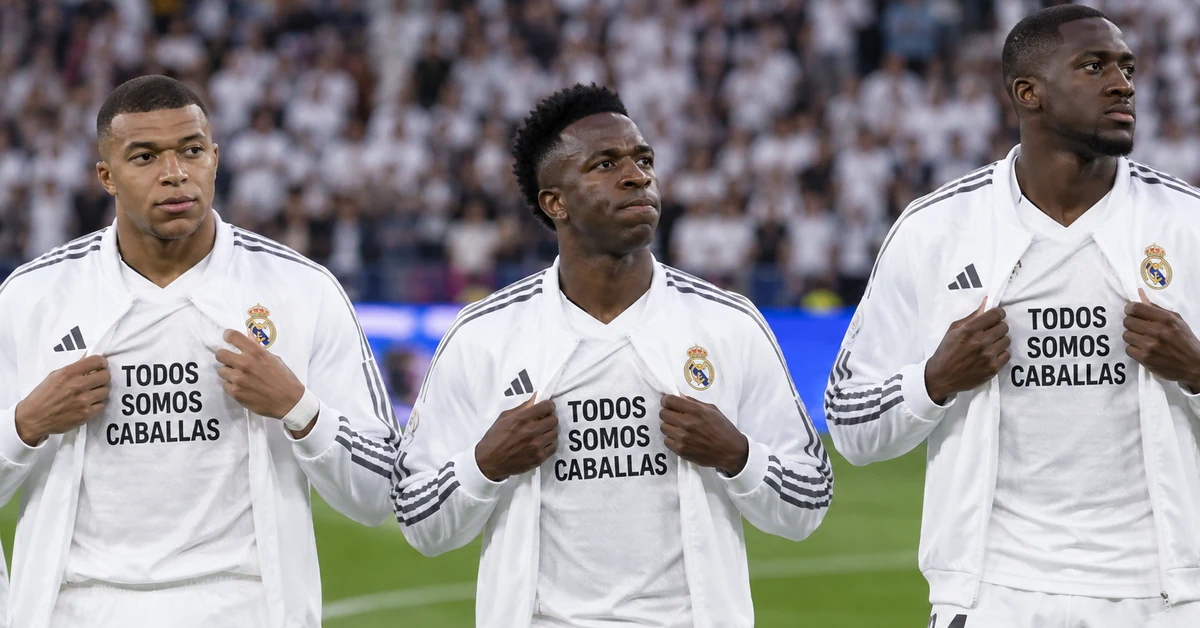
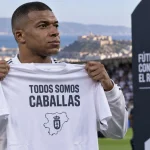
Before Real Madrid’s match against Elche, players were given shirts displaying the “Todos somos caballas” message in support of Ceuta following the migration crisis.
Mbappé, Vinícius Jr and Ibrahima Konaté obscured the message rather than displaying it fully.
Real Madrid subsequently defended their freedom to make that choice.
Tebas took the opposite position.
The LaLiga president said the players should have displayed the shirt because it formed part of an institutional initiative rather than an ideological campaign.
“The player has to wear the shirt,” he said.
Until now, Mbappé’s reason for not doing so was unknown.
He accepts that his gesture could have been interpreted as opposition to the Ceuta campaign.
But he explicitly rejects that interpretation.
His concern, he says, was that solidarity should extend to people suffering on both sides of the migration crisis.
There is no evidence that Vinícius or Konaté acted for the same reason.
The argument has changed
Mbappé’s explanation makes Tebas’s insistence on compulsory participation more interesting.
This is no longer simply a dispute between an institution supporting Ceuta and a player refusing to do so.
Both say Ceuta deserves solidarity.
The disagreement is over whether an individual should be required to communicate the institution’s chosen formulation of that solidarity.
Mbappé believed another group also belonged in the message.
Tebas believes that once a club adopts an institutional initiative, players should display it.
Real Madrid believes its players should retain the choice.
Those are three distinct positions.
Who owns the message?
Football increasingly asks players to participate in campaigns involving issues extending beyond sport.
Usually there is little conflict because players agree with the message or simply participate without comment.
The harder case arrives when somebody broadly supports the cause but disagrees with how the institution has framed it.
Mbappé’s explanation provides exactly that case.
He says he supported Ceuta.
He also wanted to acknowledge migrants who died.
And because the official message did not express both, he chose not to display all of it.
That makes the question larger than one shirt.
If an athlete agrees that people deserve solidarity but disagrees with the message his employer has chosen to express it, who gets the final say over what he publicly communicates?
Sources
- AS – Mbappé explains why he obscured the Ceuta message
- El País – Mbappé explains his gesture towards migrants who died
- Eurosport – Mbappé response and Tebas controversy
Join the Dissenting Citizen Newsletter
Independent news and commentary delivered directly to your inbox.
Breaking stories, analysis and commentary throughout the day.
Follow @VoxDissent →