







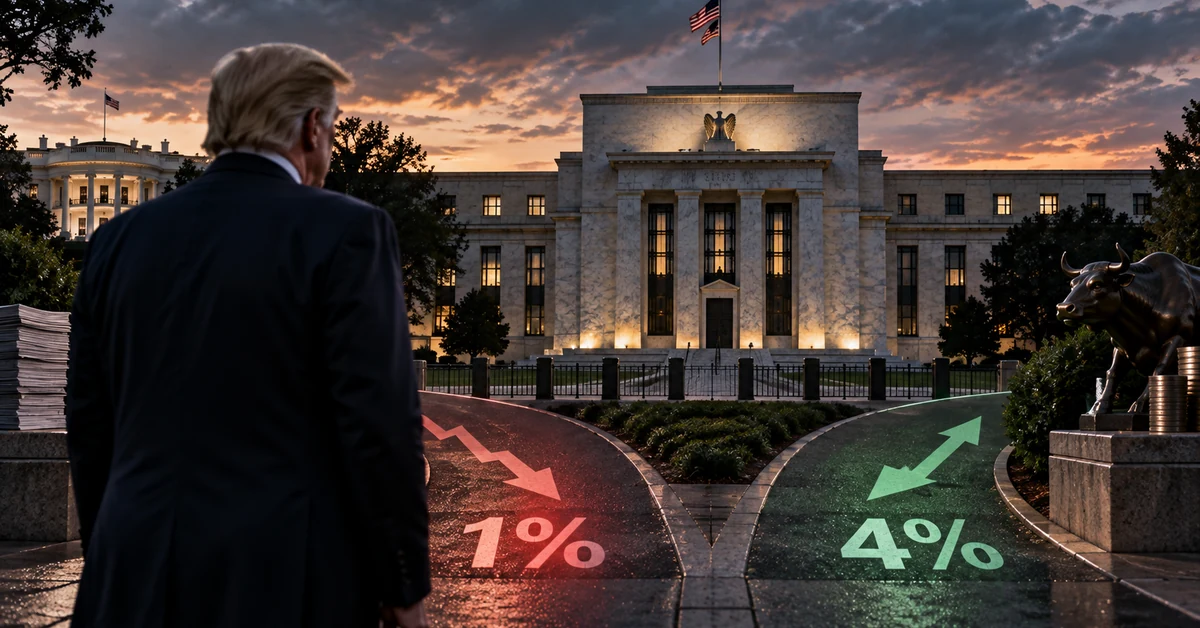
President Donald Trump has demanded that US interest rates be cut to 1% or lower, hours after the Federal Reserve moved in the opposite direction and raised borrowing costs.
The Fed unanimously increased its benchmark federal funds target range by a quarter-point to 3.75%-4.00% on Wednesday, its first rate increase since 2023.
Later the same day, Trump said rates should be at 1% or below and called for them to be reduced quickly.
The contrast puts the president increasingly at odds with a central bank now led by his own appointee, Fed Chair Kevin Warsh.
Fed expects further tightening
Warsh supported Wednesday’s increase alongside every other voting member of the Federal Open Market Committee.
The Fed said inflation remains elevated and that higher rates would support a faster return towards its 2% target.
The disagreement may not end with Wednesday’s decision.
New projections show 16 of the Fed’s 18 policymakers expect at least one further rate increase before the end of 2026.
That puts the likely direction of monetary policy even further from Trump’s preferred rate.
Trump wants borrowing costs reduced from their current level to 1% or lower.
Most Fed policymakers currently expect them to rise again.
A test of Fed independence
The Federal Reserve sets monetary policy independently of the White House, although its governors and chair are presidential nominees subject to Senate confirmation.
That arrangement is intended to insulate interest-rate decisions from short-term political pressure.
The tension is particularly significant because Trump appointed Warsh while advocating substantially lower borrowing costs.
Warsh has instead presided over a unanimous rate increase less than two months before the midterm elections.
The Fed says its priority is bringing elevated inflation back under control.
Trump wants substantially cheaper credit.
The distance between those positions is now considerable: a federal funds rate of 3.75%-4.00%, with further tightening expected by most policymakers, against a presidential demand for 1% or lower.
The next question is whether that remains a disagreement over economic policy or develops into a broader confrontation over the independence of the US central bank.
Sources
- Federal Reserve – September 16 FOMC statement
- Reuters – Fed raises rates and signals further tightening
- Reuters – Trump says US interest rates should be 1% or lower
Join the Dissenting Citizen Newsletter
Independent news and commentary delivered directly to your inbox.
Breaking stories, analysis and commentary throughout the day.
Follow @VoxDissent →