




A vessel has been struck by a projectile while transiting the Strait of Hormuz, just days after an attack forced Saudi Arabia to shut the principal pipeline being used to bypass the disrupted waterway. The attacker is not yet known. The strategic problem is already visible.
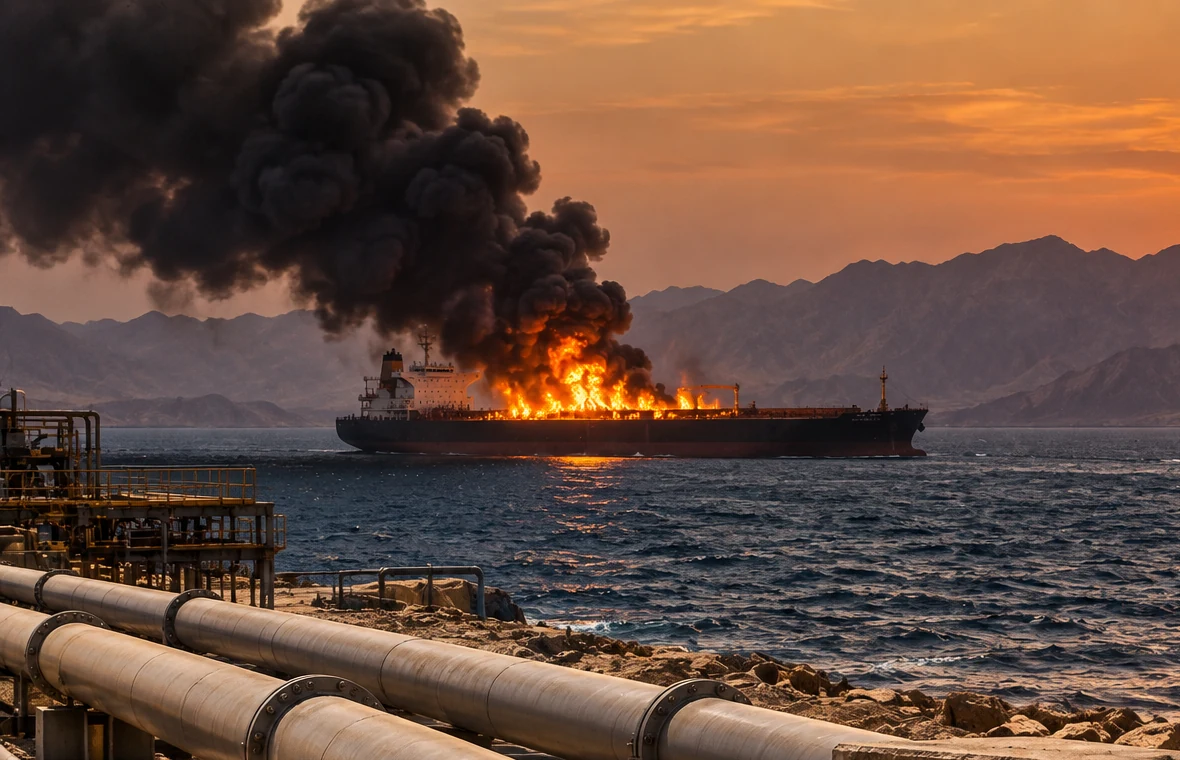
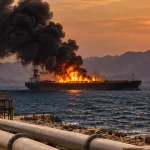
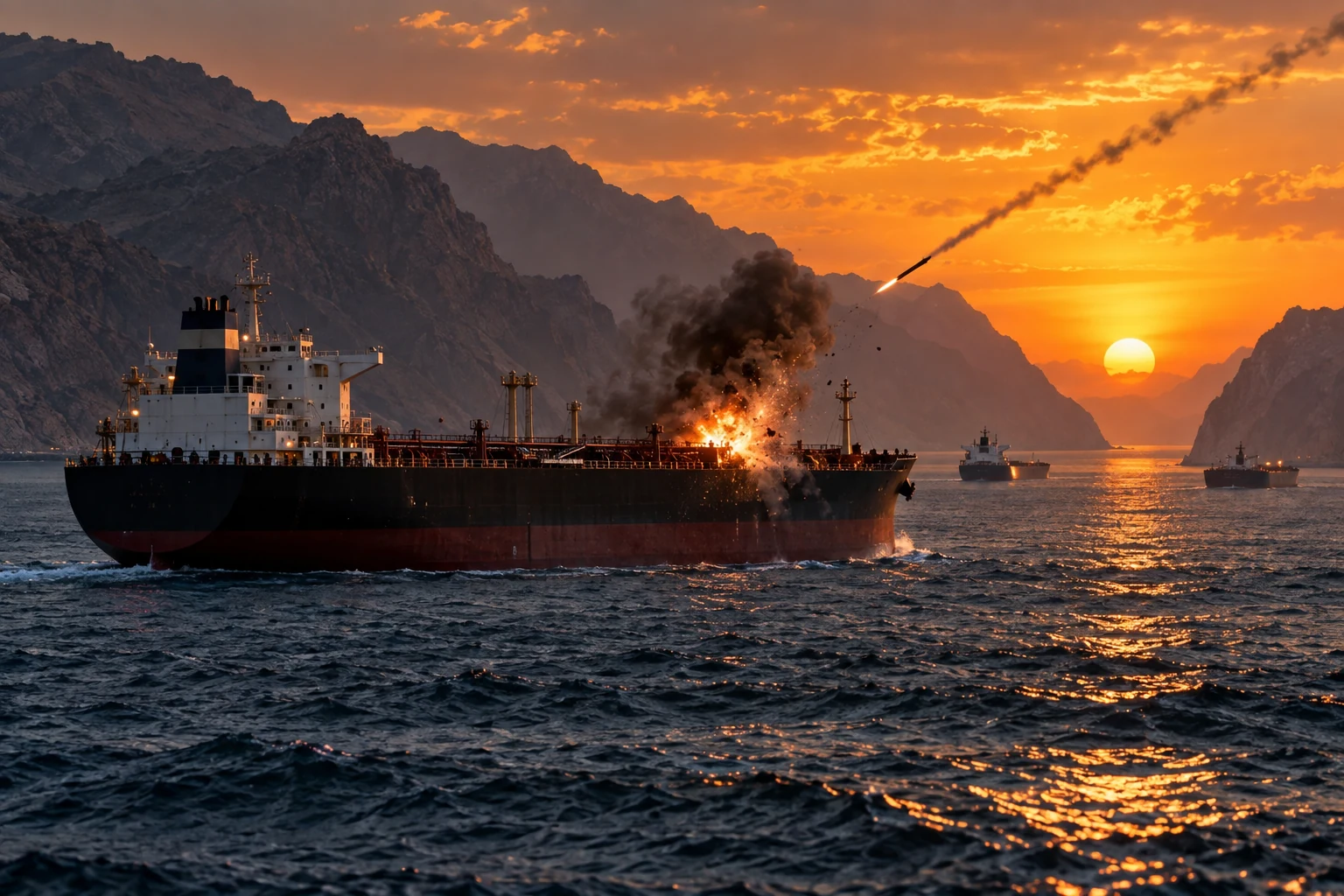
A vessel travelling through the Strait of Hormuz has been struck by a projectile as pressure intensifies on the routes carrying Middle Eastern oil to the rest of the world.
UK Maritime Trade Operations said it received a report of a projectile hitting a vessel transiting the strait.
The extent of the damage and the condition of the crew were not immediately known.
There was also no immediate claim of responsibility.
That uncertainty matters.
The attack should not be attributed to Iran, the Houthis or any other actor without evidence establishing who was responsible.
But whoever fired the projectile, the incident exposes a much larger vulnerability.
The Strait of Hormuz is already heavily disrupted by war.
Saudi Arabia increasingly relied upon its East-West pipeline to bypass it.
Now both routes have demonstrated their vulnerability within days of each other.
THE BYPASS WAS SUPPOSED TO REDUCE THE RISK
Saudi Arabia’s East-West pipeline runs approximately 1,200 kilometres across the Arabian Peninsula, allowing crude produced near the Gulf to reach the Red Sea without passing through Hormuz.
Its strategic importance has increased enormously during the current conflict.
Before a drone attack forced its temporary closure, the pipeline had been moving approximately 4–5 million barrels of oil per day.
That is equivalent to roughly 4–5% of total global oil supply.
The pipeline therefore represented something more important than another piece of Saudi energy infrastructure.
It was a safety valve.
When one of the world’s most important maritime chokepoints became unreliable, Saudi Arabia possessed another route to the sea.
Then that route was attacked.
Saudi Arabia temporarily shut the pipeline as a precaution after a drone strike that Riyadh and Baghdad said originated from Iraqi territory.
Iraq is home to several Iran-backed armed groups, but responsibility for that attack remains contested. President Donald Trump said Iran was probably responsible, while Tehran denied involvement.
NOW HORMUZ ITSELF HAS BEEN HIT AGAIN
The latest maritime incident reverses the problem.
If the pipeline is vulnerable, ships may need Hormuz.
If Hormuz is vulnerable, producers need alternatives such as the pipeline.
The danger becomes considerably greater when neither route can be treated as reliably secure.
For decades, energy planners have understood the extraordinary concentration of global oil flows through a small number of geographical chokepoints.
Hormuz is the most important of them.
Before the current war, around one-fifth of global oil supply passed through the strait.
Saudi Arabia’s cross-country pipeline provided one of the most important mechanisms for reducing dependence upon it.
The events of the past few days demonstrate the limitation of that protection.
A bypass only reduces strategic vulnerability if the bypass itself remains secure.
THE RED SEA ISN’T SAFE EITHER
The problem does not end when Saudi crude reaches the country’s western coast.
Iran-aligned Houthi forces have advanced around the Bab el-Mandeb Strait, the narrow passage connecting the Red Sea with the Gulf of Aden.
Their advance has increased the threat to another major shipping chokepoint and complicated Saudi Arabia’s ability to use Red Sea routes as an alternative to Hormuz.
The emerging picture is therefore not simply one blocked waterway.
It is a network of vulnerabilities.
Hormuz is disrupted.
The East-West pipeline has been attacked.
And the maritime route beyond the pipeline faces its own security pressures.
The redundancy designed into the global energy system is itself coming under pressure.
WHO CONTROLS THE ARTERIES?
The military confrontation is now colliding with a political argument over control of Hormuz itself.
Iran is due to attend talks with Gulf states in Oman on Monday concerning the future of the strait.
Tehran is seeking recognition of a right to collect fees from ships passing through Hormuz, while expectations of an immediate agreement remain low.
That makes the timing of the latest maritime attack particularly significant.
The region is simultaneously confronting two questions.
How can ships physically pass through one of the world’s most important energy corridors?
And who gets to determine the conditions under which they do so?
Those questions affect far more than Gulf states.
Oil prices have already moved back above $100 a barrel amid the disruption.
Every economy dependent upon imported energy ultimately has an interest in what happens next.
WHEN THE BACKUP NEEDS A BACKUP
Modern infrastructure is built around redundancy.
If one route fails, another takes over.
That principle works until multiple parts of the system become vulnerable simultaneously.
Saudi Arabia’s East-West pipeline exists partly because dependence upon Hormuz represents an obvious strategic risk.
The events of this week reveal the next question.
What happens when the route designed to bypass the chokepoint becomes vulnerable at the same time as the chokepoint itself?
The vessel struck in Hormuz may ultimately prove to have suffered limited damage.
The pipeline may reopen.
Individual incidents can be repaired.
The structural problem is harder to fix.
The world still depends upon enormous quantities of energy moving through a remarkably small number of geographical corridors.
We are now discovering what happens when the chokepoint and the escape route come under pressure together.
Sources: Reuters, 12–13 September 2026.
Join the Dissenting Citizen Newsletter
Independent news and commentary delivered directly to your inbox.