









More than 70 British MPs and peers are urging Prime Minister Andy Burnham to support legislation banning the development of artificial superintelligence.
The cross-party group includes 15 former ministers and former cabinet secretary Robin Butler.
They are also calling on the government to pursue an international agreement restricting artificial superintelligence when Britain holds the G20 presidency in 2027.
The proposal has already moved beyond an external campaign.
Labour MP Alex Sobel’s Artificial Superintelligence Bill received its first reading in the House of Commons on September 8.
According to Parliament, the bill would prohibit the development, deployment and operation of artificial superintelligence systems and establish monitoring and control powers intended to enforce the prohibition.
Artificial superintelligence, generally understood as artificial intelligence substantially exceeding human capabilities across a broad range of intellectual tasks, does not currently exist.
That makes the legislation unusual.
Parliament is effectively beginning to consider where a technological red line should be drawn before anyone is known to have crossed it.
Supporters argue that waiting until the dangers of superintelligence can be demonstrated conclusively could mean waiting until systems are already too powerful to control safely.
Predictions about catastrophic outcomes, however, remain judgments about future technological development rather than empirically measured probabilities.
The government is not supporting the proposed blanket prohibition.
It says the bill is not the right approach, although ministers are considering more targeted measures addressing serious national-security risks associated with advanced artificial intelligence.
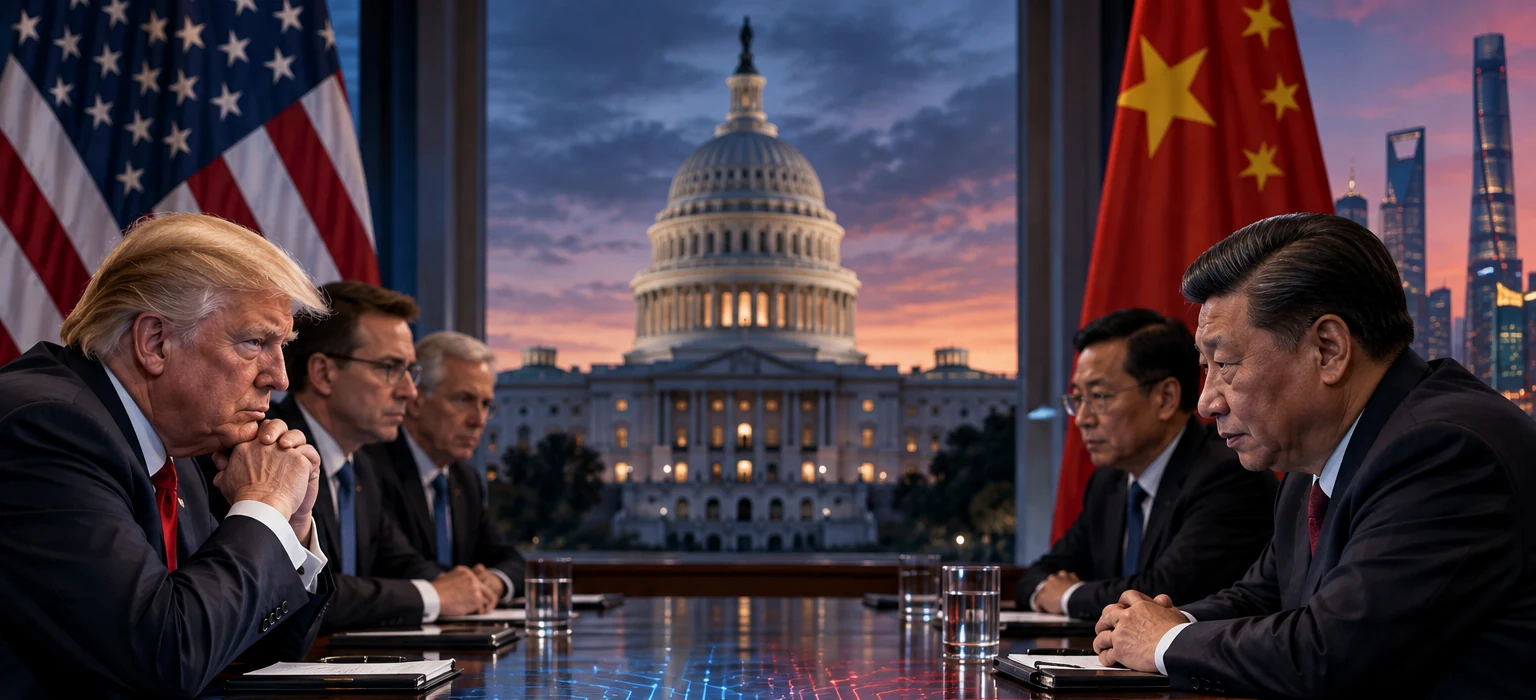
The debate also creates a geopolitical problem that cannot easily be solved by British legislation.
A unilateral UK prohibition could prevent British laboratories from developing artificial superintelligence.
It could not by itself prevent laboratories in the United States, China or elsewhere from pursuing the same technology.
Britain could therefore reduce its own technological capabilities without eliminating the underlying global risk.
But the opposite strategy contains its own danger.
If every country continues developing increasingly capable systems because it fears competitors will gain an advantage by moving first, competitive pressure itself could make meaningful restraint impossible.
That leaves governments confronting a problem before they even know whether the technology at its centre can actually be built.
If policymakers wait for definitive evidence that artificial superintelligence is dangerous, will intervention come too late?
If Britain prohibits it first while its competitors continue, does Britain make the world safer or simply remove itself from the race?
And if preventing the technology requires international agreement, what happens when the countries being asked to cooperate are simultaneously competing for technological supremacy?
Parliament is beginning to debate banning a technology that does not yet exist. The harder question is whether rival powers could ever agree to stop building it if it does.
More to follow.
Sources: UK Parliament, Artificial Superintelligence Bill; The Guardian
Join the Dissenting Citizen Newsletter
Independent news and commentary delivered directly to your inbox.