


Two federal cases involving Minnesota churches are testing religious liberty from opposite sides of America’s immigration divide.
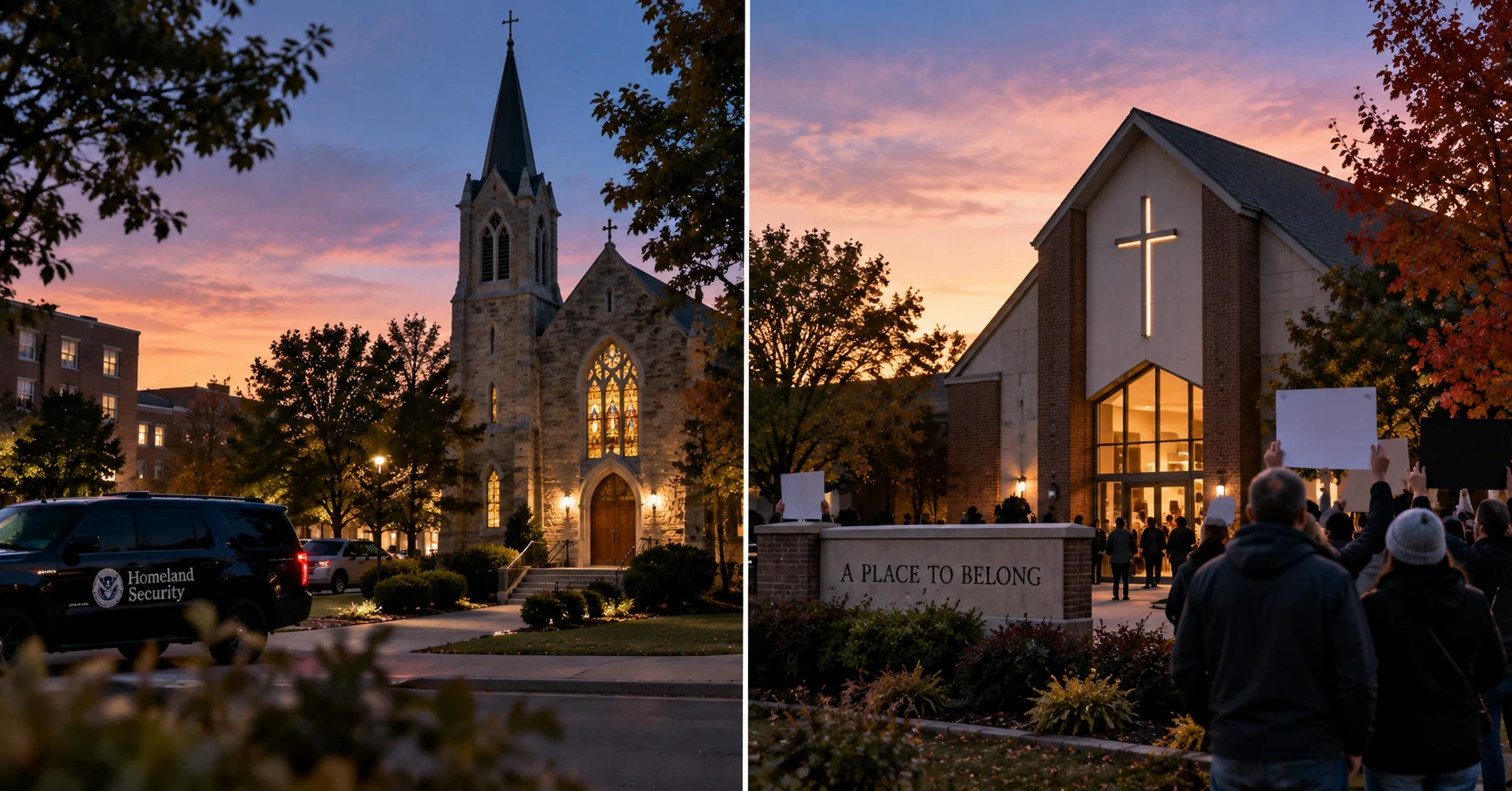
At University Baptist Church in Minneapolis, religious groups are challenging surveillance conducted by Department of Homeland Security agents after immigration protesters used church property.
Court documents cited by the Associated Press say federal agents conducted surveillance on four occasions.
One operation allegedly involved an undercover agent entering the church.
Religious organisations are asking a federal judge to find that the surveillance violated an earlier injunction restricting immigration-enforcement activity at their churches.
The federal government disputes that interpretation.
It says agents were investigating alleged plans to obstruct federal officers rather than conducting immigration enforcement against the church or its congregation.
Several miles away, another church is involved in a very different federal dispute.
At Cities Church in St. Paul, more than three dozen anti-ICE demonstrators face federal charges after protesters entered a Sunday service, approached the pulpit and chanted during worship.
Lawyers representing the demonstrators are seeking dismissal of the charges.
An attorney representing the church argues that political disagreement does not give protesters the right to invade and disrupt a religious service.
The two cases arise from opposite sides of America’s increasingly bitter argument over immigration enforcement.
But they also present a useful test of whether religious liberty is treated as a principle or merely as another political weapon.
A church does not cease to deserve protection because members of its congregation oppose the government’s immigration policies.
Government surveillance of activity connected to a church therefore deserves serious scrutiny, particularly where a court has already imposed restrictions intended to protect religious institutions.
The same principle works in the opposite direction.
Worshippers do not surrender their right to gather peacefully because political activists strongly object to immigration enforcement or to the views associated with people inside the church.
The details and legal questions in the two cases are different, and neither dispute should determine the outcome of the other.
But the underlying principle should survive political disagreement.
A church should not have to belong to the “right” political tribe before its religious liberty is worth defending.
Sacred space deserves protection even when you disagree with the people inside it.
More to follow.
Source: Associated Press, 12 September 2026
Join the Dissenting Citizen Newsletter
Independent news and commentary delivered directly to your inbox.