




The Spanish Super Cup needs somewhere new to play in 2027.
It is going to Turkey.
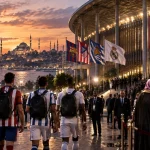
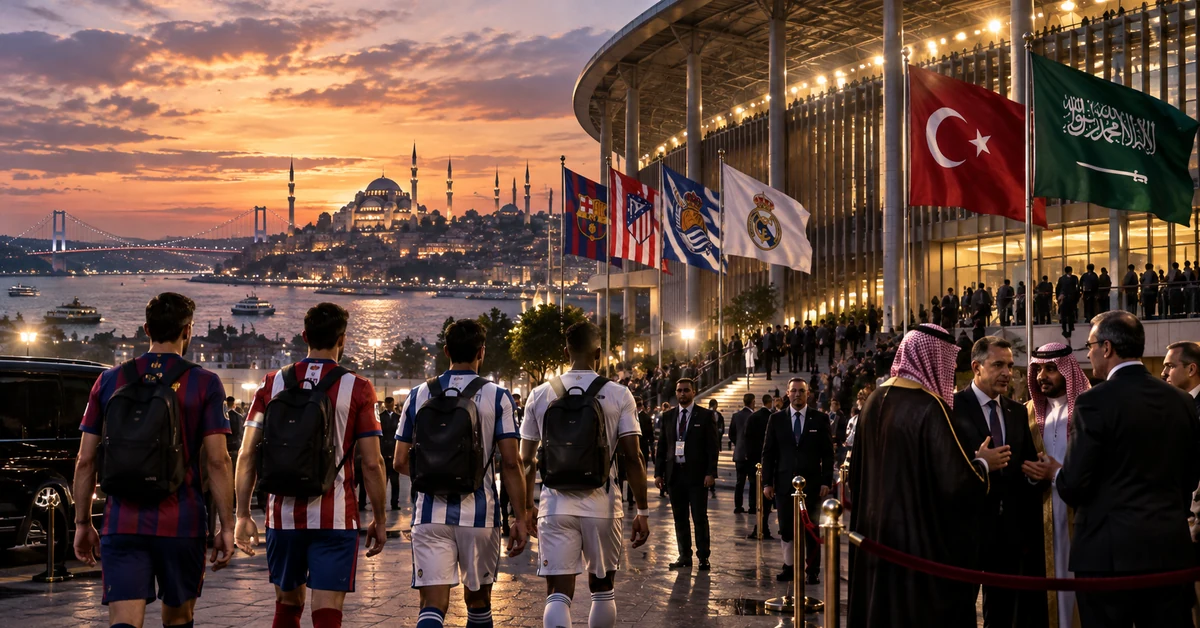
Barcelona, Real Madrid, Atlético Madrid and Real Sociedad will travel to Istanbul in February for a Spanish domestic competition that has spent most of the past decade being staged in Saudi Arabia.
The interesting part is why.
The Spanish Football Federation says the switch is not primarily a response to security concerns in the Middle East.
Saudi Arabia simply cannot accommodate the tournament on its usual dates because it will be hosting the Asian Cup.
So the Super Cup needed another venue.
Spain apparently wasn’t the answer.
Instead, the competition will move from one overseas market to another.
Barcelona will face Atlético Madrid at Fenerbahçe’s Şükrü Saracoğlu Stadium on February 2.
Real Sociedad will play Real Madrid the following day at Beşiktaş’s Tüpraş Stadium.
The final will be held at Galatasaray’s RAMS Park on February 6.
The arrangement was formally presented in Istanbul on Thursday by the Spanish federation alongside Turkish and Saudi representatives.
That last participant is important.
The Super Cup may be leaving Saudi Arabia for a year.
Its Saudi commercial relationship is not leaving with it.
RFEF president Rafael Louzán told Reuters that the Istanbul arrangement was agreed with Saudi sports and events company Sela and the Saudi government.
He said the financial terms would remain broadly comparable with those under the Saudi arrangement, with some improvements.
And negotiations are already under way to extend the federation’s Saudi partnership beyond 2030.
That makes Istanbul less a retreat from the Super Cup’s overseas model than evidence of how established that model has become.
The competition originally belonged to a simple domestic sporting calendar.
Spain’s league champions and cup winners played for another Spanish trophy.
The format has since expanded to four teams and become a valuable international event in its own right.
Saudi Arabia has hosted it under a lucrative agreement with the Spanish federation since 2020, apart from the pandemic-disrupted 2021 edition.
Moving the competition abroad has always generated an obvious criticism.
Spanish clubs are competing for a Spanish trophy thousands of miles from many of the supporters who follow them every week.
The federation’s answer is financial and international.
Taking the tournament overseas generates substantially more revenue and exposes Spanish football to markets beyond Spain.
Istanbul preserves both advantages.
Turkey has an enormous football audience, three major stadiums capable of staging the competition and a commercial arrangement that Louzán says broadly maintains – and potentially improves – the economics of the Saudi deal.
From the federation’s perspective, returning to Spain would therefore mean giving up something valuable simply because Saudi Arabia is temporarily unavailable.
That logic is precisely what makes the 2027 move revealing.
If Saudi Arabia were merely an unusual temporary host, its unavailability might naturally return the competition to the country whose name it carries.
Instead, another foreign city was found.
Elite football has spent decades exporting television rights, merchandise, sponsorships and pre-season tours around the world.
Increasingly, it can export the competition itself.
The Spanish Super Cup still determines which club lifts a Spanish trophy.
But geographically, commercially and increasingly conceptually, it no longer needs Spain very much at all.
Sources
- Reuters – Istanbul move driven by Asian Cup clash
- RFEF – Official Istanbul signing ceremony
- RFEF – 2027 fixtures and stadiums
Join the Dissenting Citizen Newsletter
Independent news and commentary delivered directly to your inbox.
Breaking stories, analysis and commentary throughout the day.
Follow @VoxDissent →