








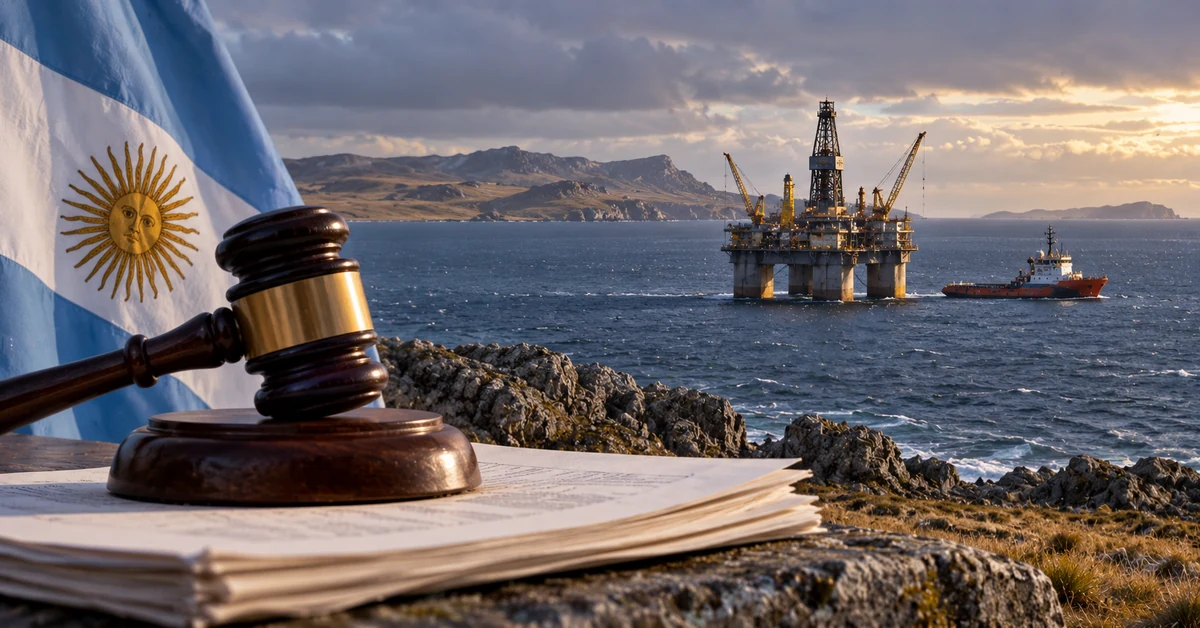
An Argentine federal judge has ordered two oil companies to halt development of the Sea Lion oil project north of the Falkland Islands, despite Argentina having no administrative control over the islands or the waters where the development is taking place.
The injunction targets Britain’s Rockhopper Exploration and Israel’s Navitas Petroleum and covers drilling, offshore installations and associated port development.
The judge ruled that work should stop until Argentine authorities conduct an environmental assessment.
The companies intend to continue developing Sea Lion.
That leaves Argentina with a court order whose practical enforcement against activity around the British-controlled Falklands is highly uncertain.
A court order across a sovereignty line
Argentina claims sovereignty over the Falkland Islands, which it calls the Malvinas, and disputes Britain’s rights over surrounding waters and natural resources.
Britain rejects the Argentine claim and says the islanders have the right to determine their own political status.
That produces the unusual legal situation surrounding Sea Lion.
From Argentina’s perspective, the companies are exploiting resources in territory over which Britain has no legitimate sovereignty.
From the British and Falkland Islands position, Argentine courts have no jurisdiction over economic activity taking place there.
The injunction does not resolve that dispute.
It demonstrates it.
Argentina’s courts can issue orders based on Argentina’s sovereignty claim. Whether those orders can affect companies operating under Falkland Islands licences is another matter.
Oil makes the dispute economically consequential
Sea Lion is expected to begin commercial production in 2028.
The development could have an unusually large economic effect on the Falklands because the islands have a population of only around 3,500.
Oil production would introduce a major new source of economic activity and government revenue to a territory whose sovereignty has been disputed for generations.
That gives Argentina an additional reason to challenge the project beyond its longstanding territorial claim.
Once substantial infrastructure has been built and commercial oil begins flowing, the economic facts surrounding the islands change as well.
Islanders voted to remain British
Argentina’s sovereignty campaign has intensified under President Javier Milei, who has repeatedly said he wants the islands returned through diplomatic means.
Britain points to the wishes of the people living there.
In a 2013 referendum, 99.8% of participating Falkland Islanders voted to retain their status as a British Overseas Territory, with turnout above 90%.
Argentina does not recognise that referendum as determining the sovereignty dispute.
The United States has traditionally avoided recognising either country’s sovereignty claim, although President Donald Trump has recently suggested Washington could reconsider its position. The US has not recognised Argentine sovereignty over the islands.
The Sea Lion injunction therefore creates a straightforward test of the difference between claiming jurisdiction and exercising it.
Argentina has obtained a domestic court order requiring development to stop.
Britain controls the territory.
The companies operating there intend to keep drilling.
Sources
- Associated Press – Argentine judge orders halt to Falklands oil project
- Reuters – Britain rejects Argentine jurisdiction over Falklands businesses
Join the Dissenting Citizen Newsletter
Independent news and commentary delivered directly to your inbox.
Breaking stories, analysis and commentary throughout the day.
Follow @VoxDissent →