







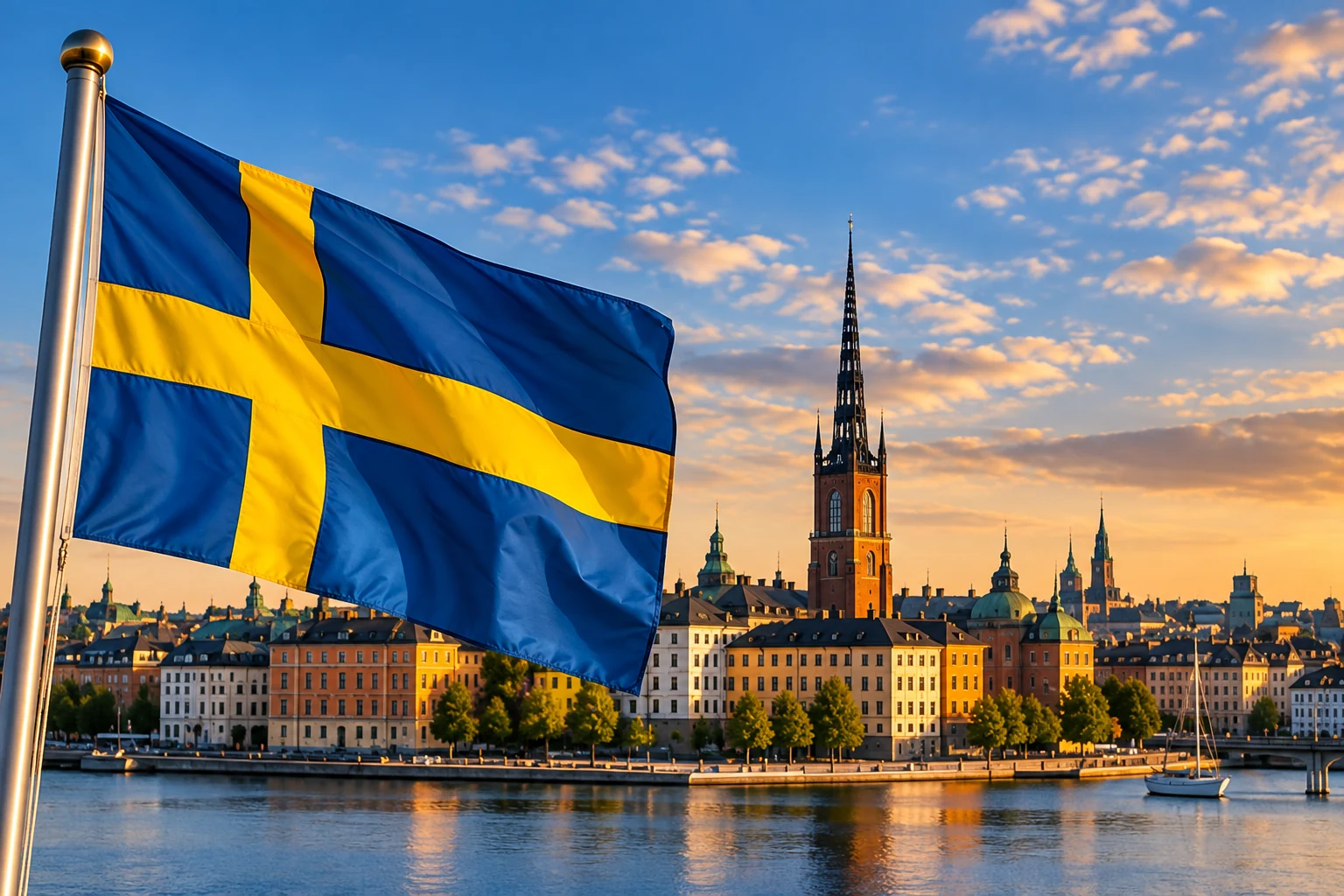
Sweden votes today in an election that could bring the Sweden Democrats into government for the first time. But behind the battle for power lies a larger political change: Sweden’s argument over immigration has already moved substantially.
Swedes are voting today in a closely fought general election that could produce a historic change in government.
Prime Minister Ulf Kristersson has said that if his right-wing bloc wins, the Sweden Democrats would formally enter government.
The party has supported Kristersson’s minority administration from parliament for the past four years.
It has never previously held cabinet positions.
That could change tonight.
The centre-left opposition led by former Prime Minister Magdalena Andersson’s Social Democrats enters election day with a narrow polling advantage, but the gap has tightened considerably during the campaign.
FOUR PER CENT COULD DECIDE THE GOVERNMENT
One of the most important numbers in today’s election is not the Sweden Democrats’ share of the vote.
It is 4%.
That is the threshold a party generally needs to enter Sweden’s parliament.
The Liberal Party, part of the governing right-wing alliance, has been hovering close to it.
If the Liberals clear the threshold, their votes can translate into parliamentary seats and strengthen Kristersson’s route to another term.
If they fall below it, the arithmetic becomes considerably more difficult for the right.
Sweden’s 349-seat parliament produced an extremely narrow result four years ago.
Today’s election could again be decided at the margins.
THE SWEDEN DEMOCRATS’ LONG JOURNEY
Entry into government would represent another major step in the Sweden Democrats’ transformation from political outsiders to one of the country’s most influential parties.
Their rise was built heavily around opposition to immigration, concern about crime and arguments over Swedish national identity.
For years, established parties sought to isolate them.
That barrier has gradually collapsed.
Since 2022, the Sweden Democrats have supported Kristersson’s government in parliament without formally joining the cabinet.
Kristersson is now proposing to remove that final distinction.
A right-wing victory would therefore not simply return the existing government.
It could change who actually sits inside it.
BUT SWEDEN HAS ALREADY CHANGED
The more significant transformation may extend beyond the Sweden Democrats themselves.
Sweden was once internationally associated with one of Europe’s most welcoming approaches towards migration.
That policy environment has changed dramatically.
The current government has tightened immigration rules and asylum numbers have fallen sharply.
Supporters of Kristersson’s bloc point to reduced immigration and falling gang violence as important achievements of the past four years.
But the shift is not confined to the right.
The Social Democrats have themselves adopted a substantially tougher position on immigration than the one historically associated with Sweden’s centre-left.
That creates tensions with some of the parties Andersson may need if she is to form a government.
The election therefore no longer represents a straightforward choice between restrictive immigration policy and a return to Sweden’s previous approach.
The political centre of gravity has moved.
The argument increasingly concerns how far restrictions should go, how they should operate and which political coalition voters trust to implement them.
TONIGHT’S RESULT
Polling stations are open until 20:00 local time, equivalent to 19:00 BST.
Sweden’s preliminary count begins when voting closes, with results reported throughout the evening.
Attention will naturally focus on which bloc wins enough seats to govern.
But two results deserve particular attention.
Whether the Liberals clear 4%.
And whether the Sweden Democrats cross the final boundary from influencing government to sitting inside it.
Whatever happens tonight, one part of Sweden’s political transformation has already occurred.
The immigration debate voters are deciding today is no longer the immigration debate Sweden was having a decade ago.
More to follow.
Sources: Reuters, 3–13 September 2026; Swedish Election Authority.
Join the Dissenting Citizen Newsletter
Independent news and commentary delivered directly to your inbox.