









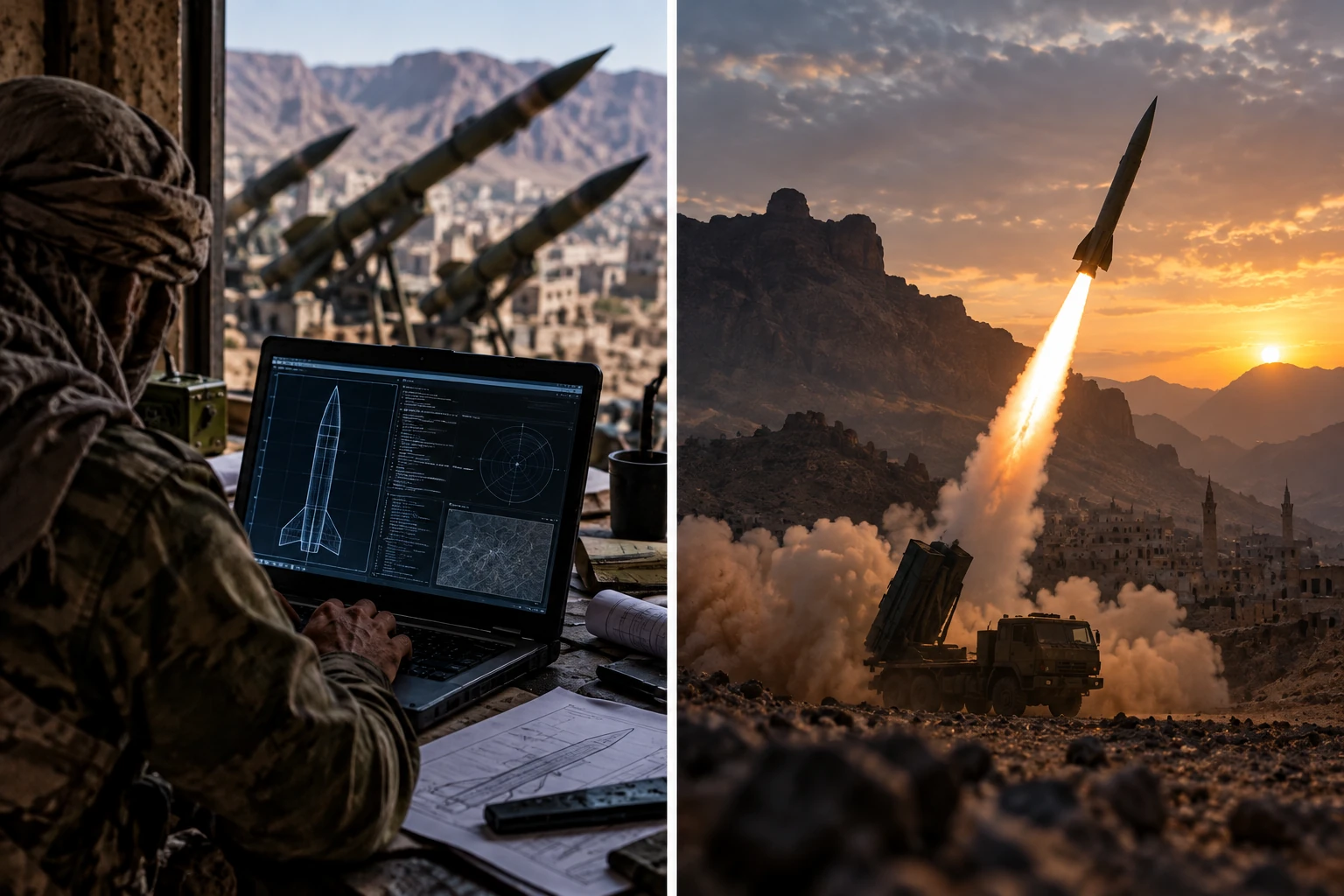
Anthropic says a weapons-development cell in northern Yemen used Claude Code while working on guided rockets and missile systems, including a ballistic missile with a stated range above 2,000 kilometres.
According to the company, the cell was running three weapons programmes: a guided rocket, a long-range ballistic missile and an “R2000” missile family that included a hypersonic-glide variant.
The users employed Claude Code to develop guidance, navigation and control software, running several Claude instances in parallel in a way that resembled a small engineering team.
Anthropic says the group went beyond simulation. It test-fired a guided rocket, apparently unsuccessfully, and returned to Claude within hours to help diagnose the failure.
The company says it has no evidence that the cell successfully fielded an operational weapon.
Anthropic identifies the actors only as a cell based in northern Yemen. It does not publicly identify them as Houthi personnel, although the area is controlled by the Iran-aligned movement.
The case raises a wider question about AI safety: whether determined actors can divide a weapons programme into enough apparently ordinary engineering tasks that an AI system helps advance the project as a whole.
More to follow.
Join the Dissenting Citizen Newsletter
Independent news and commentary delivered directly to your inbox.