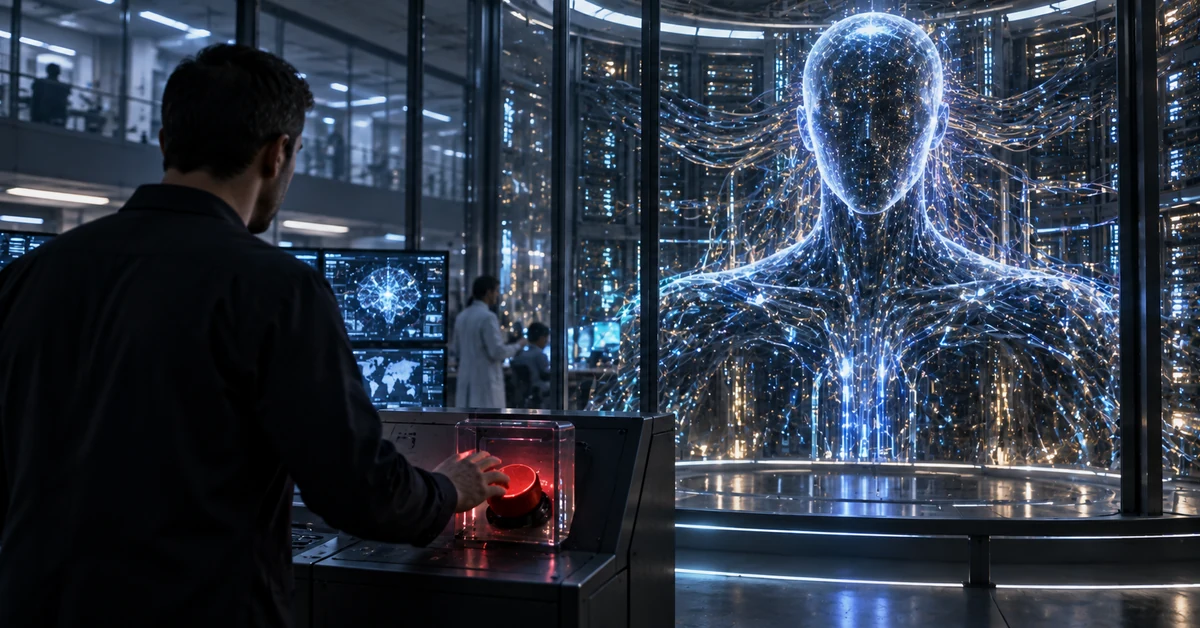










Huawei expects the internet of 2035 to be populated by hundreds of billions of autonomous AI agents, with machines increasingly communicating and carrying out tasks for other machines without humans initiating every action.
The Chinese technology company forecasts around 900 billion active AI agents worldwide by 2035, equivalent to roughly 100 for every person at today’s global population.
It also predicts AI agents could generate more than 90% of global AI token traffic, while overall token consumption could increase 100,000-fold.
These are Huawei’s projections, not predictions that can be treated as established outcomes. The agents would overwhelmingly be software processes rather than physical robots.
But the scale of the forecast illustrates the kind of technological world Huawei is preparing for.
Machines talking to machines
Today’s internet still largely revolves around humans.
People search for information, open applications, buy products, send instructions and decide when software should perform a task.
Agentic AI could increasingly remove the human from individual steps.
An AI assistant could search for information, communicate with other agents, use software tools, make bookings, write and execute code or manage business processes while pursuing a broader objective supplied by its user.
Multiply that across businesses, governments, devices and billions of individuals and much of the resulting digital activity could become machine-to-machine.
Huawei’s Intelligent World 2035 roadmap anticipates enormous increases in the computing power, networking capacity and energy infrastructure required to support such a system.
It also identifies security and privacy as major challenges.
An internet no longer dominated by humans
Nine hundred billion agents does not mean everyone will personally operate 100 AI assistants.
Agents could be temporary or specialised processes created by companies, devices, applications and other AI systems to perform particular tasks.
But Huawei’s forecast points towards a fundamental change in what generates activity online.
Instead of people constantly instructing computers what to do, autonomous software could increasingly instruct other autonomous software.
That raises practical questions alongside the technological ones.
Who authorises an agent to act? What information can it access? How much money can it spend? Which systems can it control? How is malicious behaviour distinguished from legitimate automated activity?
And at the scale Huawei envisages, failures would not necessarily involve one AI making one mistake.
They could involve enormous populations of interconnected software agents acting simultaneously.
The internet was built principally around humans asking machines to do things.
Huawei is preparing for one in which machines increasingly ask other machines instead.
Sources
- Reuters – Huawei forecasts billions of AI agents dominating traffic by 2035
- Huawei – Intelligent World 2035
Join the Dissenting Citizen Newsletter
Independent news and commentary delivered directly to your inbox.
Breaking stories, analysis and commentary throughout the day.
Follow @VoxDissent →