




The Houthis say they have launched another wave of missiles and drones at Saudi Arabia. Saudi authorities say one projectile injured two people and damaged a mosque. But the attacks are becoming more significant because of where the Iran-backed movement now stands: astride one of the world’s most important shipping routes.
Yemen’s Iran-backed Houthi movement has claimed fresh missile and drone attacks against Saudi Arabia as its rapid advance towards the Bab el-Mandeb Strait transforms the strategic balance around the Red Sea.
The Houthis said they targeted sites in southern Saudi Arabia, including a military base.
They provided no evidence establishing that the claimed military strike succeeded.
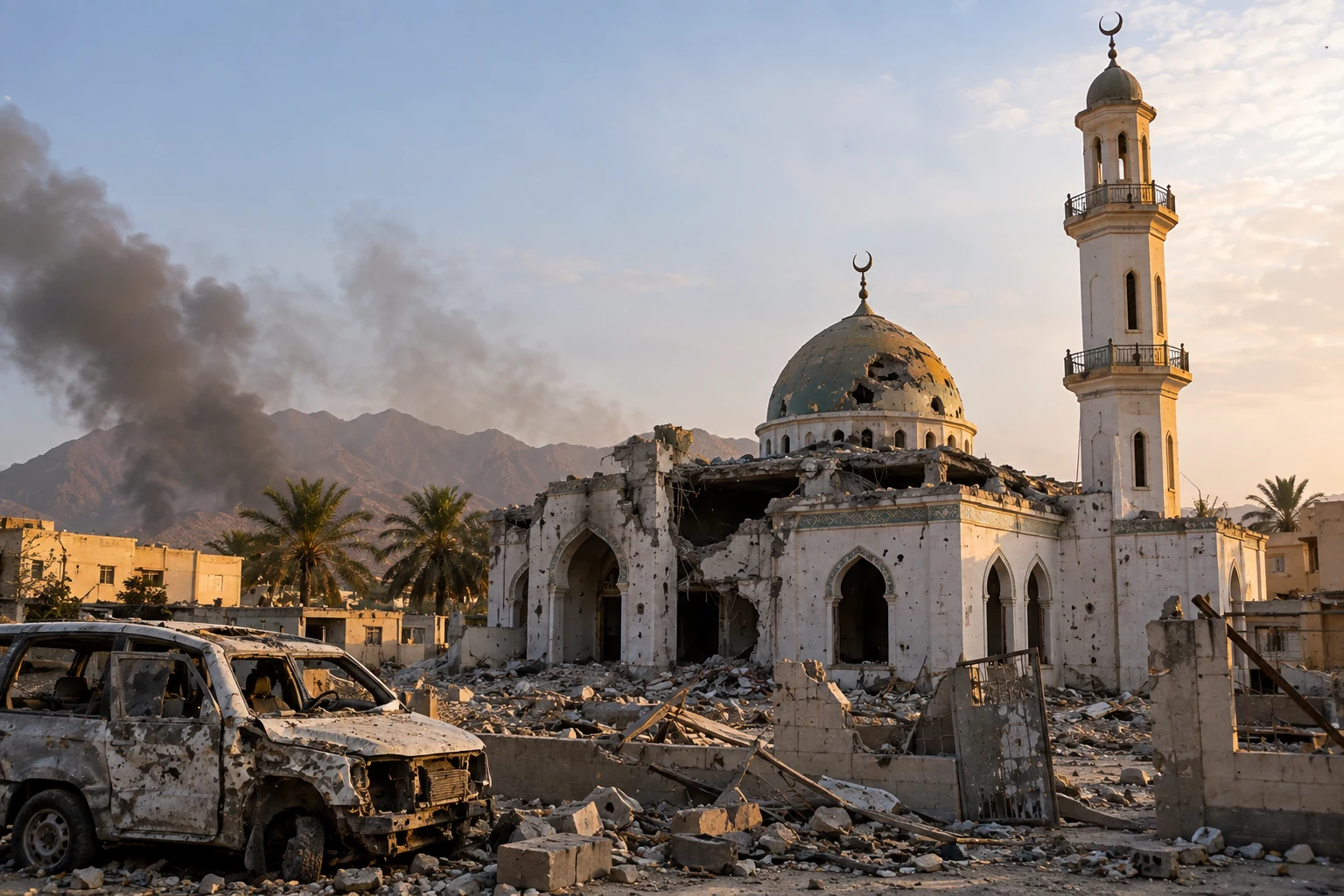
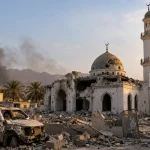
Saudi authorities separately said a projectile fell in al-Tawwal, close to the Yemeni border, injuring two people and damaging several buildings.
Among them was a mosque.
Saudi Arabia blamed the Houthis.
A MOVEMENT CLAIMING RELIGIOUS LEGITIMACY DAMAGES A MOSQUE
The damage to the mosque is a small detail compared with the military significance of the conflict.
But it illustrates something worth remembering about political-religious militancy.
Armed movements can describe themselves as defenders of a religious community while their wars impose costs on that same community.
The people placed in danger by Houthi missiles are not abstractions. Many are Muslims.
Saudi Arabia is a Muslim-majority country. And in this incident, Saudi authorities say even a Muslim place of worship was damaged.
Political Islam does not cease to have consequences for Muslims merely because its militants claim religious legitimacy.
THE HOUTHIS HAVE MOVED SOUTH
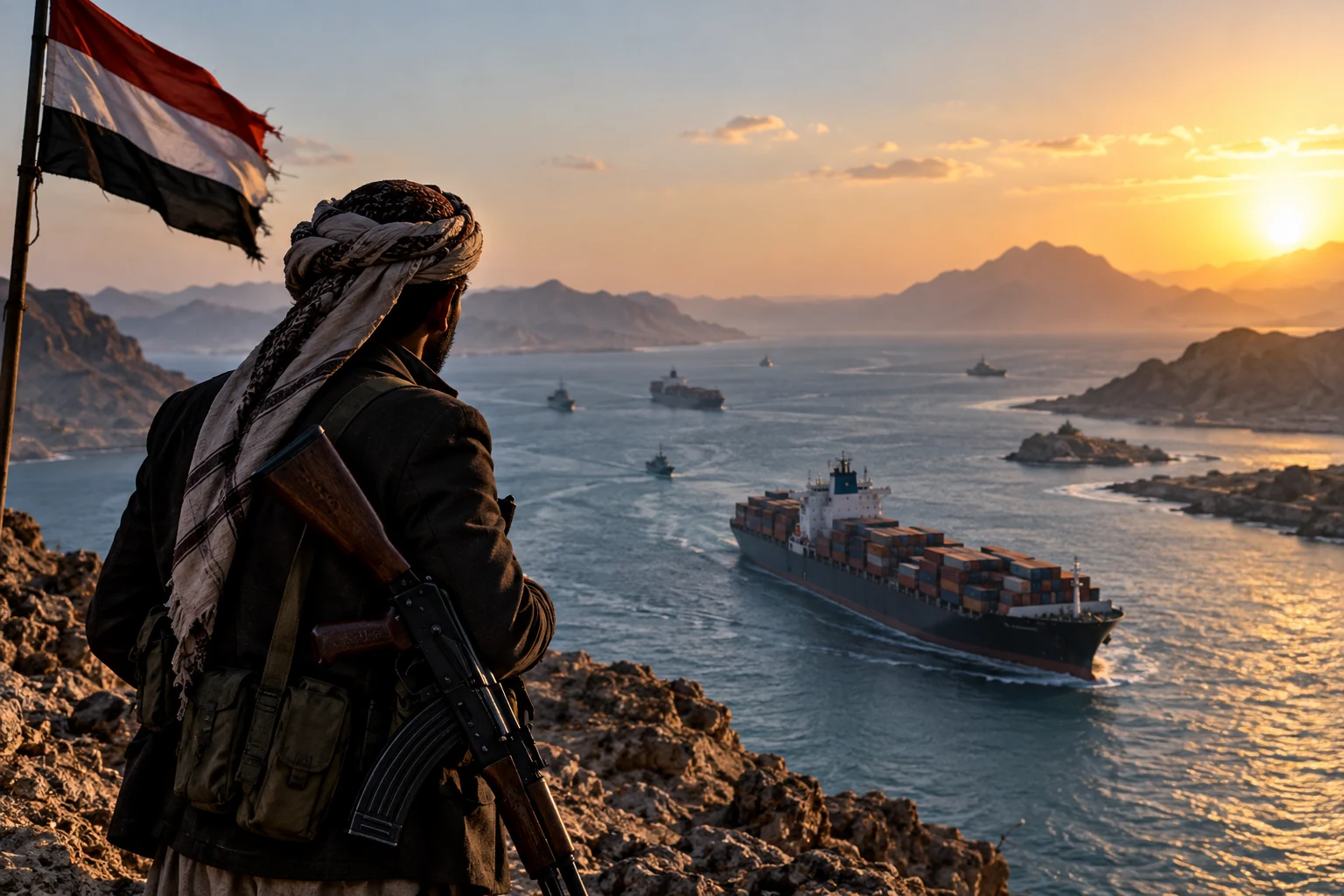
The Houthis have rapidly expanded their position along Yemen’s Red Sea coast.
They have seized Perim Island, sitting inside the Bab el-Mandeb Strait, together with territory along the surrounding coastline.
Bab el-Mandeb connects the Red Sea with the Gulf of Aden and ultimately the Indian Ocean.
Around 12% of global trade and roughly 7% of petroleum deliveries normally pass through it.
The Houthis have attacked international shipping before. Their new positions bring them dramatically closer to the vessels passing through the strait.
The question is what leverage they acquire by controlling territory immediately beside the shipping lane.
HORMUZ AT ONE END, BAB EL-MANDEB AT THE OTHER
The Strait of Hormuz, the principal maritime exit from the Gulf, is already heavily disrupted.
Before the current conflict, roughly one-fifth of global oil supply passed through Hormuz.
Saudi Arabia therefore became increasingly dependent upon routes towards the Red Sea.
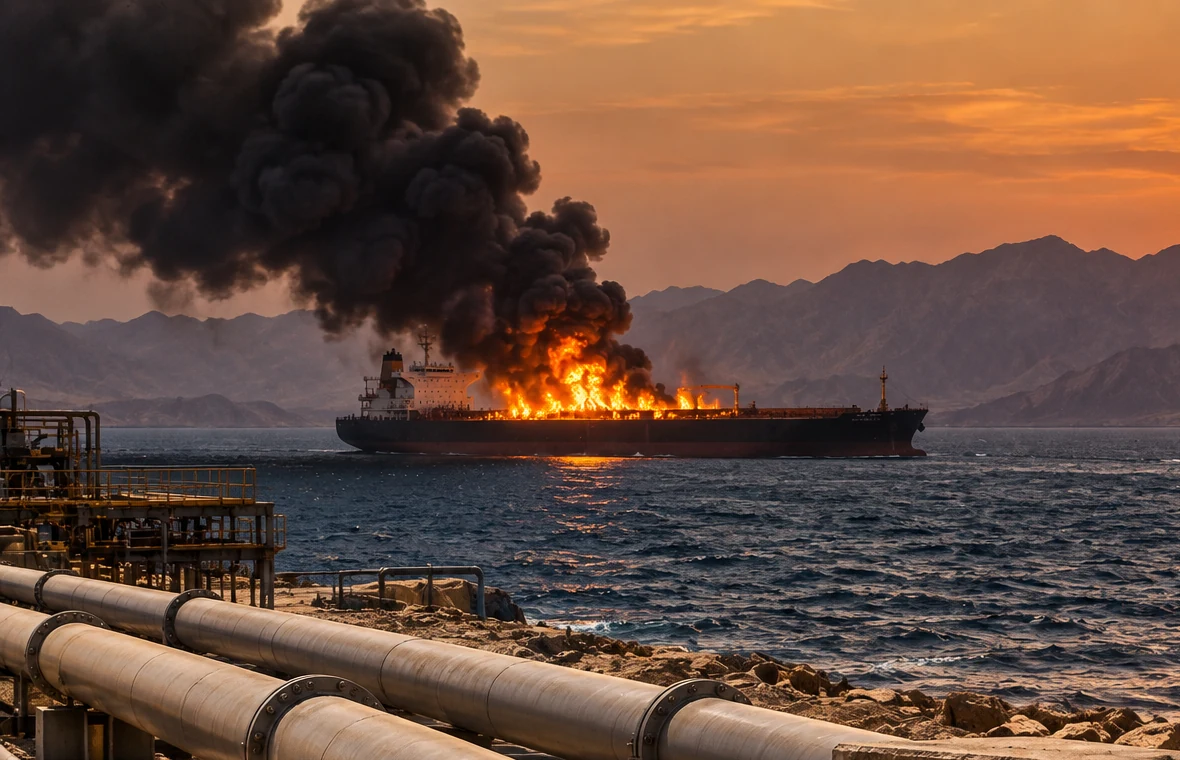
Its East-West pipeline can carry millions of barrels of oil across the Arabian Peninsula towards western export terminals.
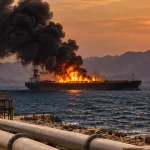
That pipeline has now itself been attacked and temporarily shut.
And beyond those terminals lies Bab el-Mandeb. The Houthis are now positioned there.
Avoid Hormuz and Saudi oil moves west. Move west and shipping eventually confronts the Red Sea’s southern exit.
That exit is increasingly dominated by an Iran-backed armed movement already attacking Saudi Arabia.
IRAN’S LEVERAGE WITHOUT IRANIAN SHIPS
Iran does not necessarily need to control every strategic waterway directly to exert pressure across the region.
Allied armed movements can create leverage elsewhere.
Reuters reports that Saudi Crown Prince Mohammed bin Salman has sought direct American military assistance against the Houthi advance.
Washington has so far declined direct intervention while offering intelligence support.
TWO CHOKEPOINTS
The Houthis’ latest attacks on Saudi Arabia may prove militarily limited.
The damage reported at al-Tawwal was localised. Two people were injured. Buildings were damaged. A mosque was among them.
But individual projectiles are only part of the story.
The more consequential development is geographical.
An Iran-backed armed movement that has repeatedly demonstrated its willingness to attack ships has acquired a far stronger position beside one of the world’s critical maritime arteries.
At the other end of the regional energy system, Hormuz is already under pressure.
The danger is no longer one unstable chokepoint.
It is the possibility that the global economy becomes dependent on routes whose opposite ends are simultaneously exposed to Iran and an Iran-backed armed movement.
Sources: Associated Press, 13 September 2026; Reuters, 12–13 September 2026.
Join the Dissenting Citizen Newsletter
Independent news and commentary delivered directly to your inbox.