




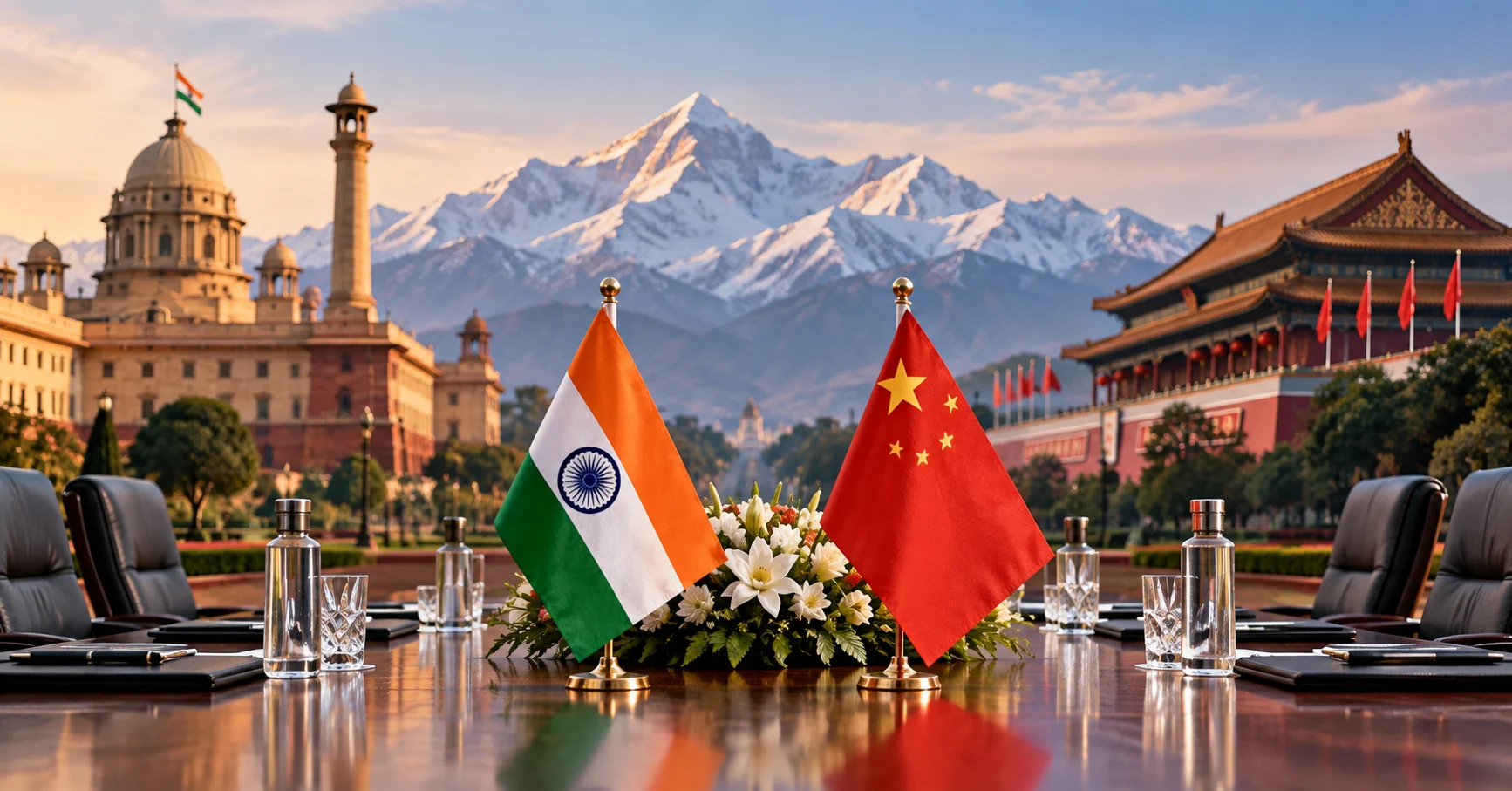
Chinese President Xi Jinping has arrived in India for his first visit to the country in seven years as Beijing and New Delhi cautiously rebuild relations damaged by their deadly Himalayan border confrontation.
Xi arrived in New Delhi for the BRICS summit and talks with Indian Prime Minister Narendra Modi.
The meeting marks a significant change from the hostility that followed the 2020 Galwan Valley clash, when Chinese and Indian troops fought along their disputed Himalayan frontier.
Twenty Indian soldiers and four Chinese soldiers were killed.
The confrontation transformed relations between the two countries and led both governments to reinforce their military presence along the border.
China and India still maintain substantial forces along their roughly 3,800-kilometre disputed frontier.
But while strategic distrust remains, their economic relationship tells a very different story.
China was India’s largest source of imports in the 2025/26 financial year, with imports worth approximately $132 billion.
India has also resumed direct flights between the countries and eased some restrictions affecting Chinese equipment and visas as relations gradually thaw.
New Delhi nevertheless remains cautious about Chinese investment in strategically sensitive sectors including telecommunications, defence and finance.
That combination makes the relationship difficult to fit into a simple geopolitical model.
India has developed increasingly important strategic ties with the United States and shares American concerns about China’s growing power in the Indo-Pacific.
At the same time, its economy remains deeply connected to Chinese trade.
Indian and Chinese troops continue facing each other across a disputed border while Xi and Modi sit together inside BRICS.
The wider grouping adds another layer to the contradiction.
BRICS countries now represent more than 40% of the world’s population and almost a quarter of global GDP.
China and Russia have generally promoted the grouping as a counterweight to Western influence, while India and Brazil have favoured a less explicitly anti-Western approach focused more heavily on reforming existing international institutions.
India therefore demonstrates why the emerging international order may not divide neatly into two competing camps.
A country can cooperate with Washington against aspects of Chinese power, confront Beijing militarily along its border, depend heavily on Chinese imports and simultaneously cooperate with China through institutions such as BRICS.
The future may not consist of two clean geopolitical blocs. It may consist increasingly of countries competing, trading and cooperating with the same rival at the same time.
More to follow.
Sources: Reuters, 12 September 2026.
Join the Dissenting Citizen Newsletter
Independent news and commentary delivered directly to your inbox.