








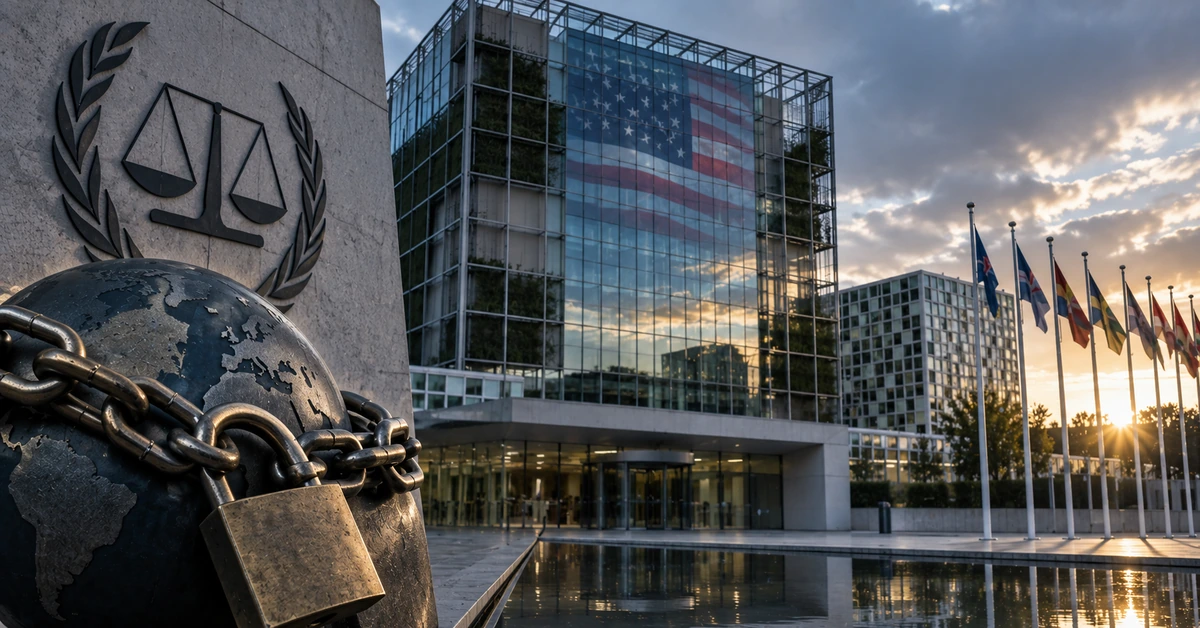
The Trump administration is reportedly preparing sweeping financial sanctions against the International Criminal Court, potentially escalating an existing dispute with individual ICC officials into a confrontation with the institution itself.
The Wall Street Journal reports, citing US officials and documents it reviewed, that the proposed sanctions would prohibit most transactions with the court following a six-to-seven-month grace period.
Reuters has not independently verified the reported plan, and no final White House or State Department announcement had been confirmed when it reported the story.
That distinction matters. The sanctions remain a reported proposal rather than announced US policy.
Sanctions could target the court itself
The reported measures would go substantially further than sanctions imposed against individual ICC judges and officials.
According to the Wall Street Journal, restricting transactions with the institution could prevent it from conducting transactions in US dollars and potentially cut it off from significant parts of the international financial system.
That could affect the practical operation of the Hague-based court rather than merely penalising particular individuals associated with its investigations.
The reported grace period would give the ICC and governments supporting it several months before the restrictions took full effect.
Exactly what exemptions or mechanisms might accompany the sanctions remains unclear.
Sovereignty dispute at the centre
The confrontation reflects a much broader disagreement over the reach of international criminal law.
The United States is not a party to the Rome Statute, the treaty establishing the ICC.
Washington has long objected to attempts by the court to exercise jurisdiction over US nationals without American consent.
Supporters of the ICC argue that its jurisdiction can extend to alleged crimes committed on the territory of states that have accepted the court’s authority, regardless of whether the accused person’s own country is an ICC member.
The Trump administration rejects attempts to apply that principle to Americans and has also strongly opposed ICC action involving Israeli nationals.
The disagreement therefore reaches beyond any particular investigation.
At its heart is a sovereignty question: under what circumstances should an international court be able to prosecute citizens or officials of a country that never accepted that court’s authority?
If the reported sanctions are implemented, Washington would be moving beyond arguing that question through diplomacy and targeted measures.
It would be attempting to use America’s position in the global financial system to place direct pressure on the court itself.
Sources
- Reuters: Trump administration prepares to sanction the International Criminal Court, WSJ reports
- The Wall Street Journal: Trump administration prepares sweeping ICC sanctions
Join the Dissenting Citizen Newsletter
Independent news and commentary delivered directly to your inbox.
Breaking stories, analysis and commentary throughout the day.
Follow @VoxDissent →