






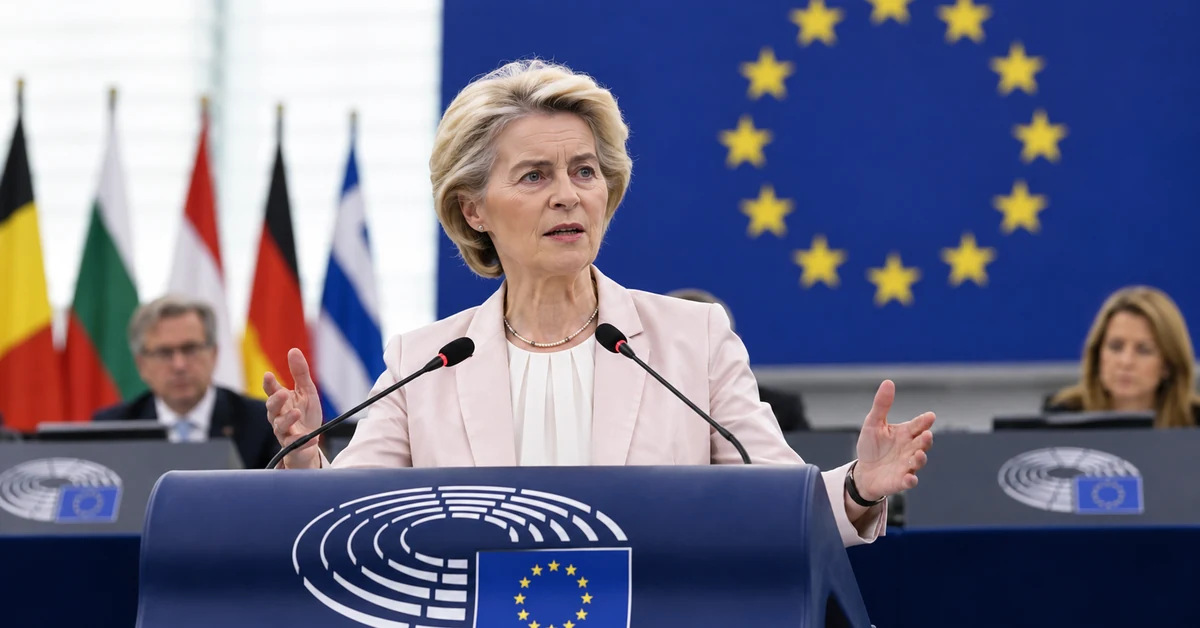
Ursula von der Leyen has proposed “Europe’s own Article 4” – an emergency mechanism that would allow a single EU country to summon every member state after sabotage, cyberattacks, arson or drone incursions that threaten national security without reaching the threshold of conventional armed attack.
The European Commission president said Europe’s existing security machinery was designed for a different world and had failed to keep pace with increasingly aggressive activity below the threshold of war.
Under the proposed Emergency Security Protocol, one member state could trigger consultations involving the entire EU.
Governments would then coordinate their response, seek to deter further escalation and limit the consequences of the incident.
Von der Leyen explicitly described it as a mechanism designed to “flank NATO’s Article 4” rather than replace NATO.
The gap below armed attack
NATO already has mechanisms for conventional military threats.
Article 4 allows members to request consultations when their security or territorial integrity is threatened. Article 5 establishes collective defence following an armed attack.
The problem von der Leyen is targeting sits below that level.
She cited cyberattacks, sabotage, arson and drone incursions as examples of activity that can seriously threaten national security without necessarily constituting conventional armed aggression.
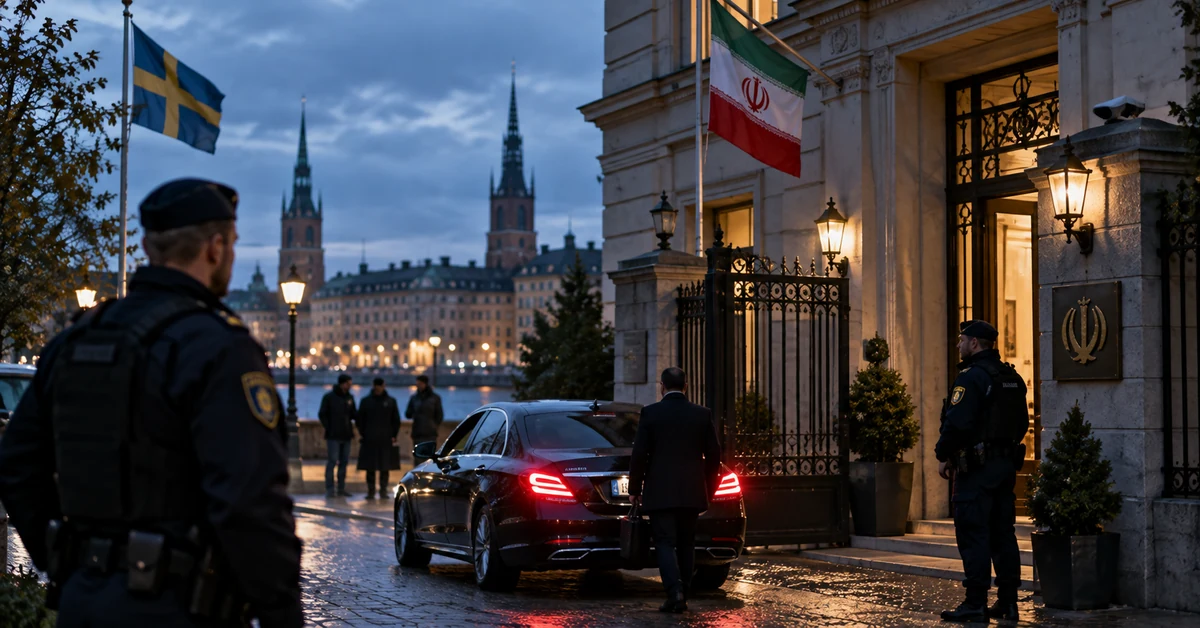
Europe has faced a series of incidents of that kind, including recent cases involving Denmark, Lithuania, Poland and Germany.
Her proposal would attempt to establish in advance how EU governments respond rather than forcing them to improvise after each incident.
Britain could join new European Security Council
Von der Leyen also proposed creating a European Security Council extending beyond the European Union itself.
She named Britain, Canada, Norway and Ukraine among the countries that could participate alongside EU governments.
That would create a European security structure in which Britain could participate despite no longer being an EU member.
The Commission has not yet published the detailed institutional design, membership rules or powers of the proposed council.
Reuters reported that some defence experts welcomed the direction while questioning what another institution would accomplish without greater military capability, defence production, interoperability and willingness to impose costs on hostile states.
That is the practical test.
Europe may establish a protocol for deciding what to do when sabotage or drone incursions fall into the grey area below conventional war.
It still needs the capability to make the resulting response matter.
Sources
- Reuters – European Security Council and counter-hybrid proposal
- European Commission – 2026 State of the Union address
Join the Dissenting Citizen Newsletter
Independent news and commentary delivered directly to your inbox.
Breaking stories, analysis and commentary throughout the day.
Follow @VoxDissent →