




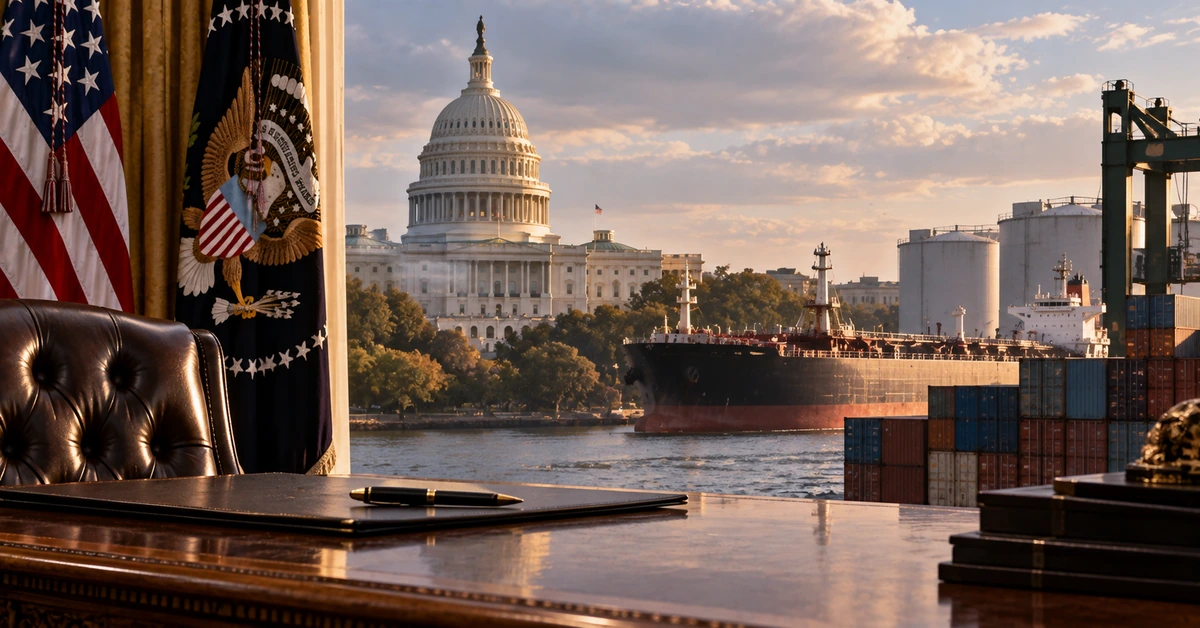
Congress has passed legislation giving President Donald Trump new authority to impose tariffs of up to 100% on goods from major buyers of Russian oil and gas, significantly expanding the economic tools available to pressure countries supporting Russia’s energy revenues.
The Lindsey O. Graham Sanctioning Russia and Iran Act of 2026 has cleared both chambers of Congress and is expected to be signed by Trump. The House passed the legislation 262-159 on September 16.
The legislation directs the president to impose tariffs above zero and as high as 100% on goods from countries that knowingly purchase Russian crude oil or natural gas and on countries ranked among the five largest importers of those products during the preceding 12 months.
It also allows tariffs of up to 100% against countries identified among the five largest facilitators of Russian oil sanctions evasion. The US Trade Representative can reassess the countries covered every 180 days.
China and India could be affected
The powers potentially expose major economies including China and India to substantially higher US tariffs because of their purchases of Russian energy.
The legislation also targets Russian officials, oligarchs, financial institutions and vessels involved in Moscow’s shadow fleet.
Its supporters argue that secondary tariffs can force countries to choose between maintaining access to the US market and continuing to provide revenue to Russia through energy purchases.
House Ways and Means Committee chairman Jason Smith said the measure was intended to close sanctions loopholes and increase the economic cost of supporting Russia’s war in Ukraine.
New presidential tariff authority
The legislation has significance beyond Russia sanctions because of the authority it delegates to the presidency.
A White House legislative official told Reuters that it represents the first new tariff authority granted by Congress to the executive branch in nearly four decades.
The president will have considerable discretion over the level of tariffs imposed within the statutory range, while the legislation also provides mechanisms for exemptions and national-security waivers.
Critics of the measure have argued that the provisions give the executive branch excessive latitude over trade policy; supporters say that flexibility is necessary to make the sanctions effective.
The immediate purpose is to increase the cost of financing Russia through energy purchases.
But Congress has also handed the presidency a significant new trade weapon: the ability to impose tariffs reaching 100% on entire categories of goods from countries targeted under the legislation.
Sources
- Reuters – Russia sanctions bill gives Trump sweeping new tariff powers
- House Ways and Means Committee – tariff provisions
Join the Dissenting Citizen Newsletter
Independent news and commentary delivered directly to your inbox.
Breaking stories, analysis and commentary throughout the day.
Follow @VoxDissent →