







China wants to build a BRICS AI Open Source Zone spanning large language models, training and open-source cooperation across the Global South. If it works, the AI race may start looking less like competition between companies and more like competition between geopolitical blocs.
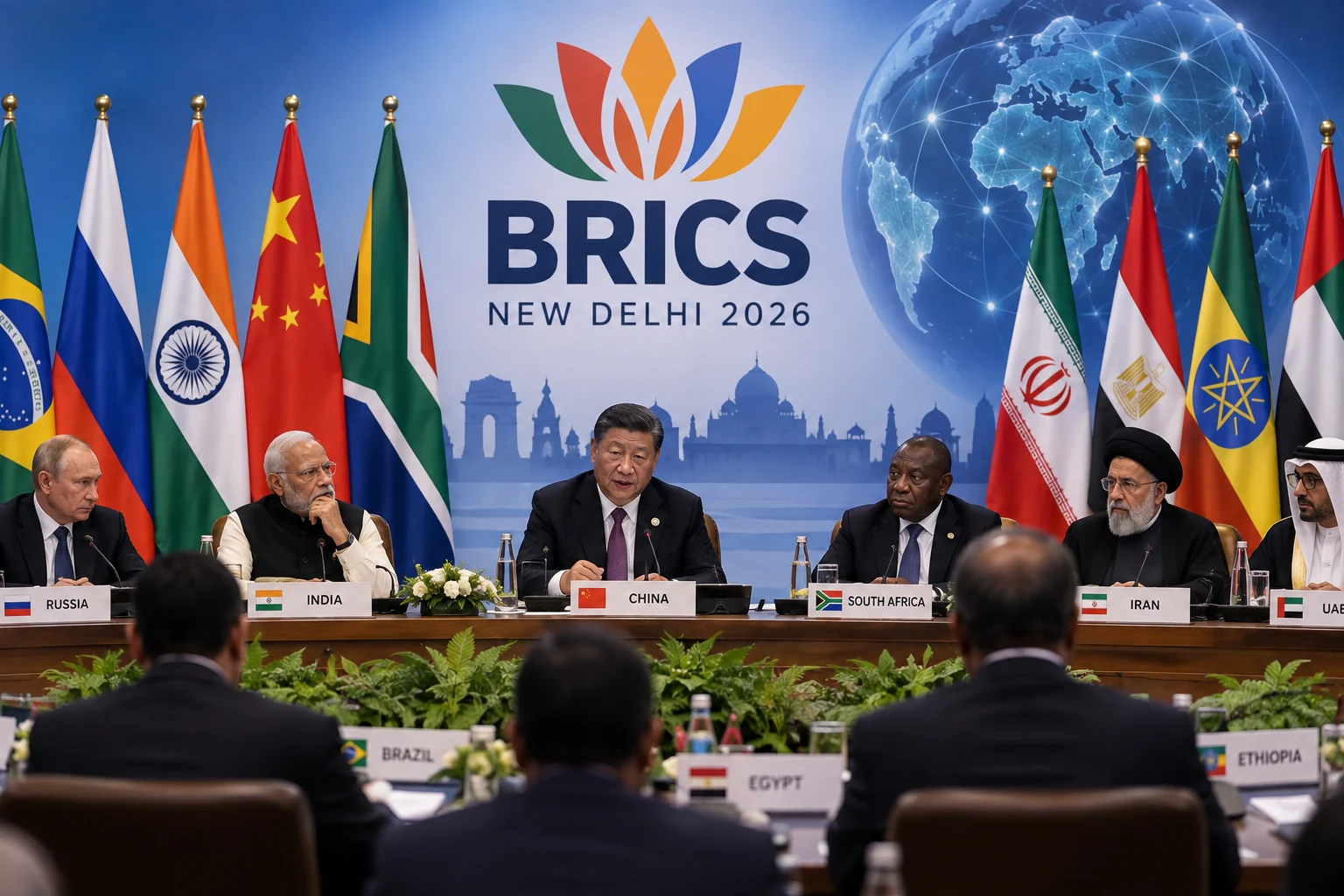
Xi Jinping announced the proposal at the BRICS summit in New Delhi.
China would lead development of the zone, intended to encourage cooperation on large language models, AI training and an open AI ecosystem.
BRICS now includes Brazil, Russia, India, China, South Africa, Iran, Indonesia, Egypt, Ethiopia and the UAE, alongside 10 partner countries.
Indian Prime Minister Narendra Modi said technology developed within BRICS should be made available across the Global South.
Vladimir Putin framed the wider BRICS project as part of the movement towards a multipolar world.
AI could now become part of that architecture.
FROM AI COMPANIES TO AI BLOCS
Today’s AI race is usually described through companies.
OpenAI. Anthropic. Google. Meta. Chinese competitors such as DeepSeek and Alibaba.
Frontier AI depends on much more than models.
It needs chips, data centres, energy, research talent, capital and access to enormous markets.
China’s proposal points towards countries cooperating across those layers rather than merely producing competing chatbots.
That could create something Washington would find considerably harder to compete with than another Chinese AI laboratory: an alternative ecosystem.
The United States has extraordinary advantages in frontier models, semiconductor design and private capital.
China has scale of its own and is now proposing to connect it with countries across Asia, Africa, the Middle East and Latin America.
Whether those countries actually build something coherent together remains unproven.
The ambition is clear.
The geopolitical contest over AI is beginning to resemble the geopolitical contest over trade, currencies and security.
The question may no longer be which company builds the best AI.
It may be which technological system the rest of the world chooses to join.
Source: Reuters, 13 September 2026.
Join the Dissenting Citizen Newsletter
Independent news and commentary delivered directly to your inbox.