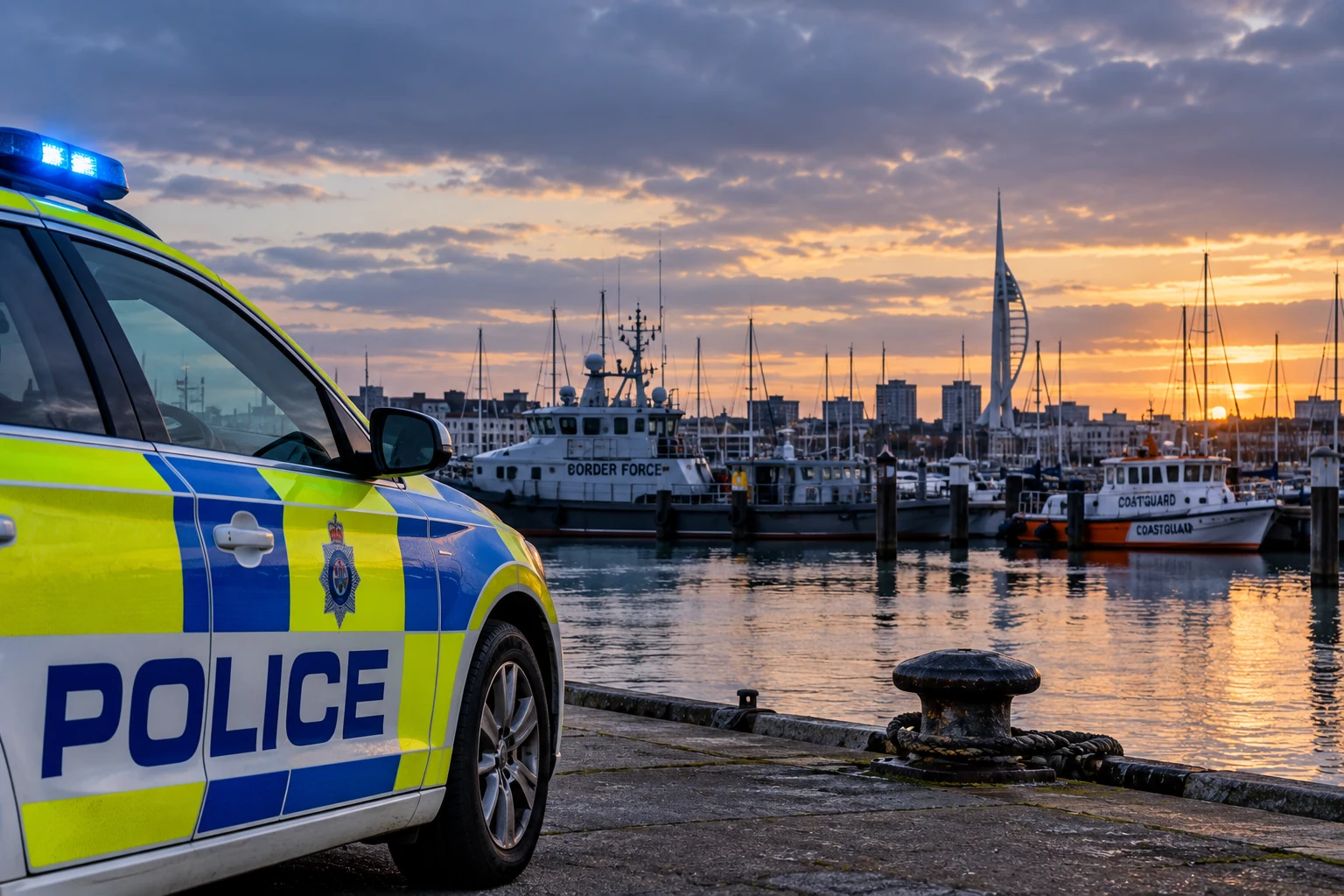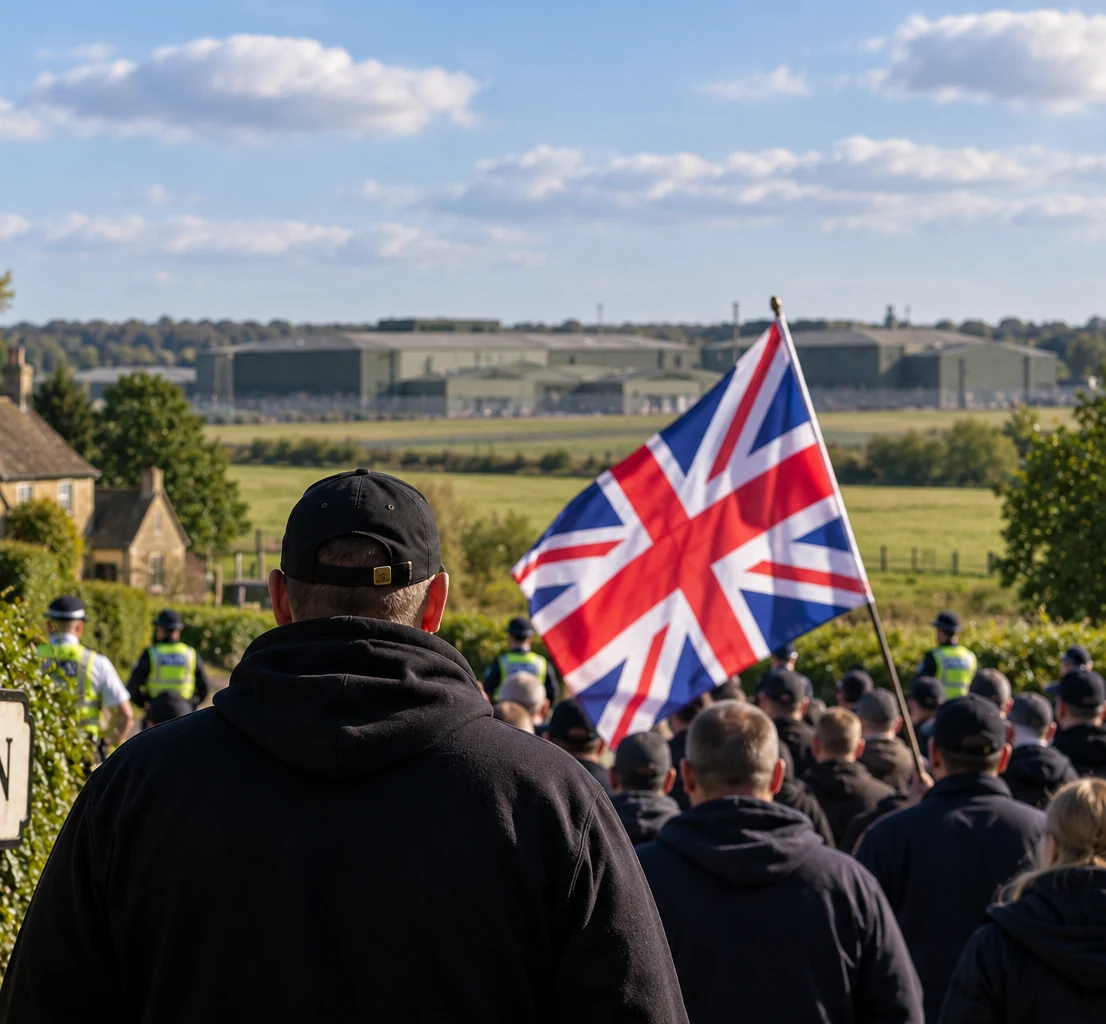




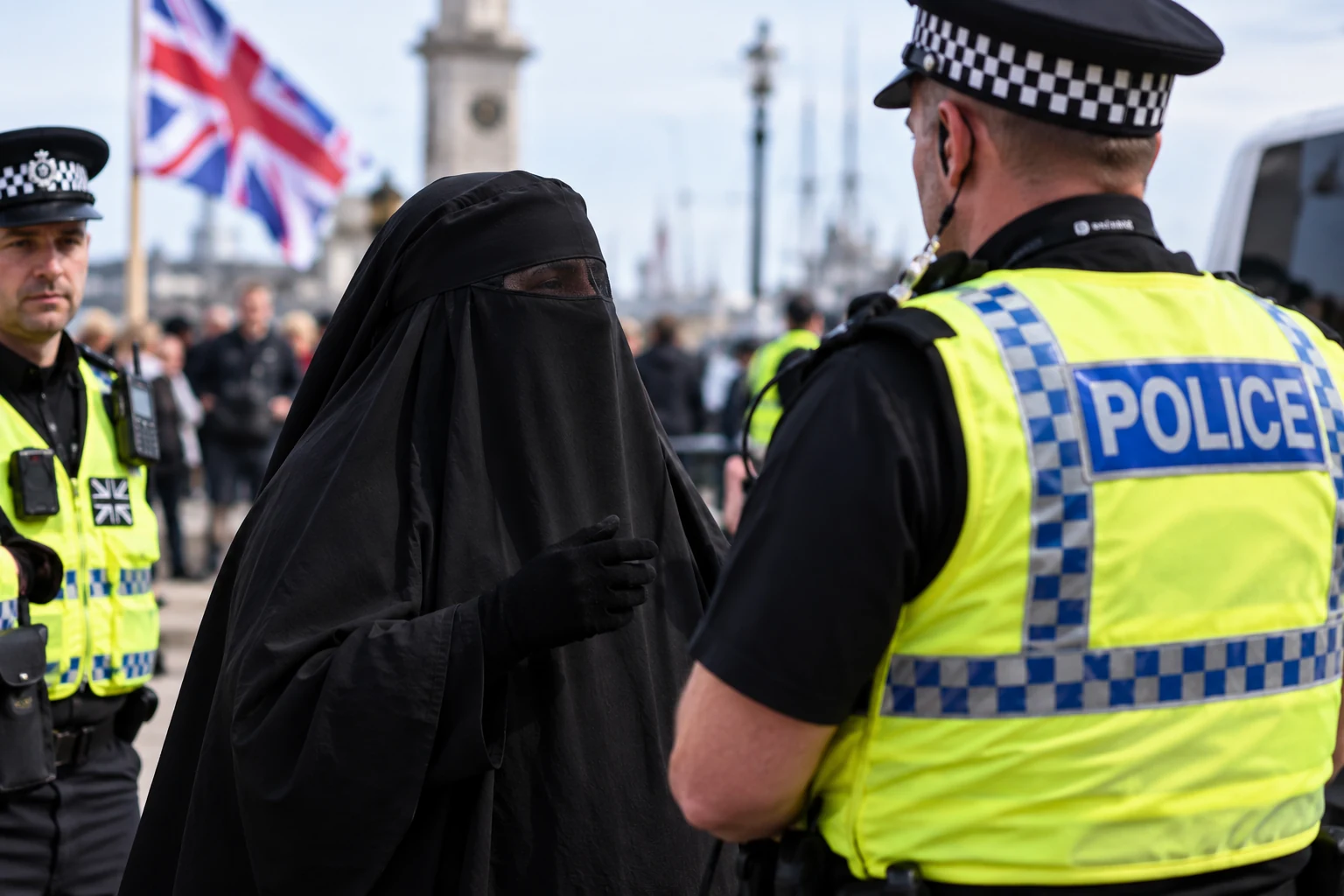
Britain’s new protest-mask law has encountered an awkward first test. A 76-year-old man wore a burka at an anti-immigration demonstration in Portsmouth. Police arrested him for concealing his identity.
The stunt was obvious.
Police had activated new powers allowing them to prohibit face coverings worn to conceal identity during Saturday’s protest.
So one demonstrator covered his entire face with a burka.
Video circulating online shows him talking to officers while apparently presenting himself as a Muslim woman.
The Independent described the incident as an apparent attempt to flout the ban. GB News subsequently identified the 76-year-old charged by police as having worn a burka.
Police arrested him. He has now been charged and is due before Portsmouth Magistrates’ Court.
His guilt or innocence is for the court to decide.
But he found the weakness in the law remarkably quickly.
THE SAME COVERED FACE
The law cannot decide whether a covered face is legal merely by looking at the covered face.
A balaclava can conceal identity.
So can a scarf.
So can a burka.
Yet Britain plainly does not intend to arrest Muslim women for wearing religious clothing at demonstrations.
That means police have to decide why somebody has covered their face.
Hampshire Police said the new power applied to face coverings worn or used for the purpose of concealing identity during protest activity. The force also promised that it would be applied equally and impartially to all groups.
That sounds straightforward until two people stand beside one another with their faces equally concealed.
One may be wearing a burka as religious dress.
The other may be wearing the same garment precisely because police have ordered protesters not to hide their identities.
One may be acting lawfully.
The other may be committing an offence.
The physical act is almost identical.
The difference is intent.
THE STUNT EXPOSES THE PROBLEM
If a man at an anti-immigration protest puts on a burka immediately after police announce an anti-mask order, officers may have obvious reasons to suspect a stunt.
But suppose he tells them otherwise.
Suppose he says the garment expresses his religion or claimed identity.
Does the legal position change?
If a protected explanation automatically defeats the restriction, anybody wishing to conceal their identity has been handed an obvious loophole.
If police simply disregard such explanations, they risk criminalising people genuinely wearing religious dress.
The answer cannot sensibly depend on whether police approve of the protester’s politics, religion or identity.
It has to return to the conduct Parliament chose to prohibit.
Was the covering being worn for the purpose of concealing identity?
THE BURKA TEST
That is what makes the Portsmouth incident more interesting than the apparent absurdity of the stunt.
The 76-year-old may simply have wanted to provoke police and produce a viral video.
Instead, he created an immediate test of Britain’s promise that its new protest powers will be applied equally.
If two people can cover their faces to exactly the same degree, the state needs a principled reason for treating them differently.
The name of the garment is not enough.
Neither is the identity of the person underneath it.
The question has to be the same whoever is behind the cloth:
Are you wearing it to conceal your identity?
If Britain cannot apply that test consistently, the problem exposed in Portsmouth is not really about a burka.
It is about whether equal treatment before the law survives contact with identity politics.
Sources: ITV News Meridian, 13 September 2026; The Independent, 12 September 2026; GB News, 13 September 2026; Hampshire Police.
Join the Dissenting Citizen Newsletter
Independent news and commentary delivered directly to your inbox.