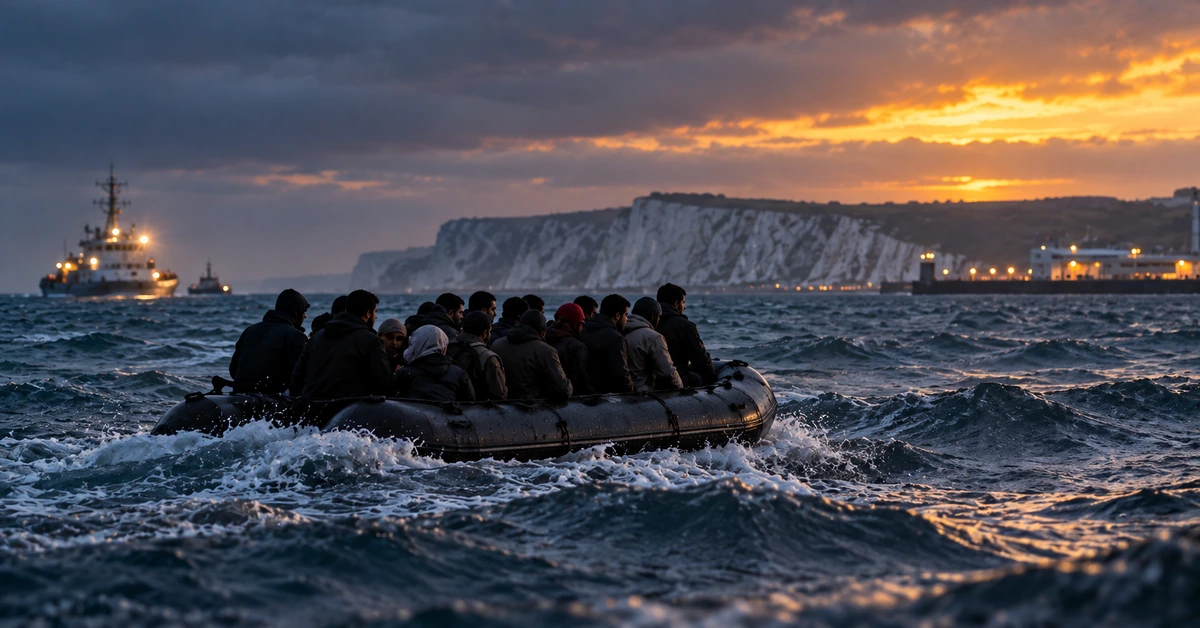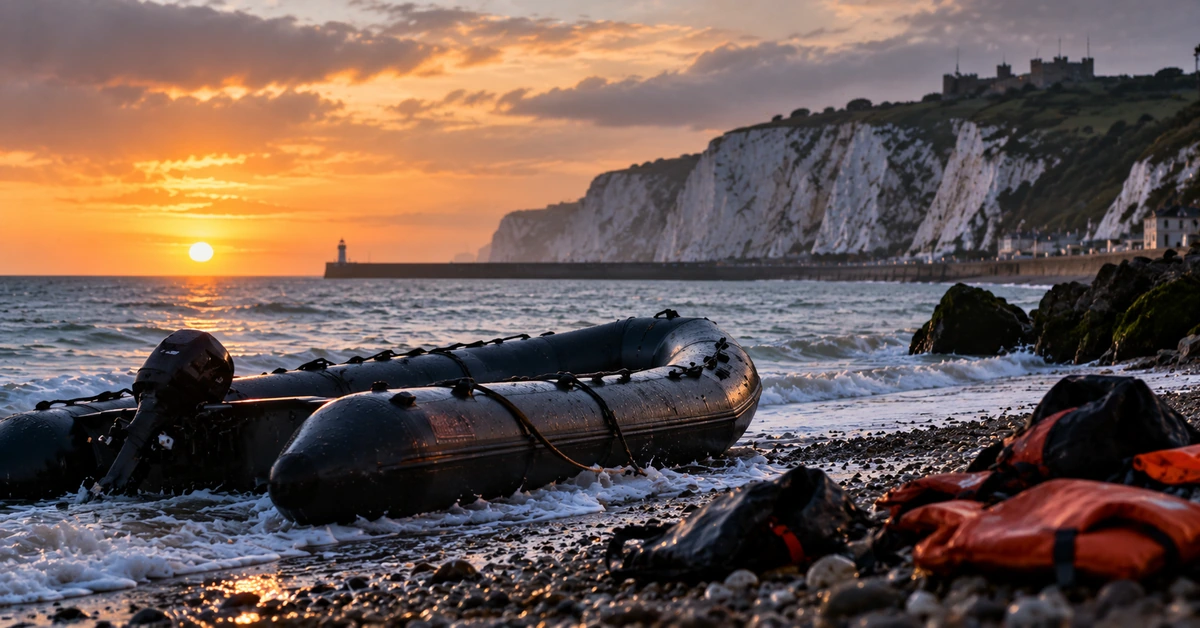







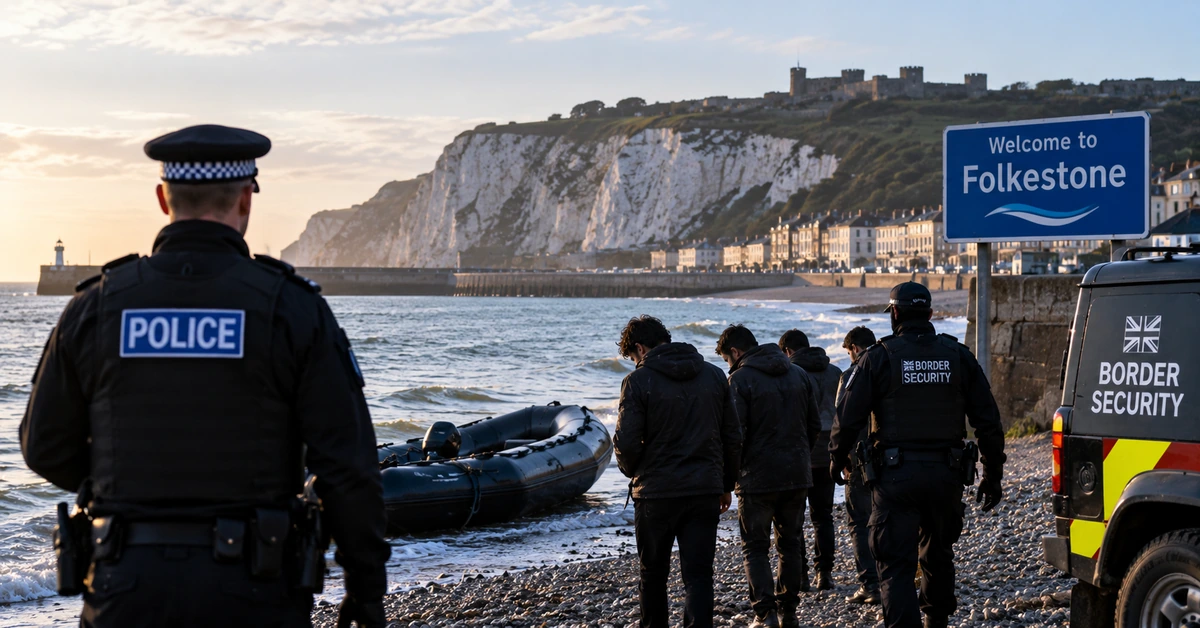
Five people have been detained after a small migrant dinghy reached the shore at Folkestone without being intercepted at sea, in what reporting describes as the first officially recorded unescorted small-boat landing on the UK coast for more than a year. Kent Police attended after being alerted by the Coastguard at around 09:25 on Monday and subsequently handed the five people to Border Security Command.
The Home Office said all occupants of the vessel were believed to have been accounted for and described the incident as “isolated and rare”. An investigation has now been opened into the circumstances surrounding the landing. According to BBC reporting, the previous officially recorded occasion on which a small boat reached the UK coast without an escort was on 6 September 2025.
The incident differs from the majority of Channel crossings because small boats are normally intercepted or escorted before those aboard reach the shoreline. In this case, the dinghy made it directly to Folkestone and the occupants came ashore before being detained, raising questions about how the vessel was able to reach the coast without interception.
The wider Channel figures provide important context. Government data cited in the reporting show 17,480 people have arrived by small boat so far in 2026, 46% fewer than at the same point last year. The Folkestone incident therefore comes during a substantial year-on-year decline in overall crossings rather than an increase.
The Home Office has cautioned against treating one landing as evidence of a wider breakdown in interception. Nevertheless, the unusual feature of Monday’s incident is clear: five people reached the British coastline without being intercepted, in the first officially recorded unescorted small-boat landing for roughly a year.
Sources
- BBC / PA: Five detained after migrant boat reaches UK shore
- Home Office: Migrants detected crossing the English Channel in small boats
Join the Dissenting Citizen Newsletter
Independent news and commentary delivered directly to your inbox.
Breaking stories, analysis and commentary throughout the day.
Follow @VoxDissent →