









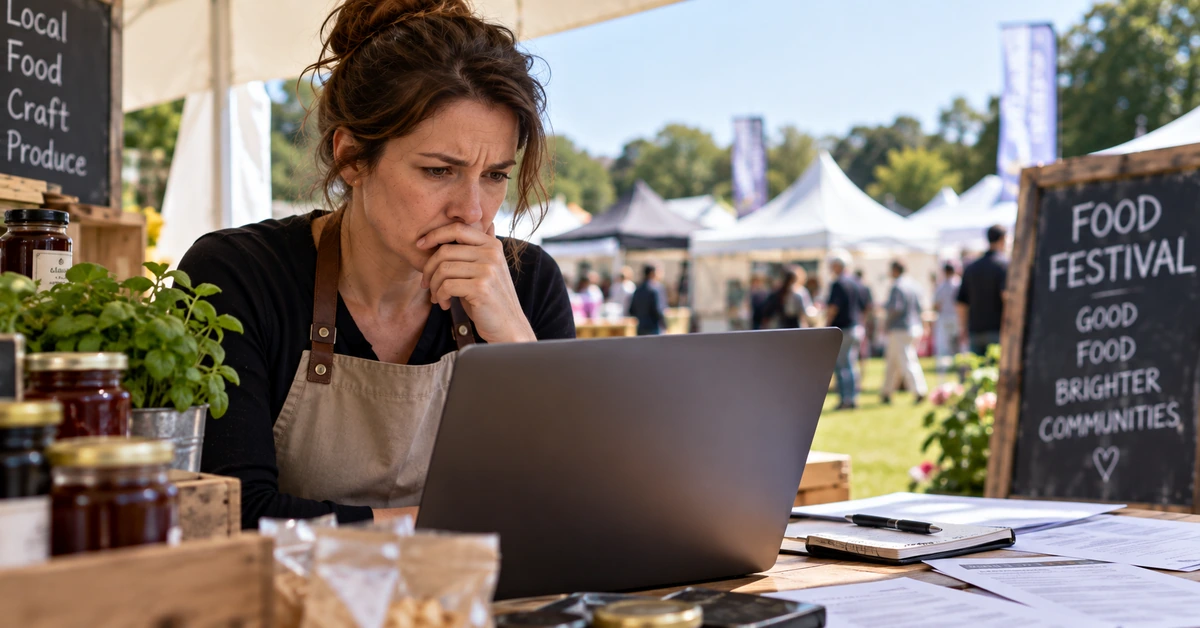
Small food and craft businesses across Britain are being targeted by highly convincing scams impersonating genuine festivals and their organisers.
A BBC Wales investigation found fraudulent emails reproducing festival branding, venue details and the names of real members of staff.
In some cases, scammers maintained multiple realistic email exchanges with traders before asking them to pay for supposedly legitimate bookings.
One business paid £400 and bought stock for an event before discovering that its booking did not exist.
AI-linked fraud reports rise 395%
Festival organisers told the BBC that generative AI has made producing detailed and personalised scam communications significantly easier.
There is no conclusive evidence that the specific emails examined by the BBC were generated using AI.
But separate figures from City of London Police show a sharp increase in fraud reports where victims themselves identified artificial intelligence as a factor.
The number increased 395% in 2025/26, from 193 reports to 956.
Police say AI is increasingly being used across fraud types including phishing, impersonation and investment scams, allowing criminals to produce more convincing material at greater scale.
The food-festival cases show how effective traditional impersonation fraud can become when the communications themselves appear professional.
Rather than relying on a single suspicious message, scammers can reproduce information about a genuine organisation and continue a plausible conversation over several exchanges before requesting payment.
That can remove some of the warning signs traditionally associated with fraudulent emails, including poor spelling, generic language and obvious inconsistencies.
For small traders, the losses can extend beyond the payment made to the scammer.
Businesses may also buy ingredients or stock, arrange transport and turn down other events after believing they have secured a legitimate pitch.
Festival organisers are urging traders to verify bookings through official contact details rather than relying solely on information contained in emails they receive.
The technology behind every individual scam may not be known.
The rise in reports shows that victims are increasingly encountering fraud they believe has been assisted by AI.
Sources
- BBC Wales – Food festivals exploited in highly convincing scam campaign
- City of London Police – intelligence assessment on AI-linked fraud reports
Join the Dissenting Citizen Newsletter
Independent news and commentary delivered directly to your inbox.
Breaking stories, analysis and commentary throughout the day.
Follow @VoxDissent →