







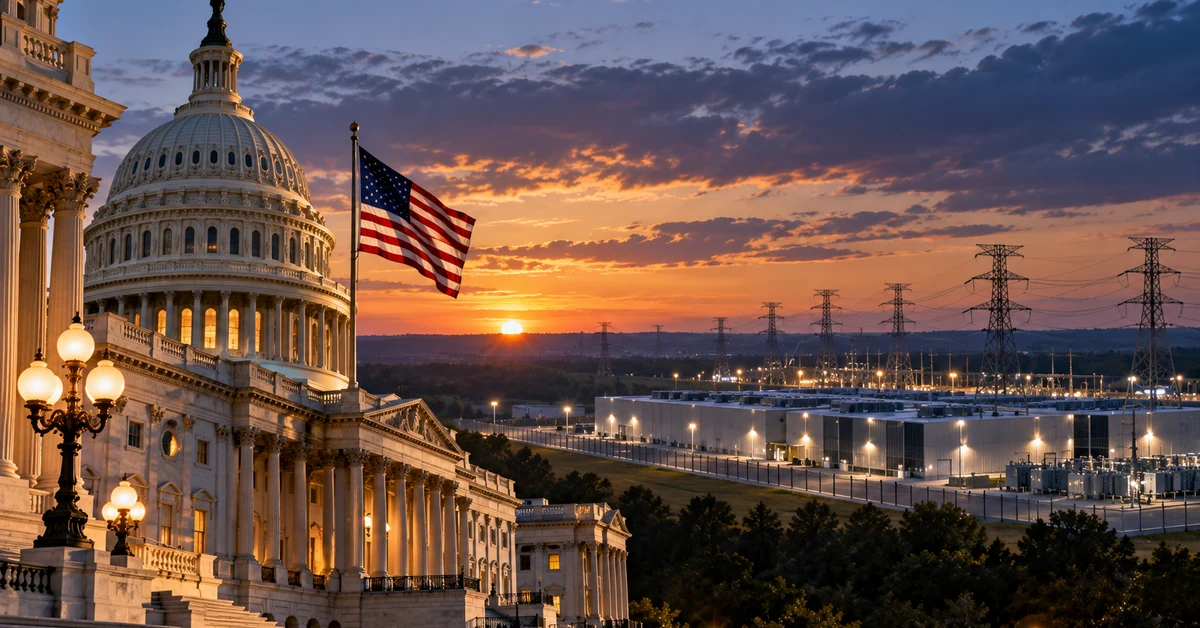
The US House of Representatives has voted 417-3 for legislation intended to prevent households and existing businesses from being forced to absorb electricity infrastructure costs created by enormous new users such as AI data centres.
The bipartisan Ratepayer Protection Act would require state utility regulators to consider whether very large electricity customers should bear the additional infrastructure costs associated with serving their demand.
That can include new generation capacity, substations, transmission infrastructure and other upgrades required when major data centres connect to the electricity grid.
The overwhelming House vote comes as America’s AI infrastructure boom increasingly collides with concerns over electricity prices and local development.
Only 11% want a data centre nearby
A University of Massachusetts Amherst poll cited by Reuters found that just 11% of Americans would support an AI data centre being built in their own community.
That creates a political problem for a country simultaneously attempting to build enormous quantities of computing infrastructure.
President Donald Trump has described data centres as the “oil of the next 20, 25 years”, reflecting their growing strategic importance as the United States competes with China over artificial intelligence.
But data centres require extraordinary amounts of electricity.
As new facilities connect to the grid, utilities may need to build infrastructure capable of supplying them.
The question facing lawmakers is who pays.
The House legislation seeks to establish the principle that existing customers should not automatically be left financing infrastructure required primarily by a new generation of exceptionally large electricity users.
National ambition meets local resistance
The 417-3 vote demonstrates how broadly the concern now extends across party lines.
Washington wants the United States to expand AI infrastructure rapidly enough to maintain its technological lead.
Individual communities encounter that ambition differently.
For them, a proposed data centre can mean new substations and transmission lines, increased electricity and water demand, construction and changes to the local landscape.
That creates a familiar political tension on an unusually large scale.
America may regard winning the AI race as a national strategic priority while individual communities remain reluctant to host the physical infrastructure required to win it.
The House has now overwhelmingly backed one answer to the financial part of that problem: the people already connected to the electricity grid should not automatically pay for infrastructure required by the largest new users.
The location problem remains harder.
If America needs thousands of increasingly power-hungry data centres but only 11% of Americans want one built near them, somebody is still going to have to live next door.
Sources
- Reuters – House passes legislation addressing economic costs of data-centre boom
- House Energy and Commerce Committee – Ratepayer Protection Act
Join the Dissenting Citizen Newsletter
Independent news and commentary delivered directly to your inbox.
Breaking stories, analysis and commentary throughout the day.
Follow @VoxDissent →